
I told myself, “One visit to Matsumoto Castle is enough.” And yet the next morning, I was walking back toward it.
That pretty much says everything.
In late June 2024, I spent two days in Matsumoto City, Nagano Prefecture, Japan. Home to one of Japan’s twelve remaining original castle keeps, Matsumoto Castle — nicknamed “Karasu-jo” (Crow Castle) for its striking black exterior — was at the top of my list.
Getting There: Highway Bus from Shinjuku
I took a highway bus from Shinjuku, winding through the Chuo Expressway. We stopped midway at Futaba Service Area in Yamanashi Prefecture. Stepping off the bus, I noticed the air getting cleaner and cooler as we gained altitude.
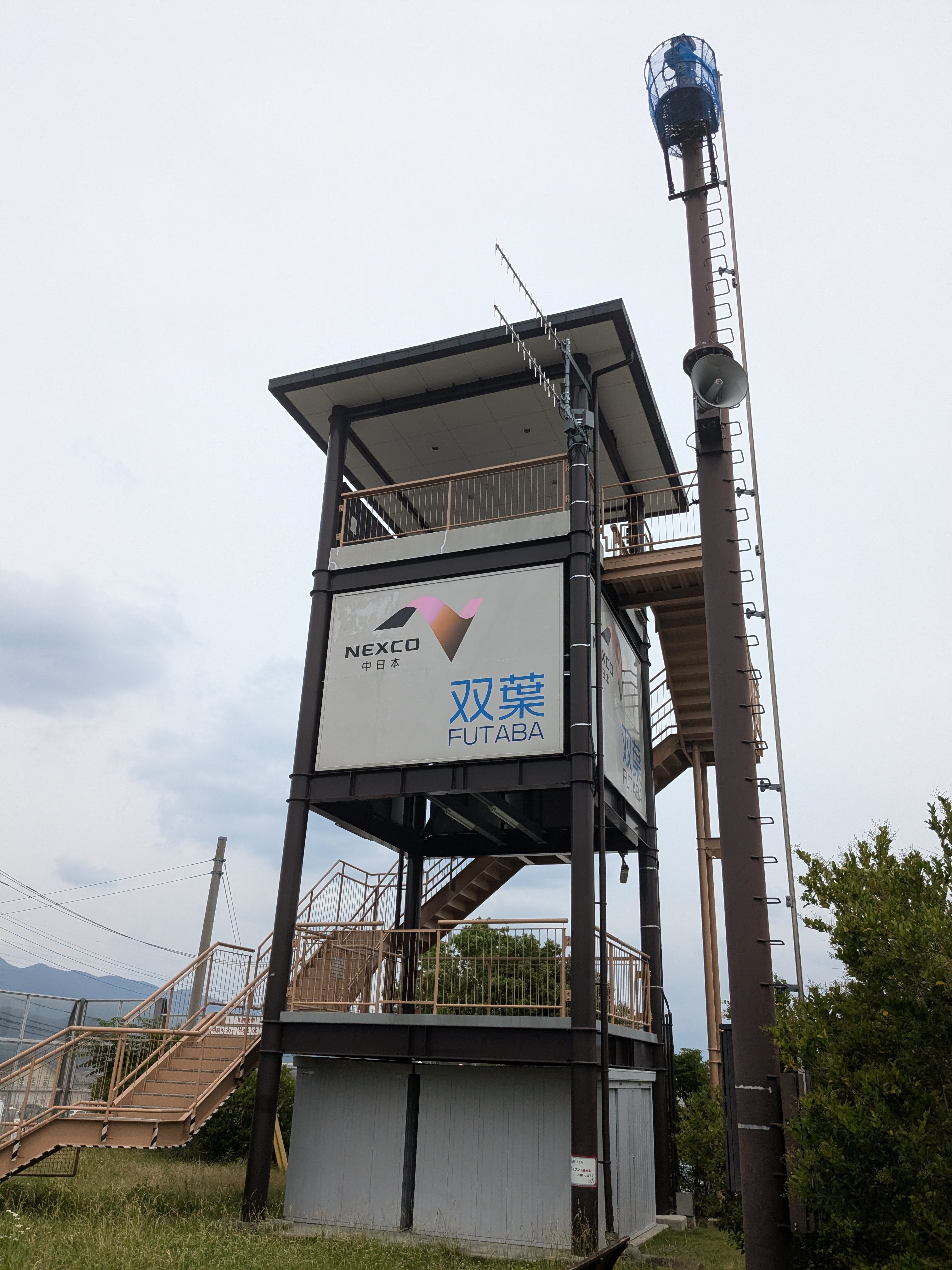
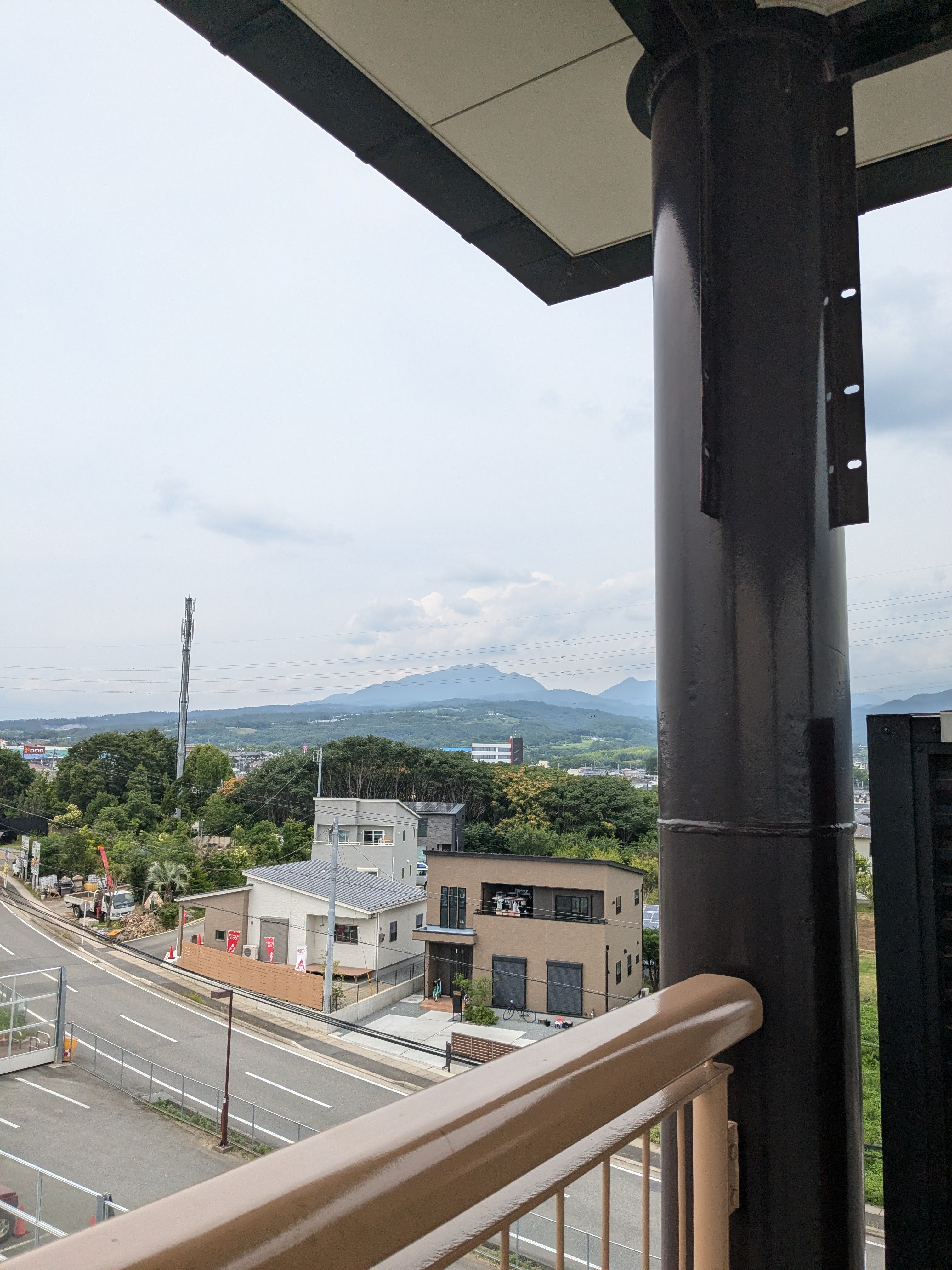
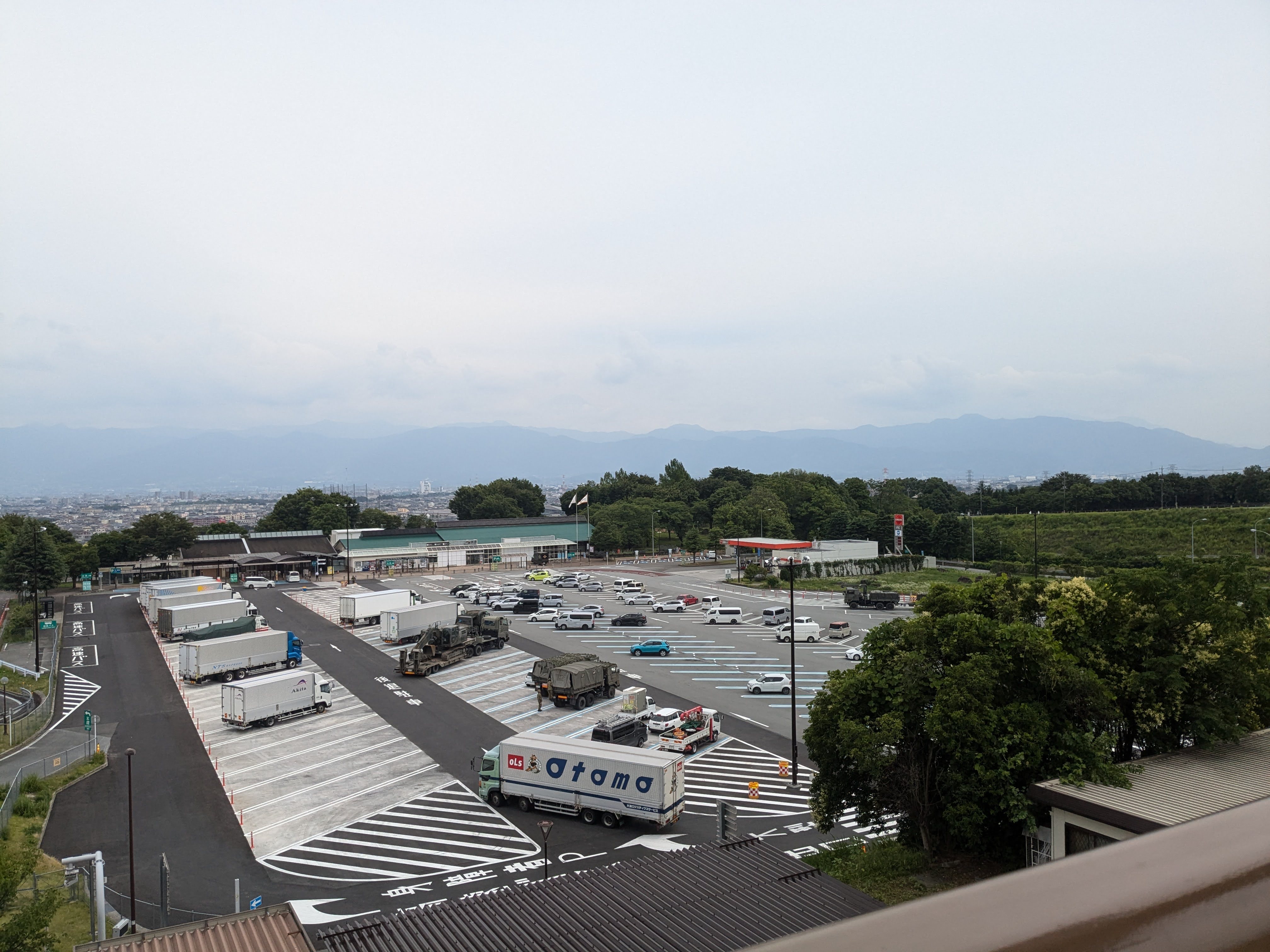
It was still rainy season in late June — the sky was a thick grey — but even so, the mountain silhouettes were impressive.
Tip: You can also reach Matsumoto by the Limited Express Azusa from Shinjuku (approx. 2h30m, non-reserved seat ¥6,170).
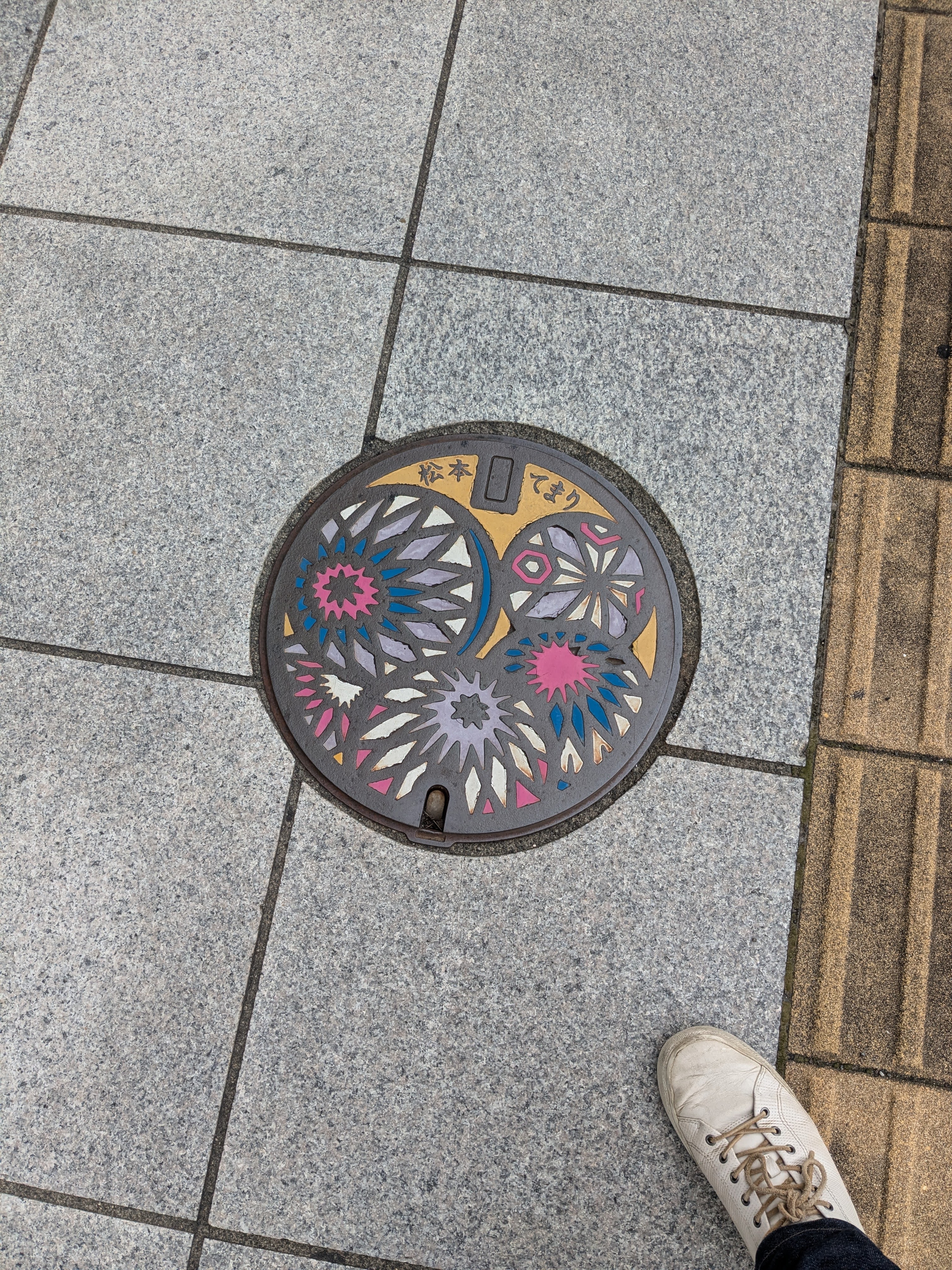
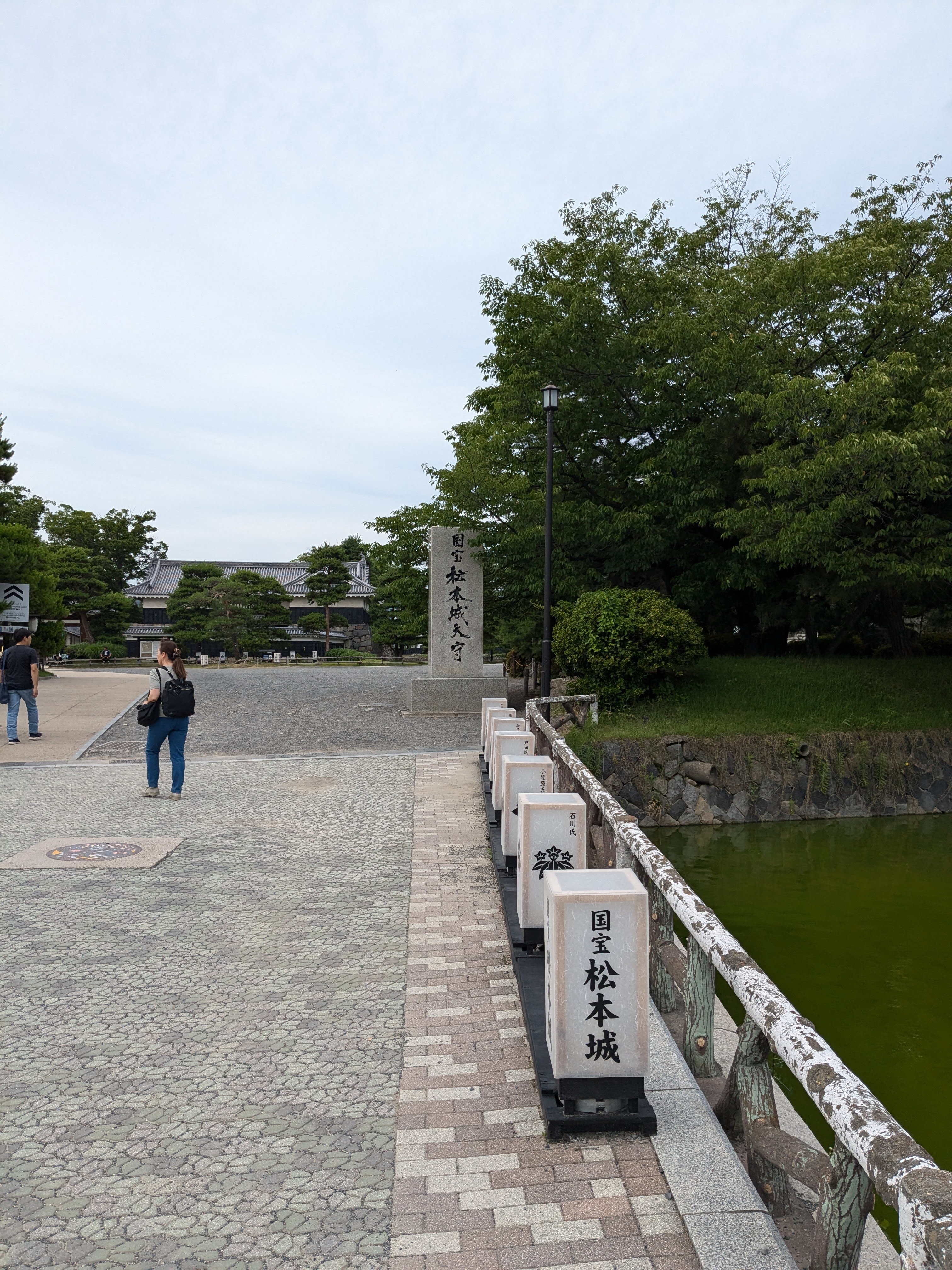
Once in Matsumoto, I walked from the bus terminal toward the castle. Along the way, I spotted a manhole cover decorated with the castle’s image — a nice little introduction to how proud this city is of its landmark.
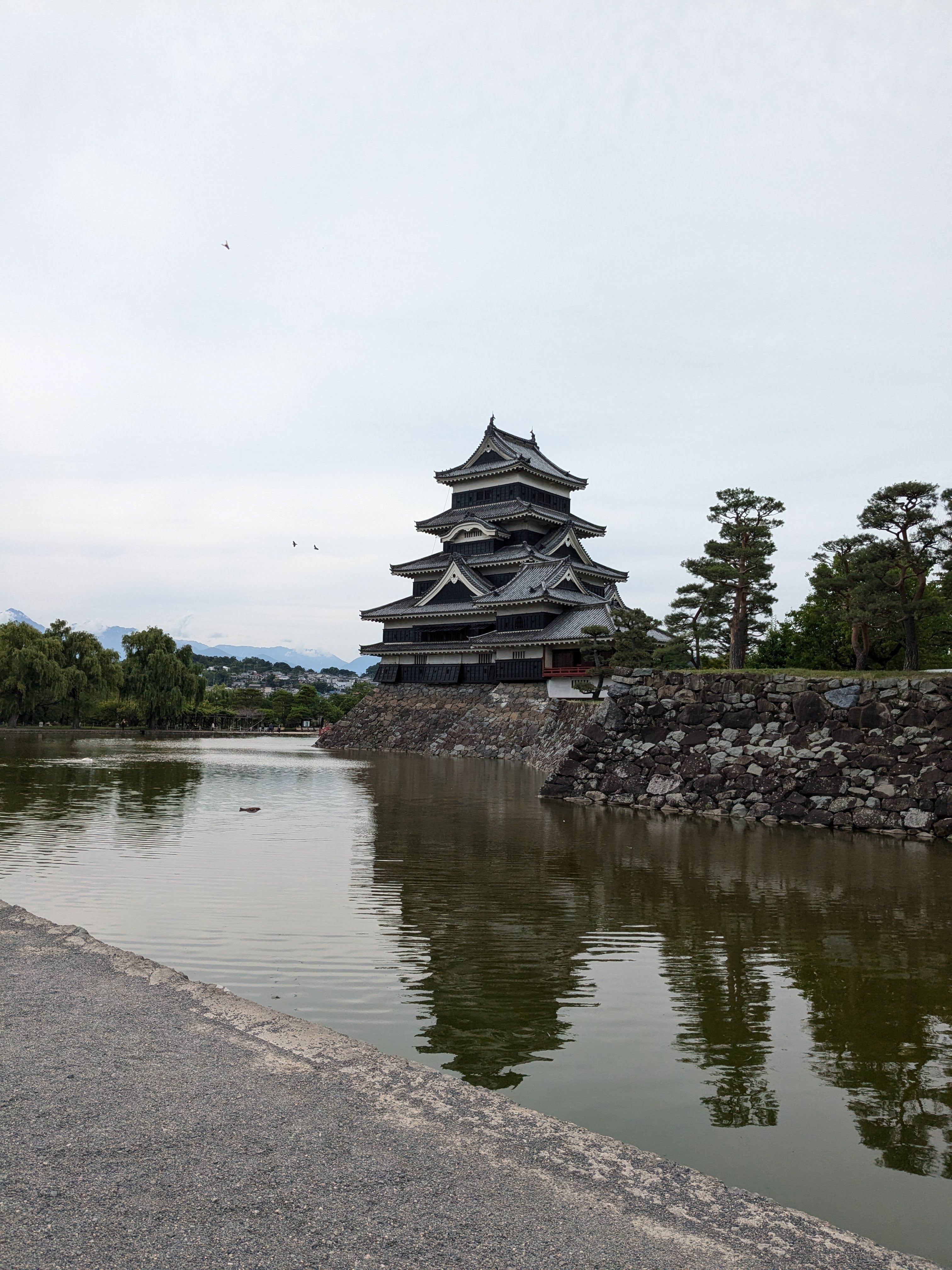
“This must be close,” I thought — and then the black keep appeared above the rooftops. I stopped walking.
Big.
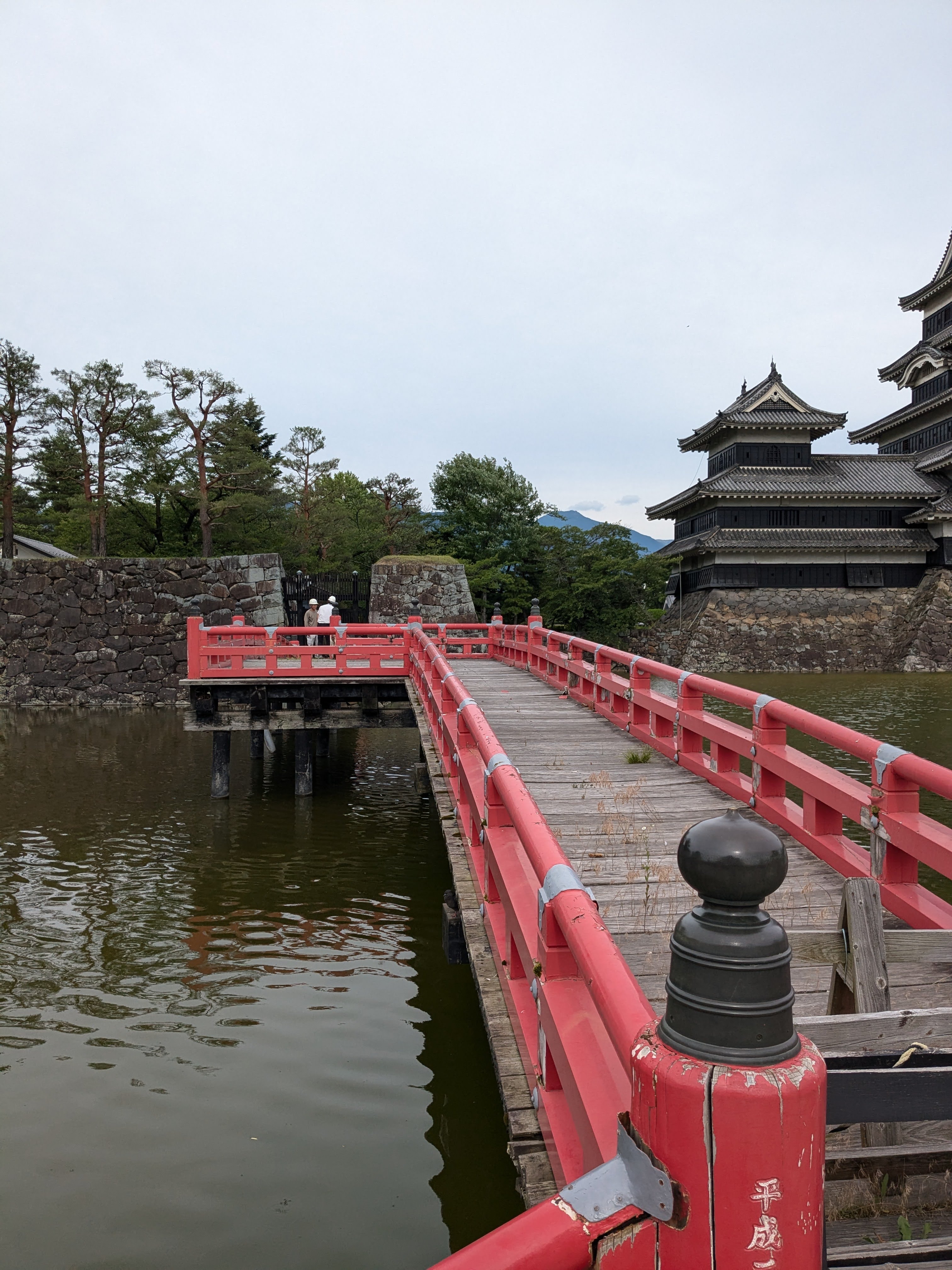
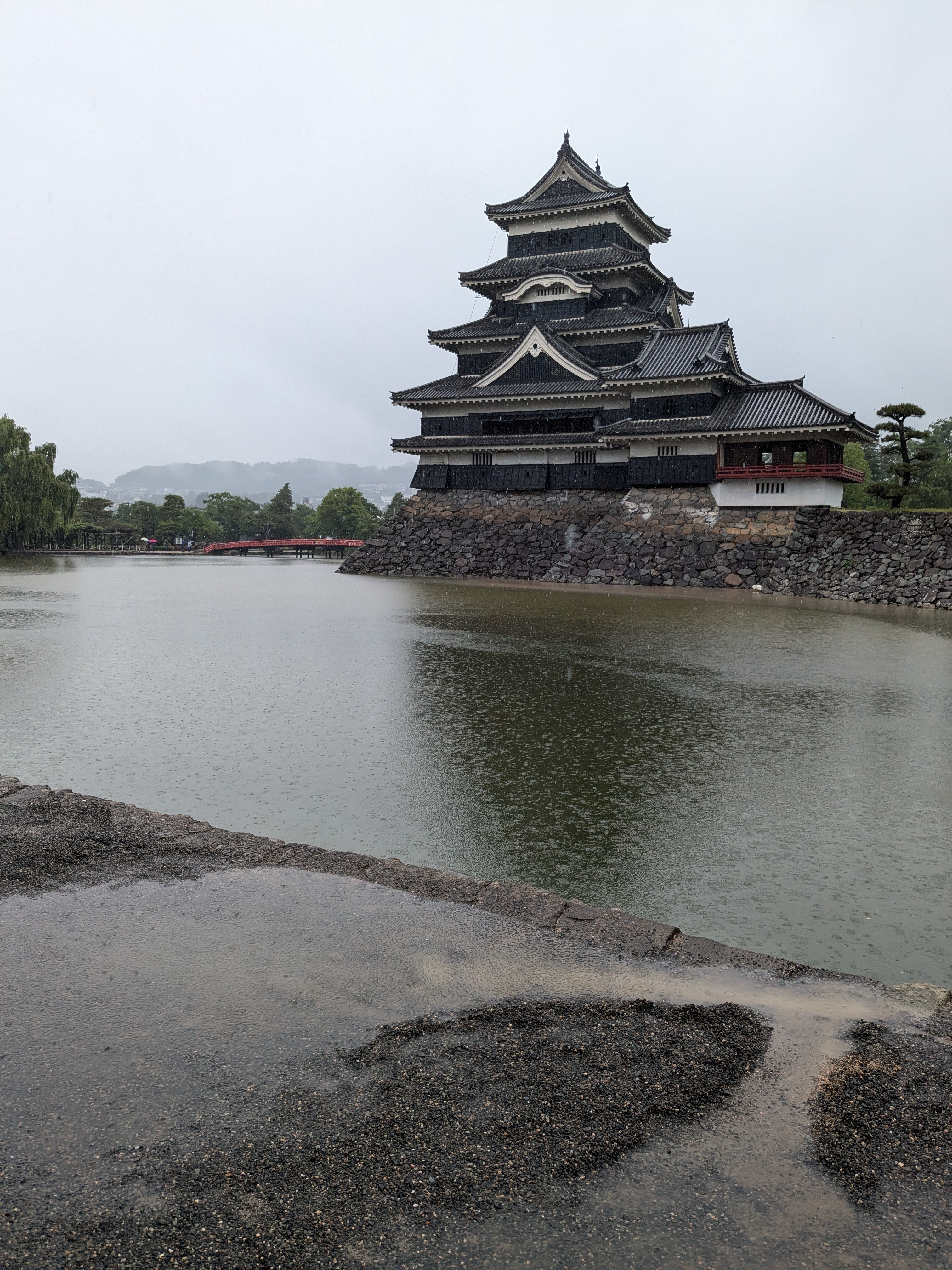
I had seen hundreds of photos of Matsumoto Castle, but nothing prepared me for the real thing. The black walls reflected in the inner moat. The overcast sky made the contrast even sharper — the castle looked darker, more imposing than on any sunny postcard.
Inside the Castle: 400 Years of War, Real and Immediate
The keep has six floors. The moment you step inside, the smell of old wood and the dim light wrap around you. This is not a theme park reconstruction — it is a real, 400-year-old building.
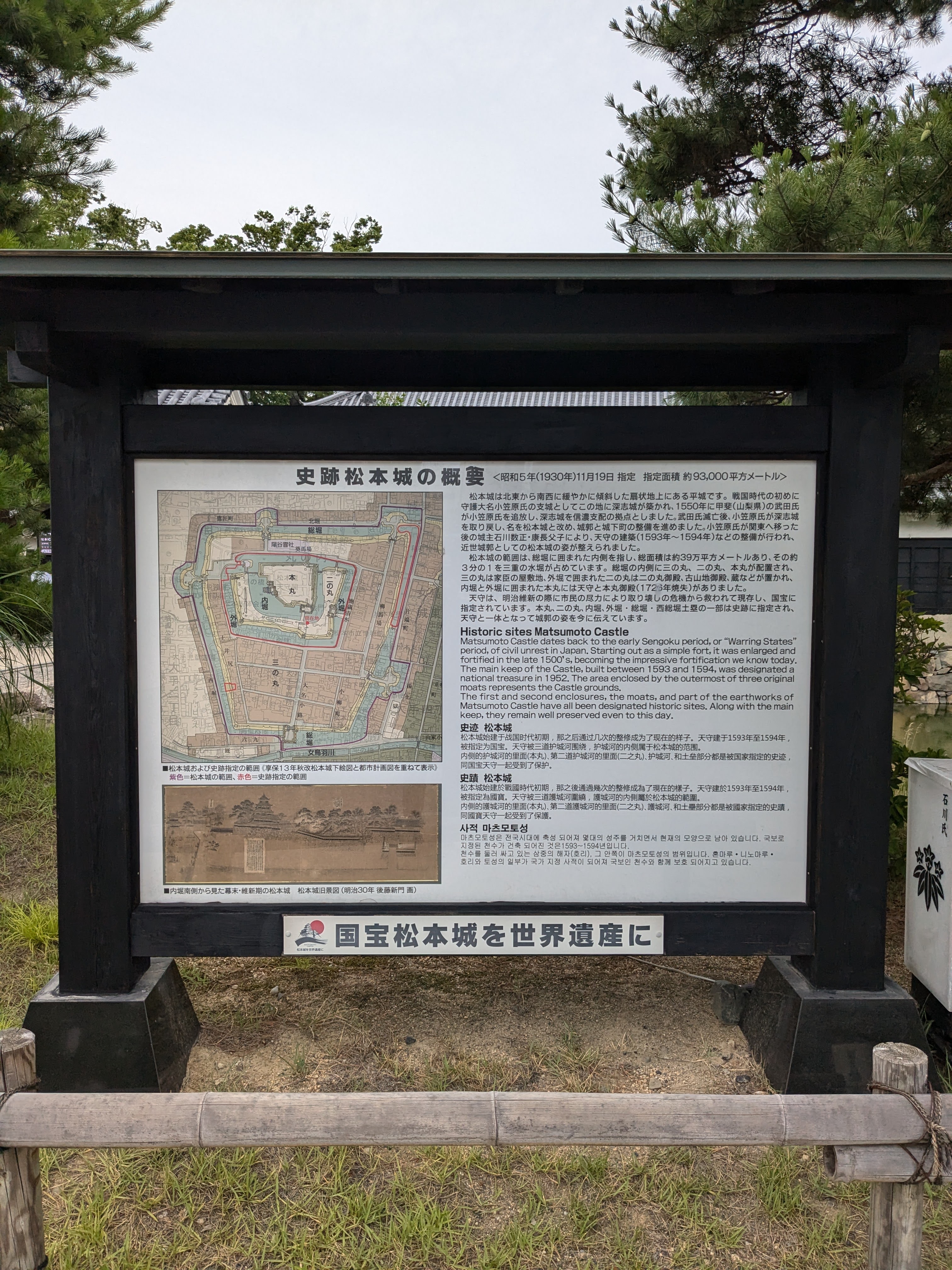
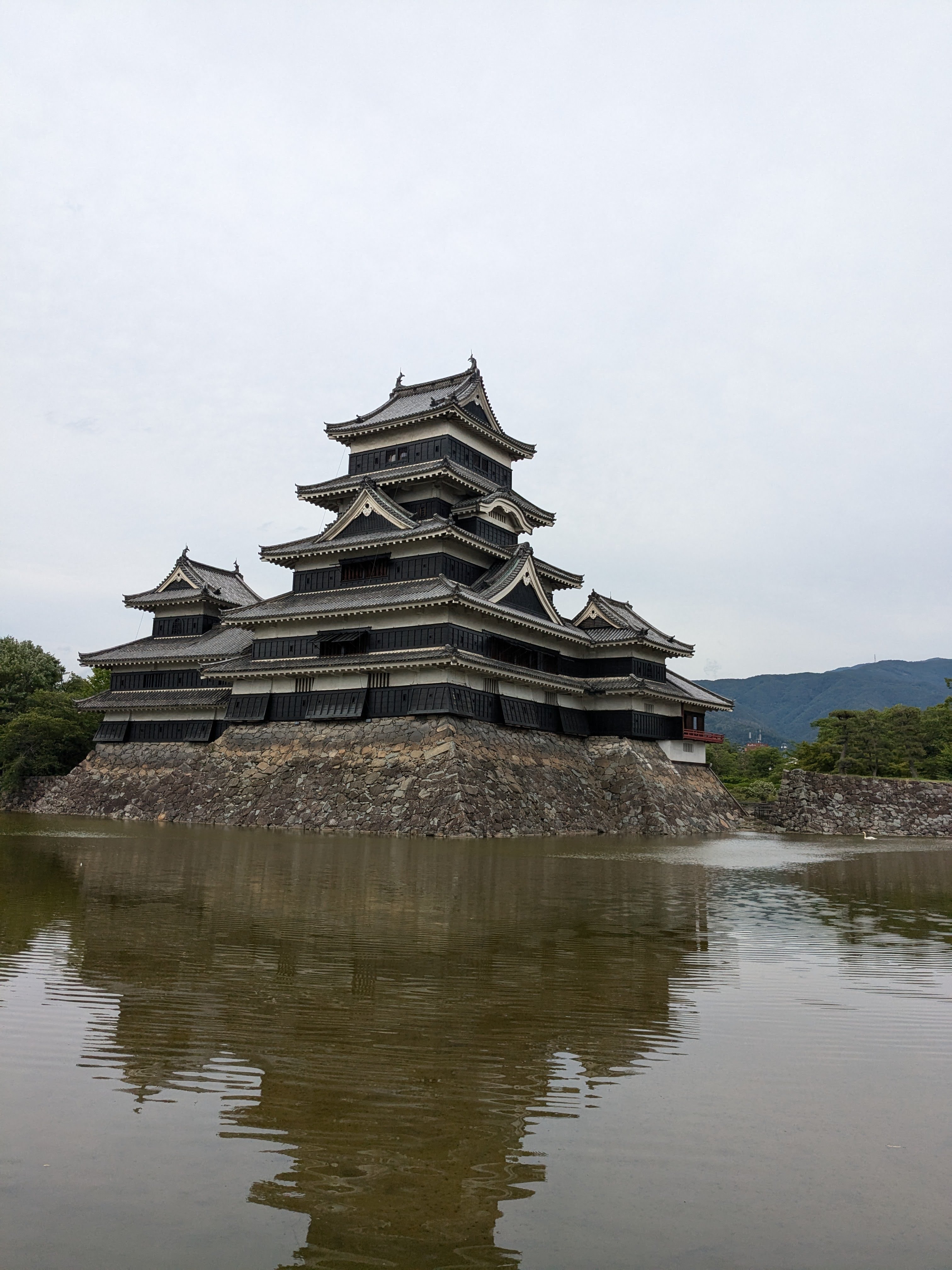
Each floor has exhibits on the weapons and defensive systems of the era. I peered through a loophole (狭間 sama) — a tiny slot cut in the castle wall — and looked out at the inner moat. The idea that a samurai once stood in this exact spot, watching for enemies, suddenly felt completely real.
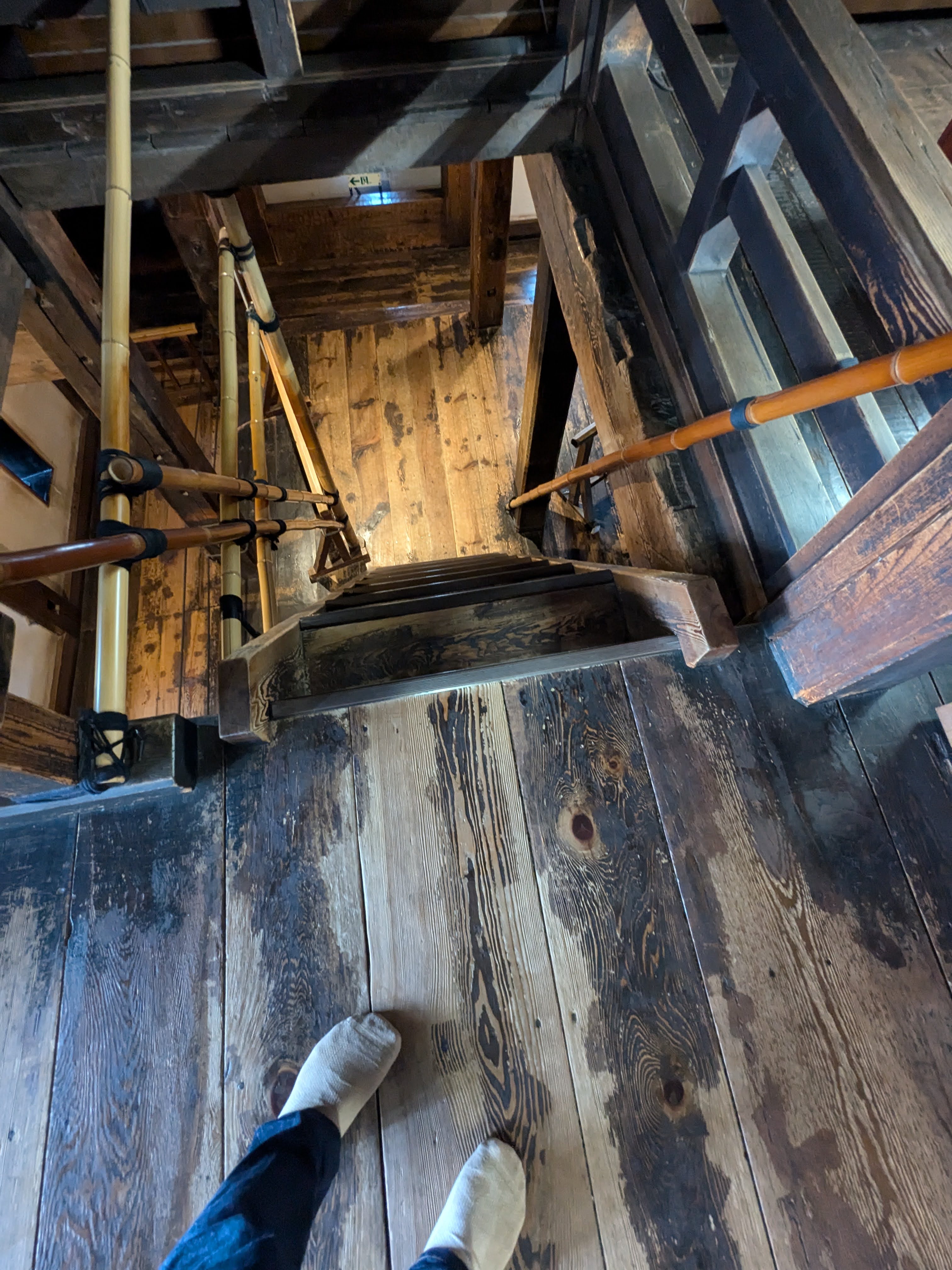
The staircases are steep and narrow. You have to grip the railing. I was told this was deliberate — a steep staircase becomes a natural trap if enemies break through the lower floors.
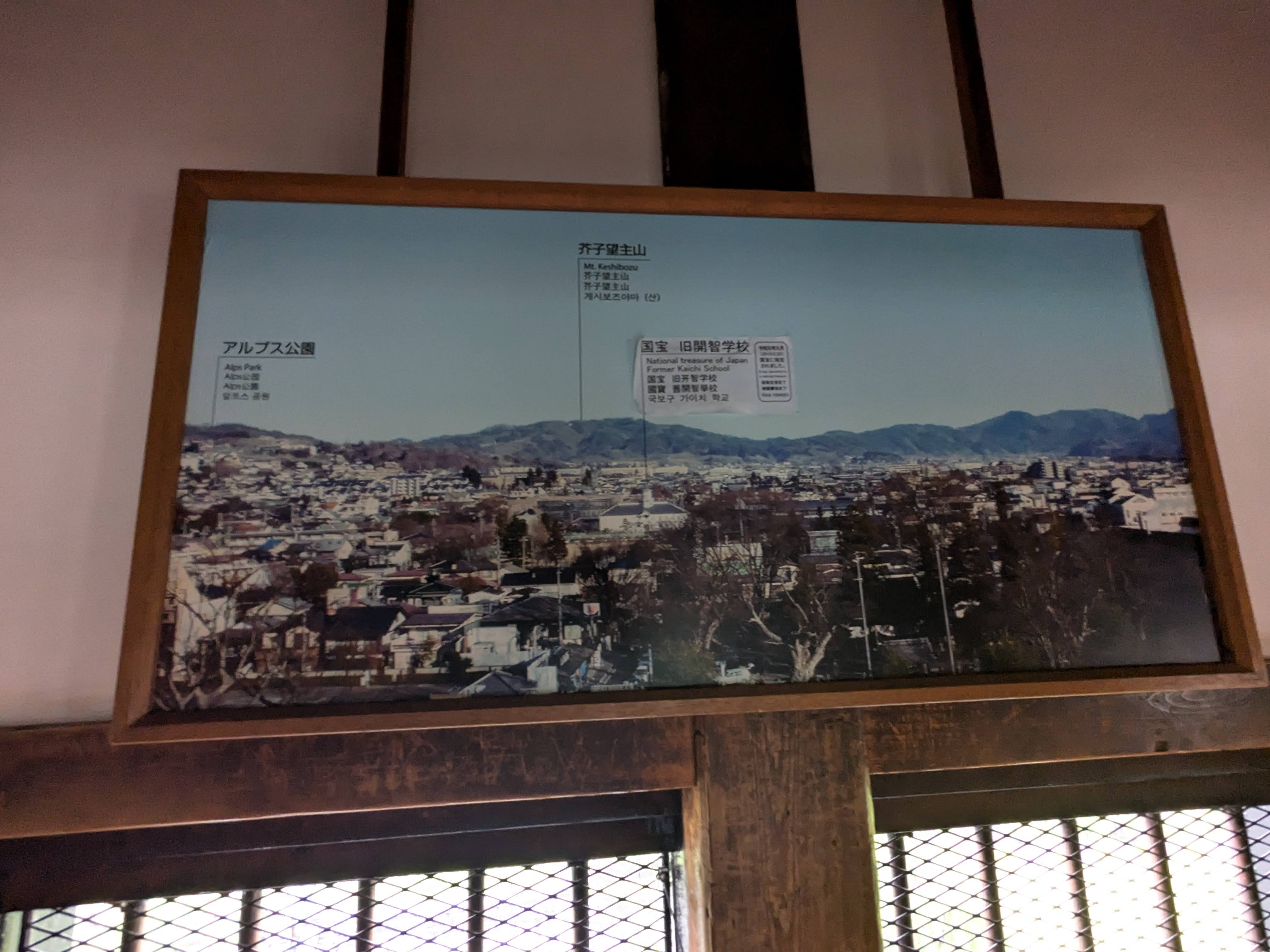
From the top floor (6th), Matsumoto city spread out 360 degrees. The Northern Alps were somewhere out there behind the clouds. I stood there longer than I expected.
Walking the Castle Grounds: The Ninomaru Palace Ruins and Taiko-Mon Gate
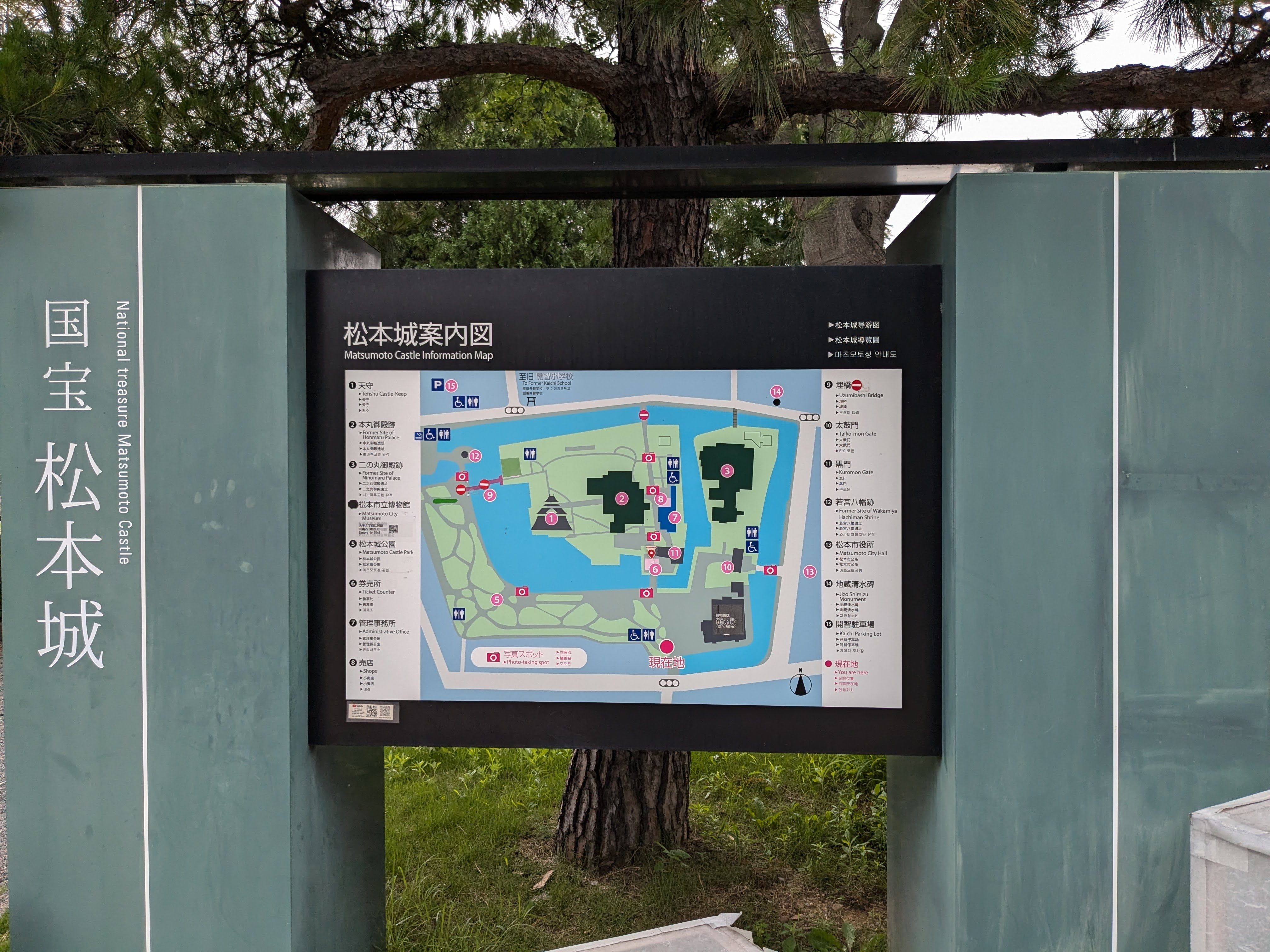
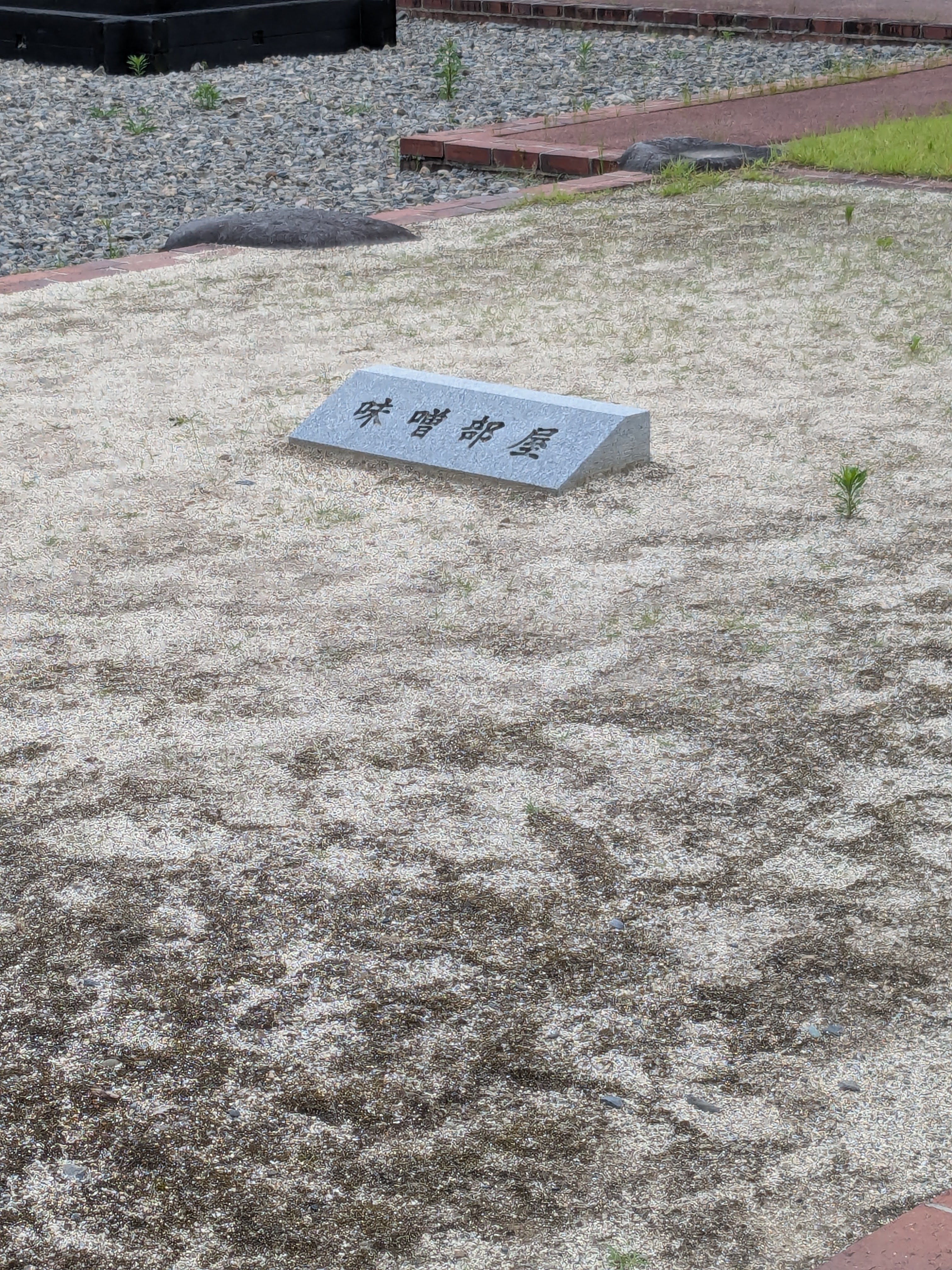
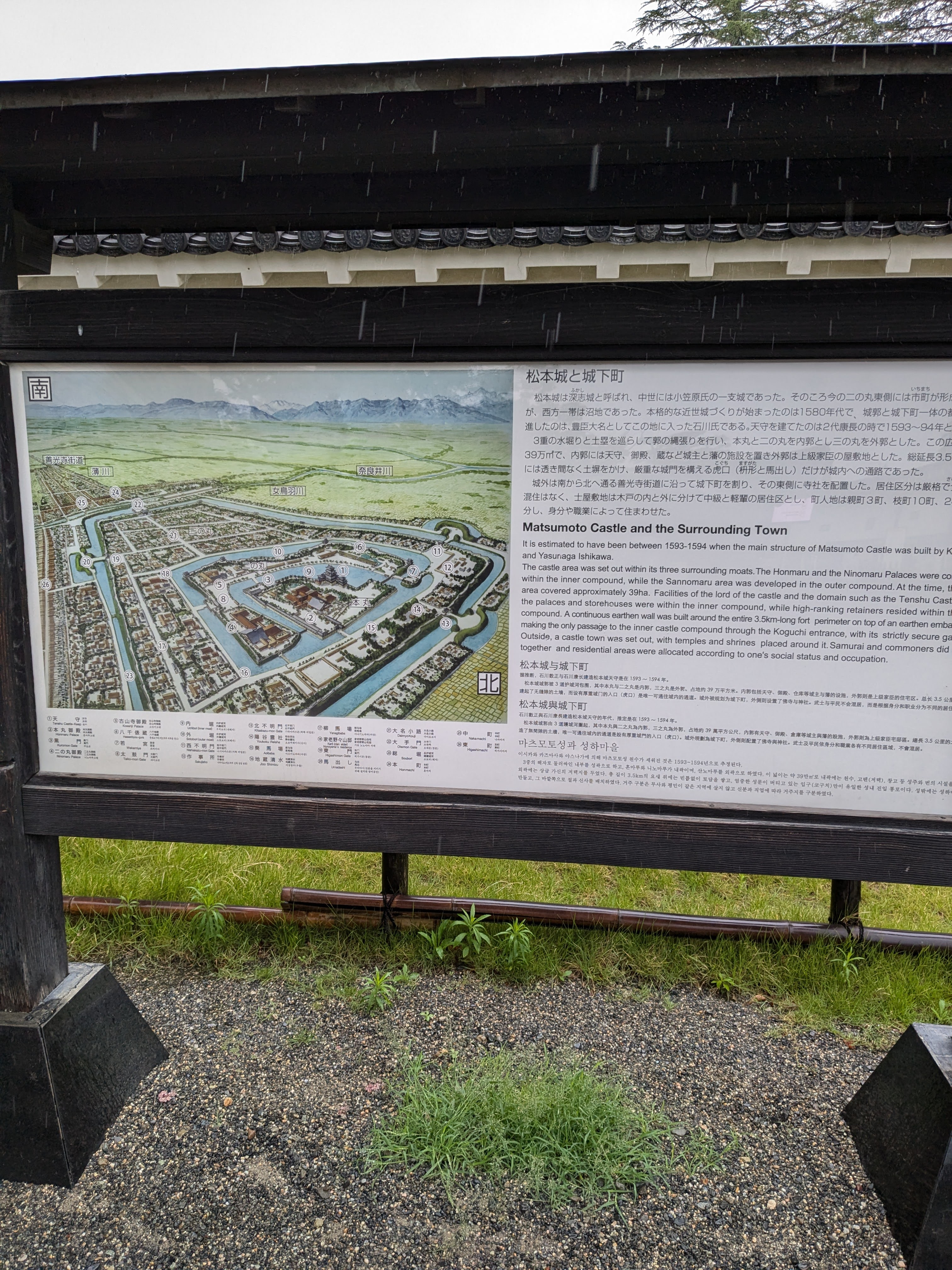
Outside the keep, I walked the castle perimeter. The former Ninomaru Palace area (a palace burned down in the 1700s) has stone markers indicating where each room once stood. A stone pillar reading “Setchin” (toilet), another for “Miso Room.” Learning where the castle’s bathrooms were is oddly humanizing.
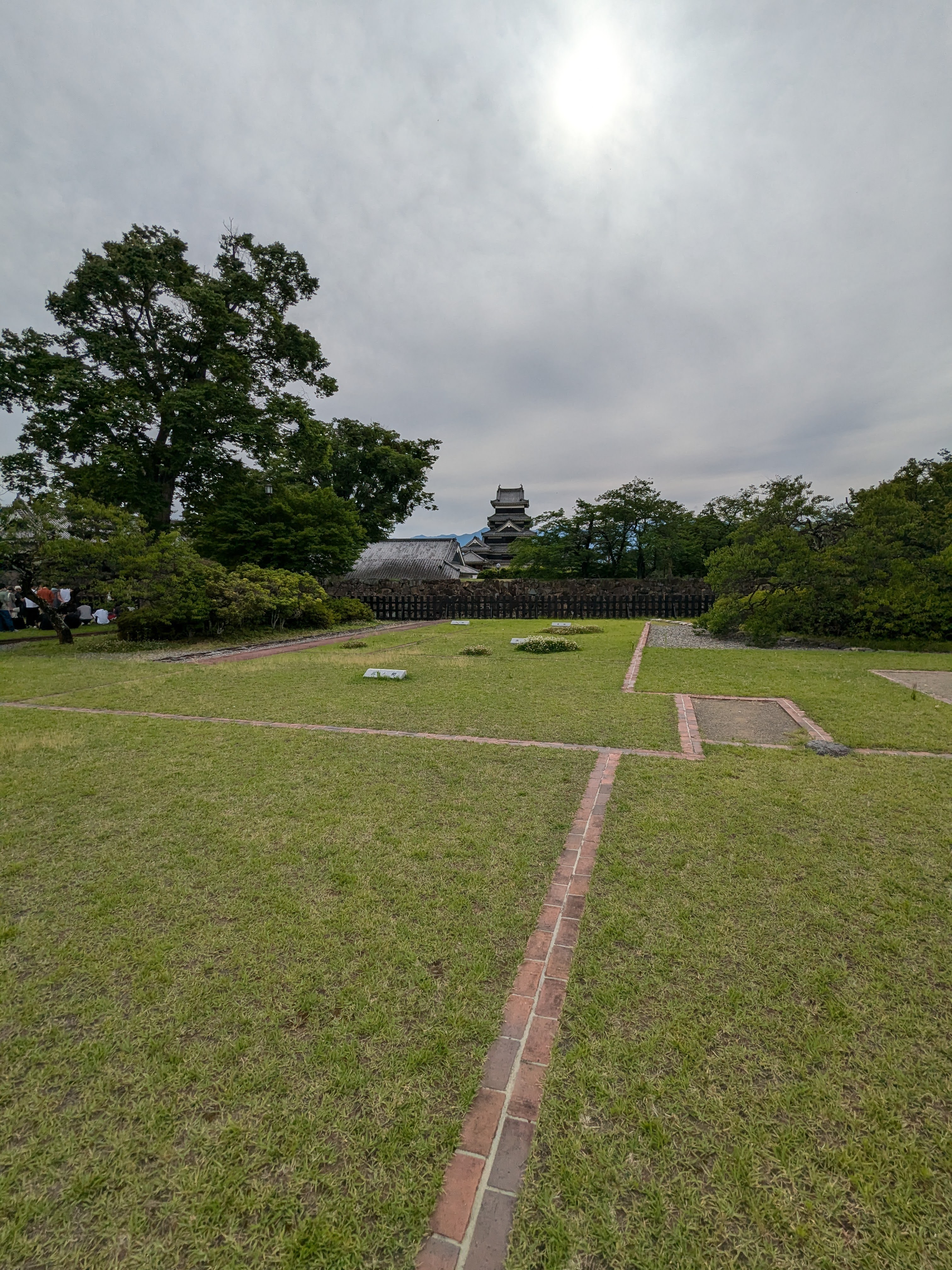
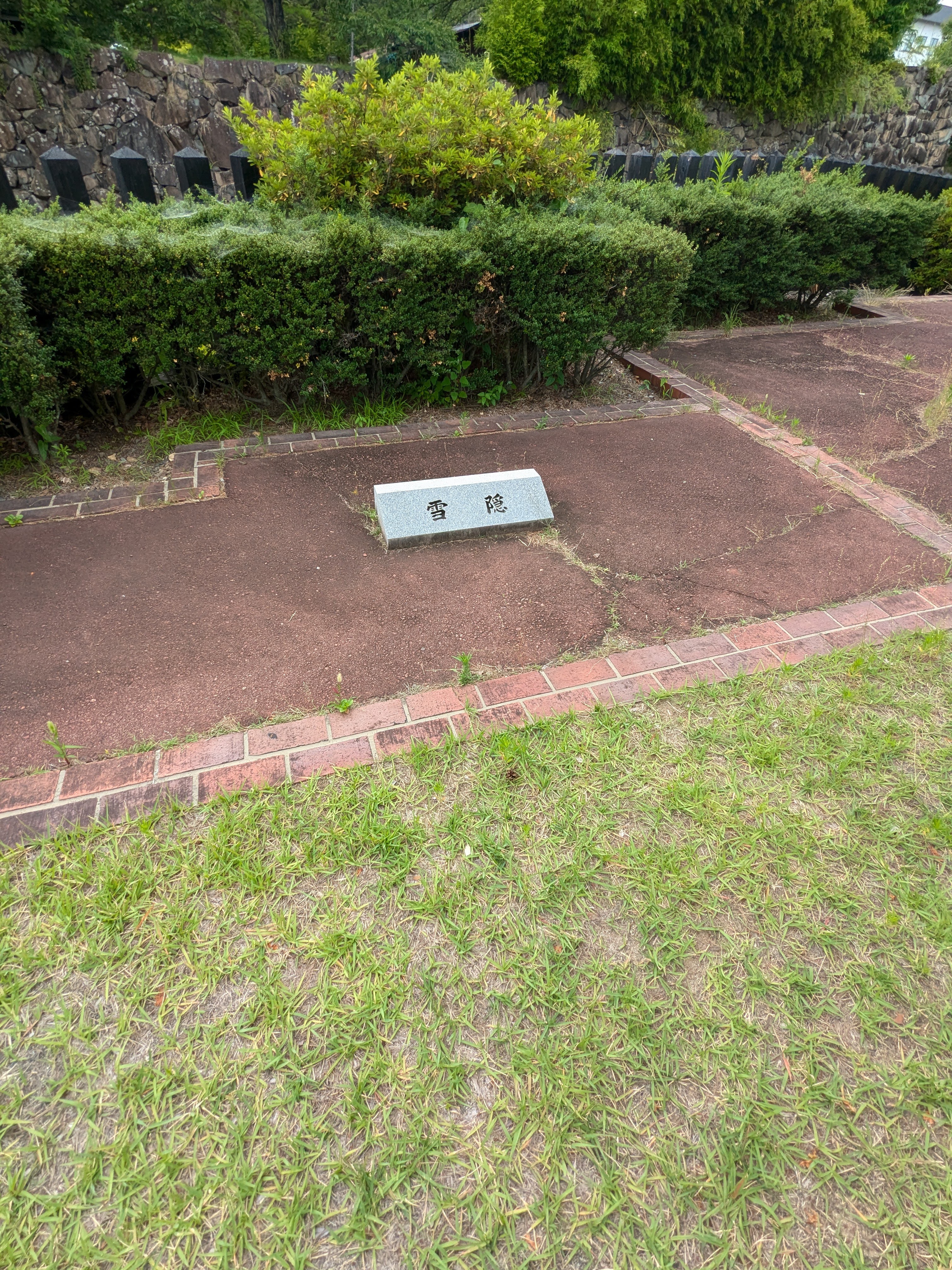
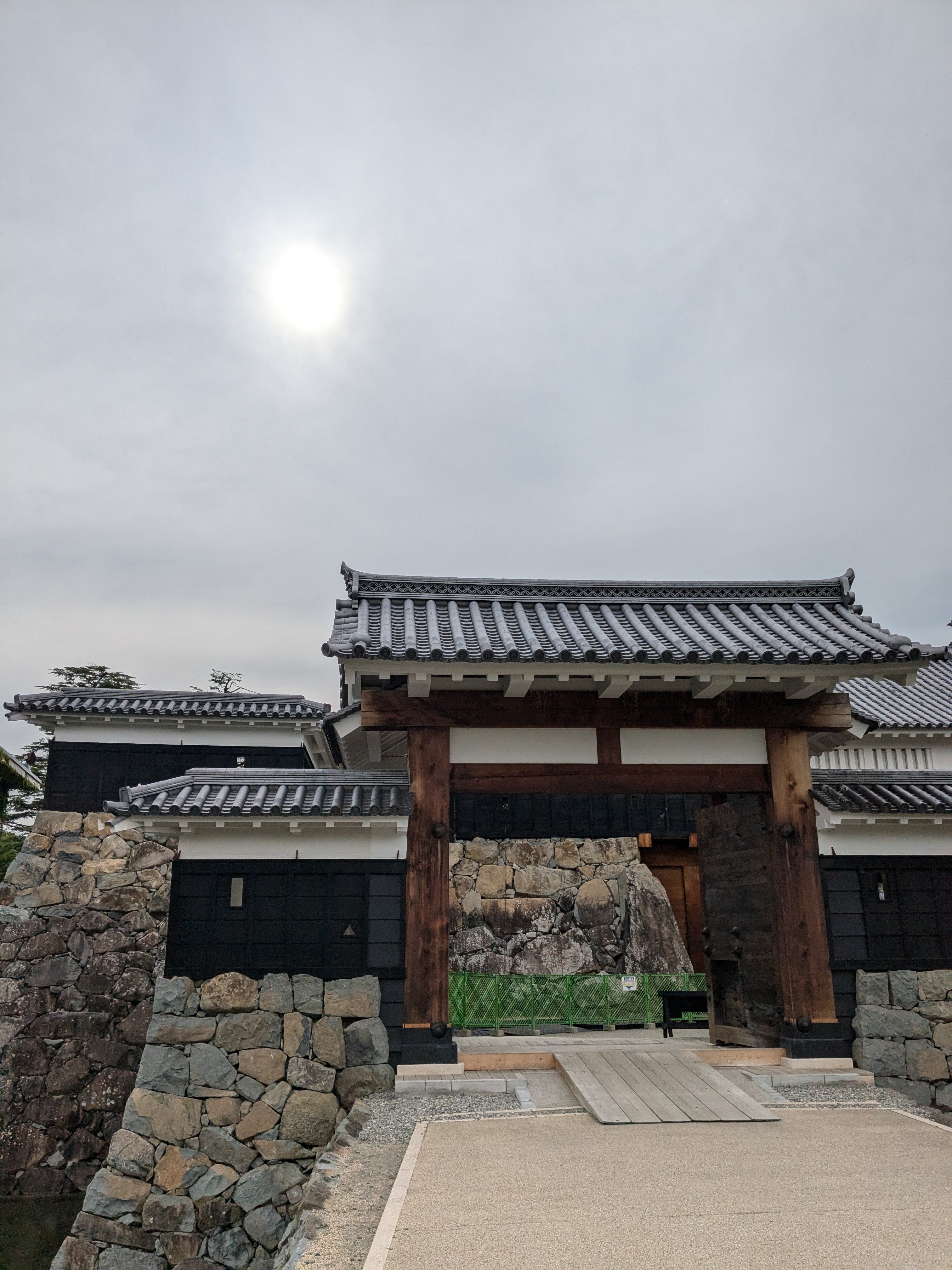
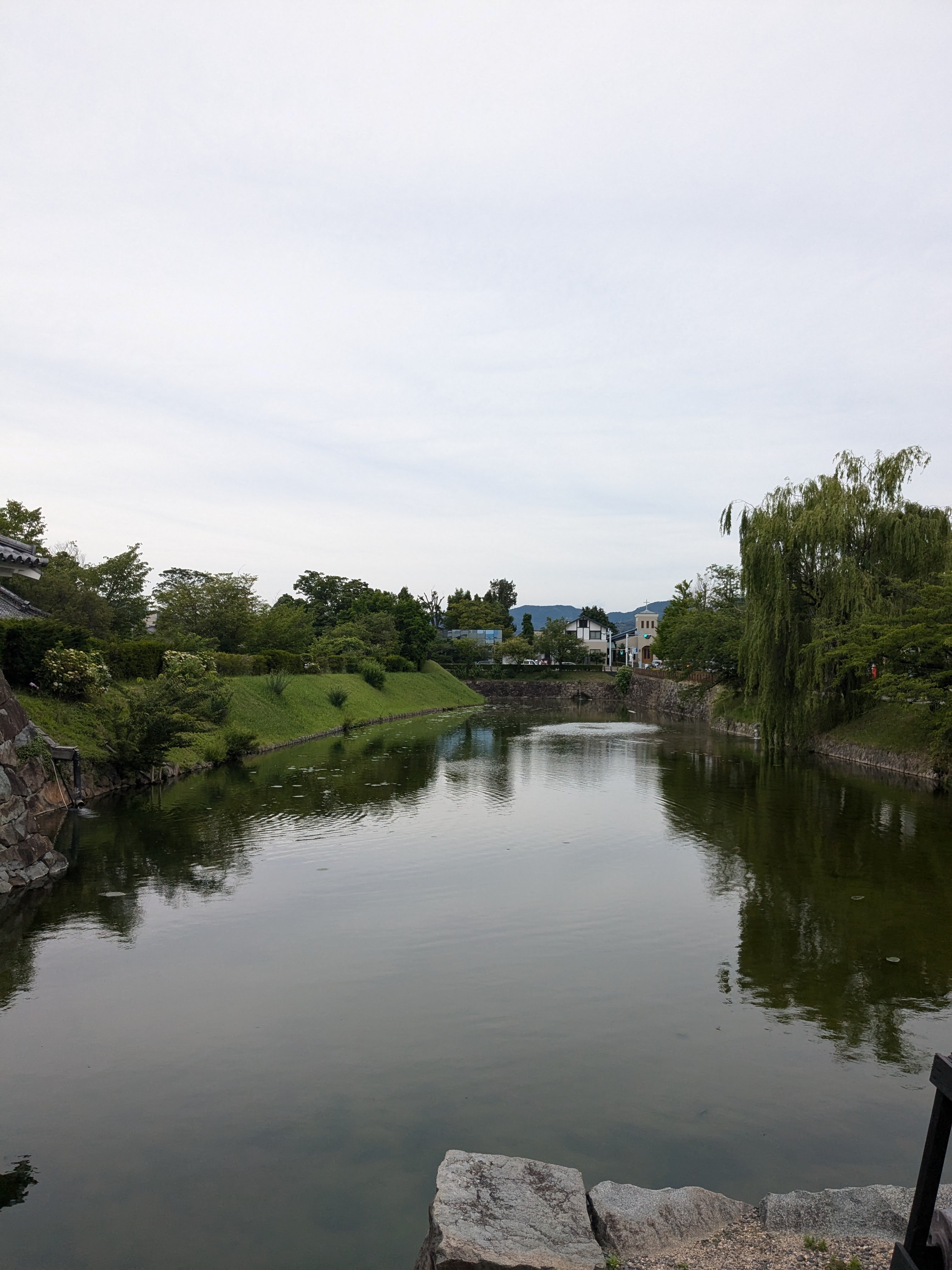
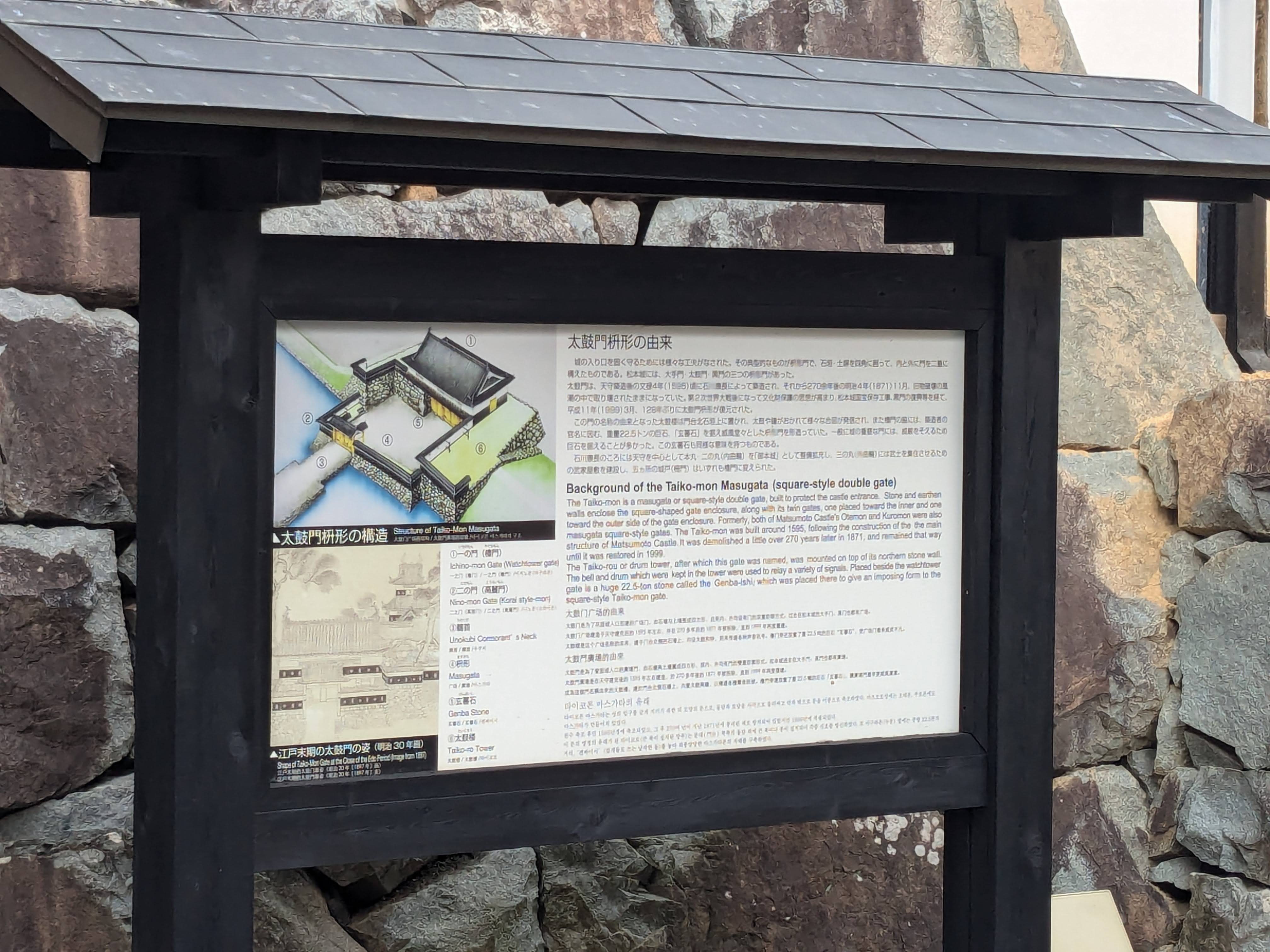
Passing through the reconstructed Taiko-Mon Gate and out to the outer moat, the full defensive depth of the castle becomes physical — the outer moat, the gate, the inner moat, the walls, the keep. A lot of thought went into making this place hard to attack.
Castle Town: Nawate Street and Nakacho Street
After the castle, I walked along the Metoba River. Stone embankments, clear water, mountains visible beyond. More quiet than the tourist areas — a real local riverbank.
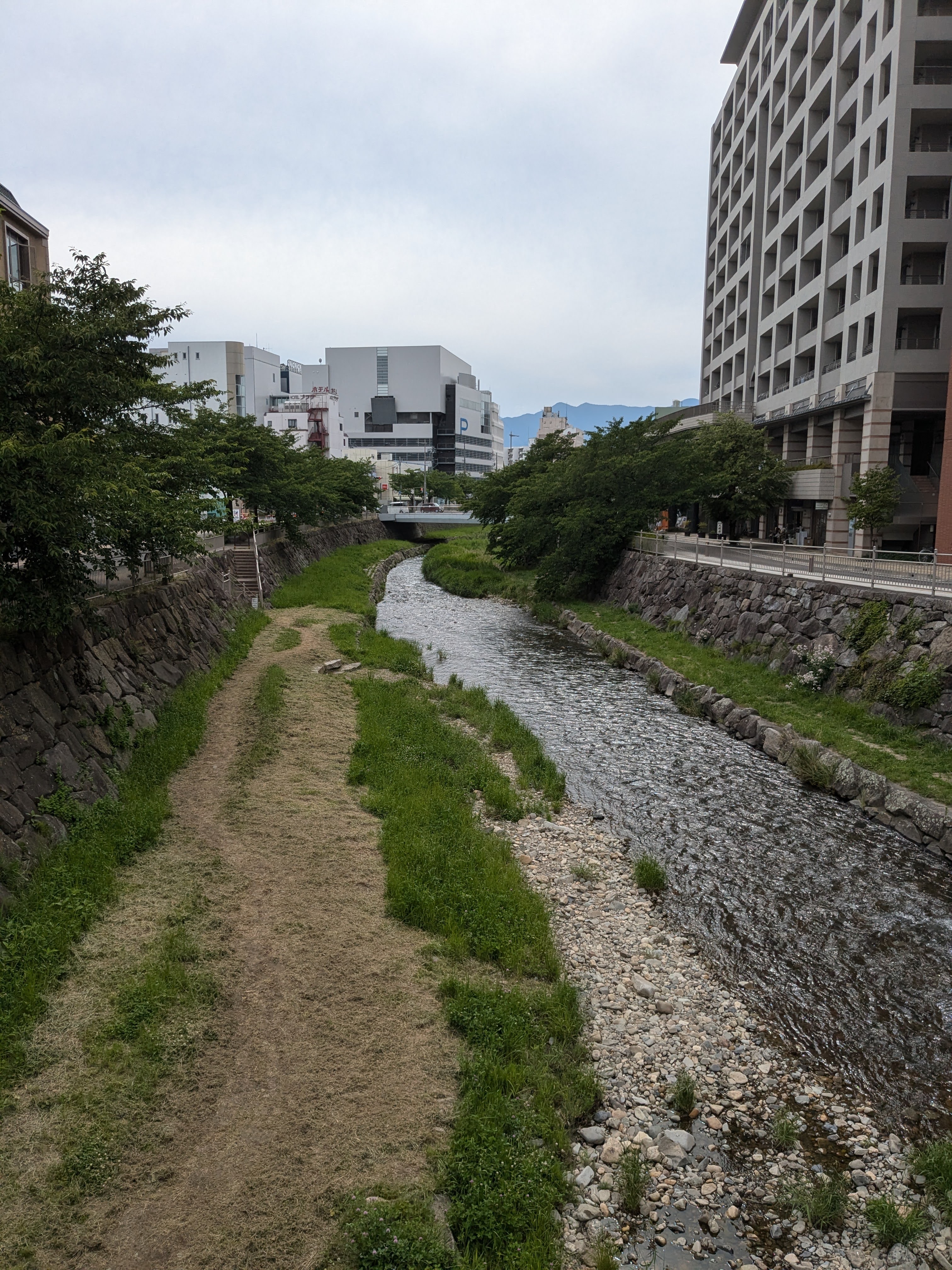
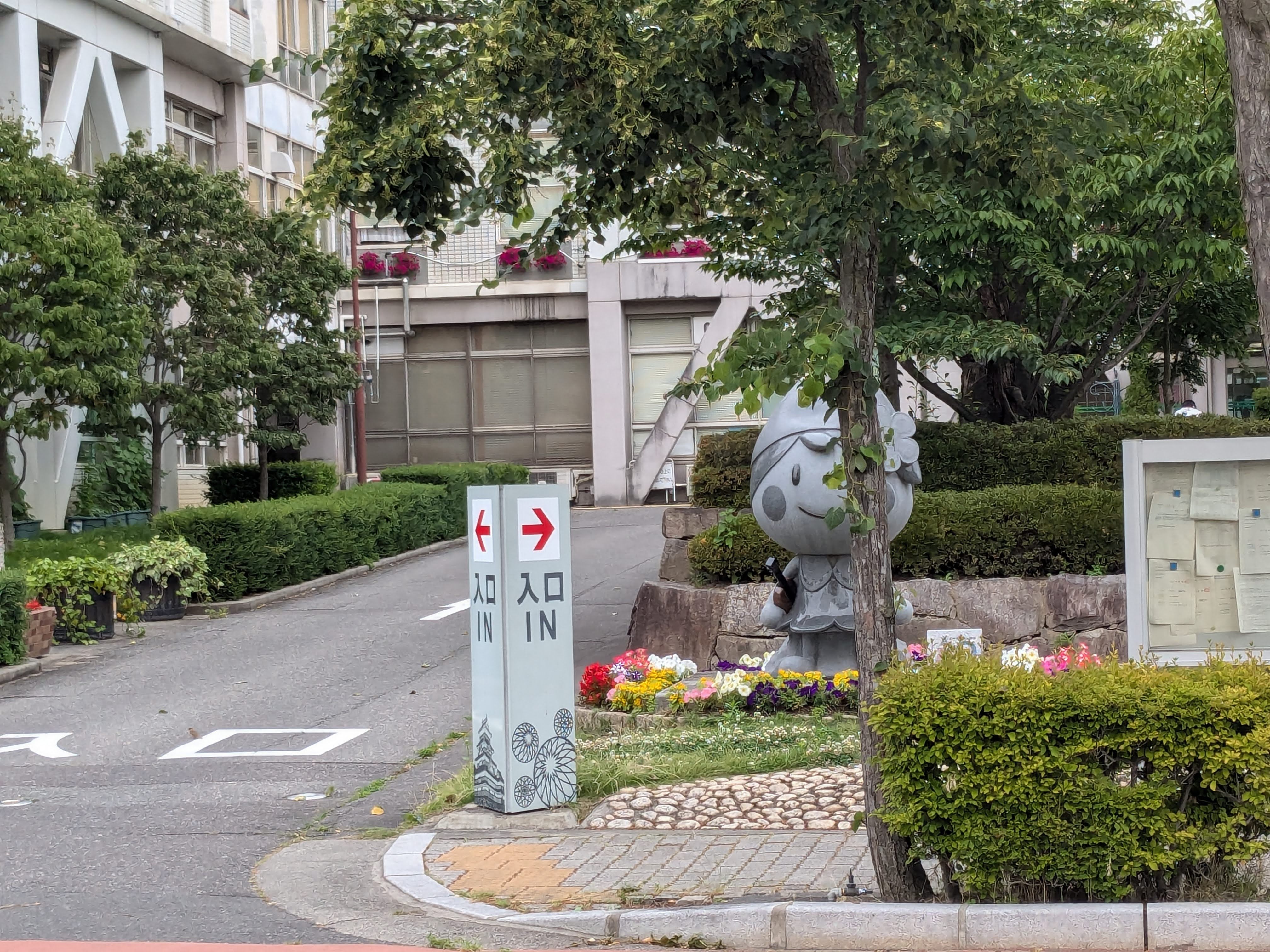
Nawate Street starts at a cute frog mascot statue. The small shopping street along the river is themed around frogs — frog goods shops, frog snacks. Kitschy but charming.
Nakacho Street has a completely different atmosphere: white-plastered kurazukuri (storehouse-style) buildings in a row. Folk crafts, ceramics, local food. This is not a theme park “old town” — these shops are genuinely active, selling real things to real locals.
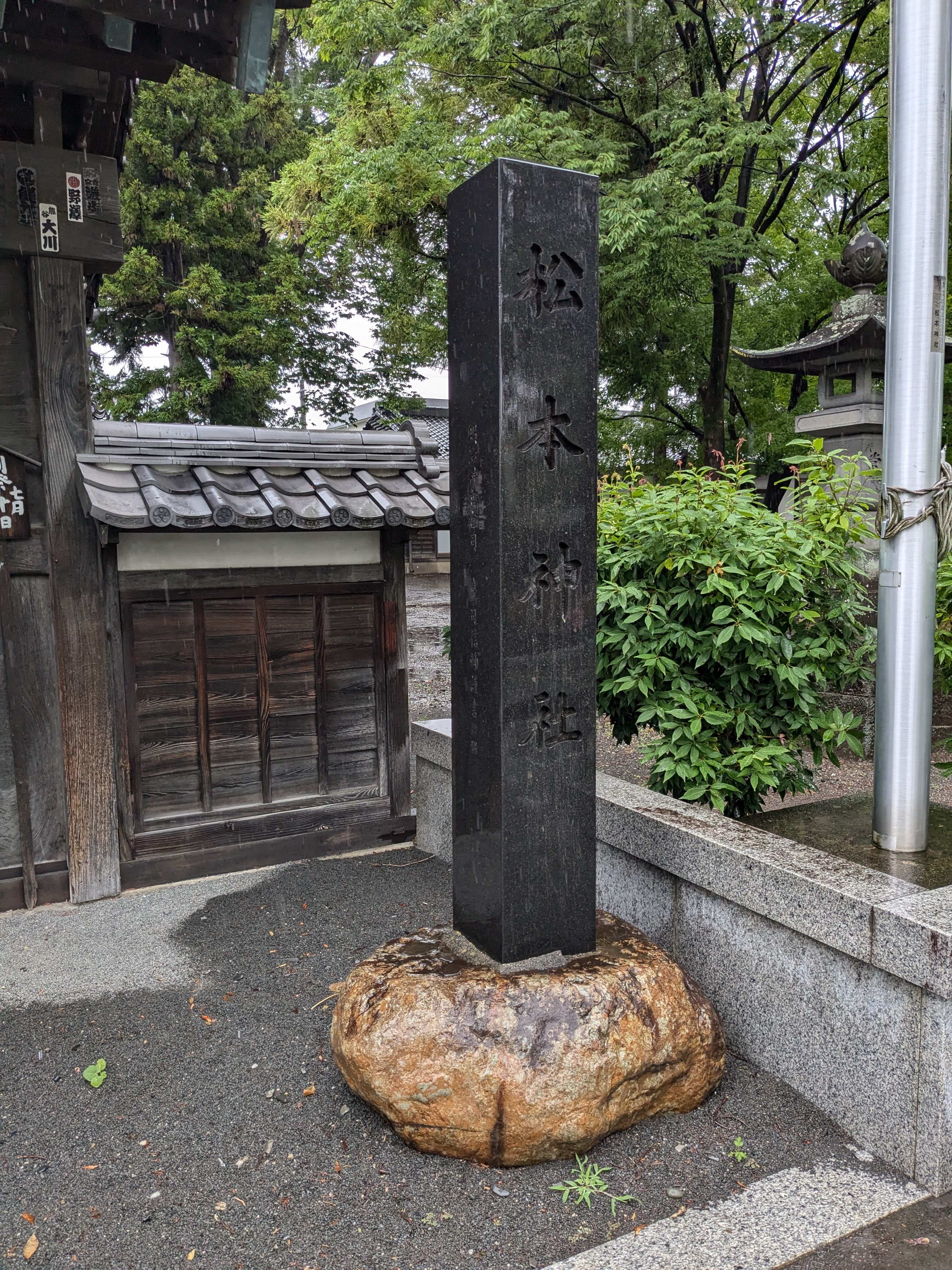
Yotsuhashira Shrine
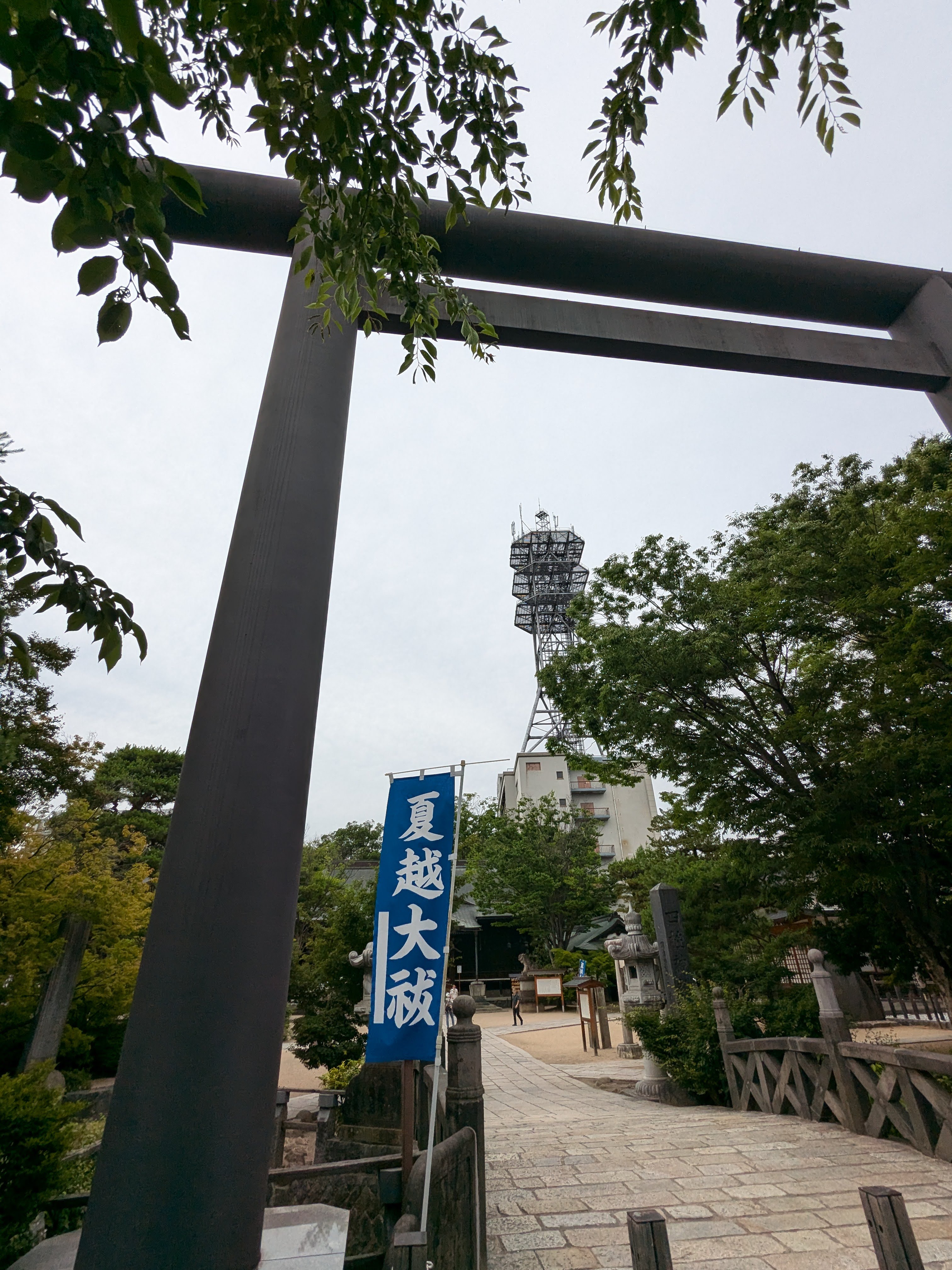
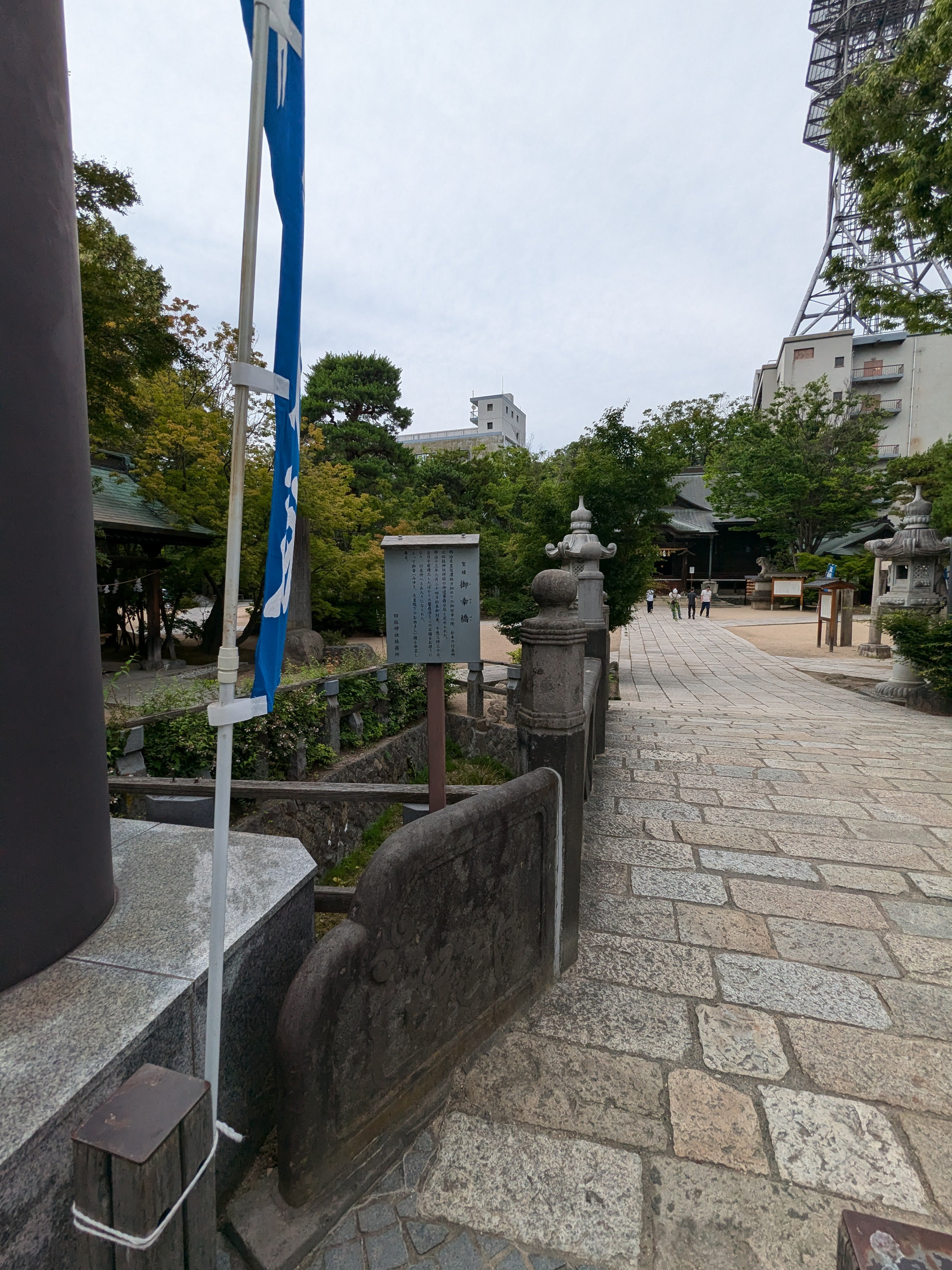
In the afternoon I visited Yotsuhashira Shrine (四柱神社), a short walk from the castle. “Yotsuhashira” means “four pillars” — the shrine is dedicated to four Shinto deities and is known locally as a place for good relationships and luck.
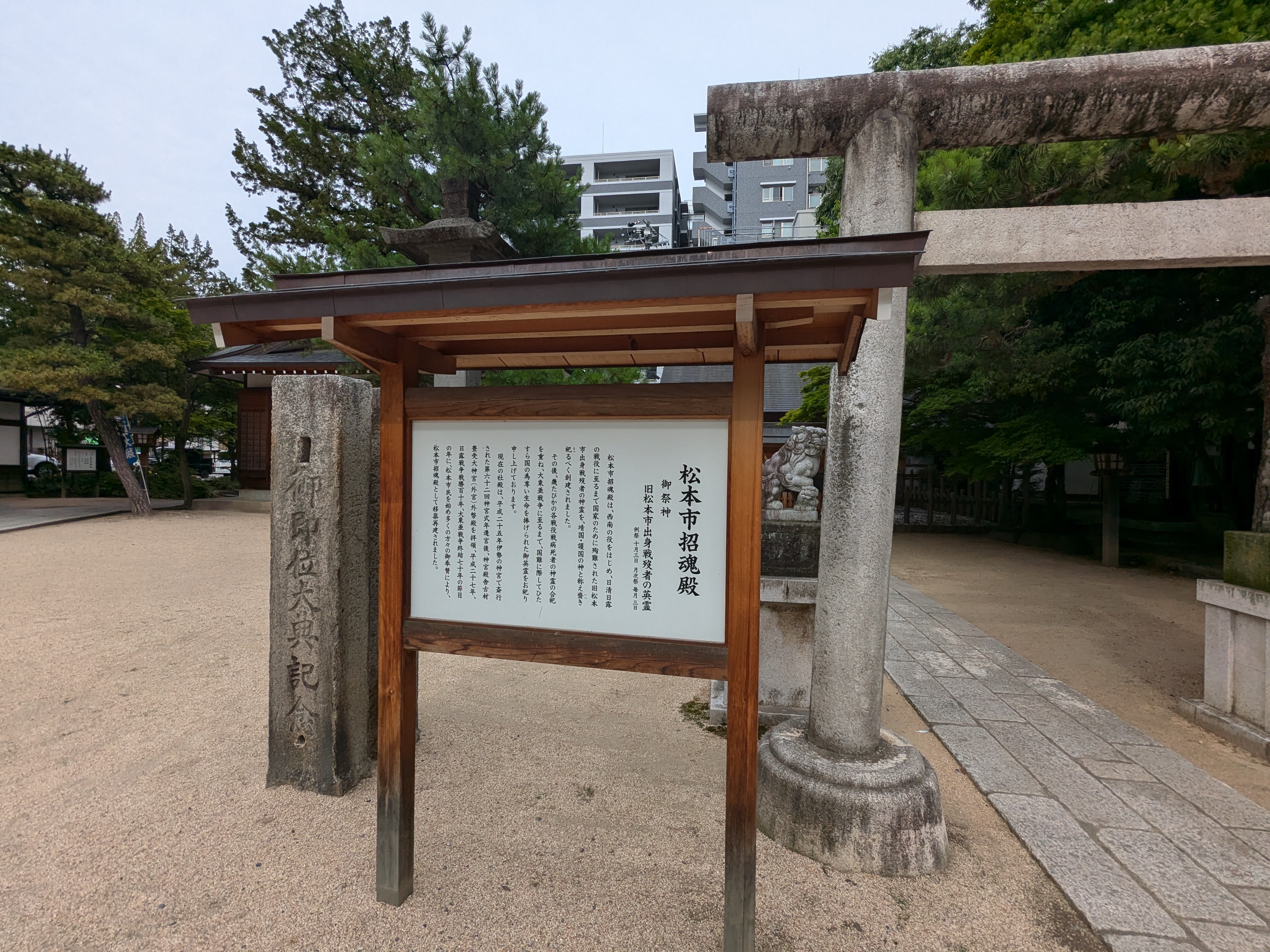
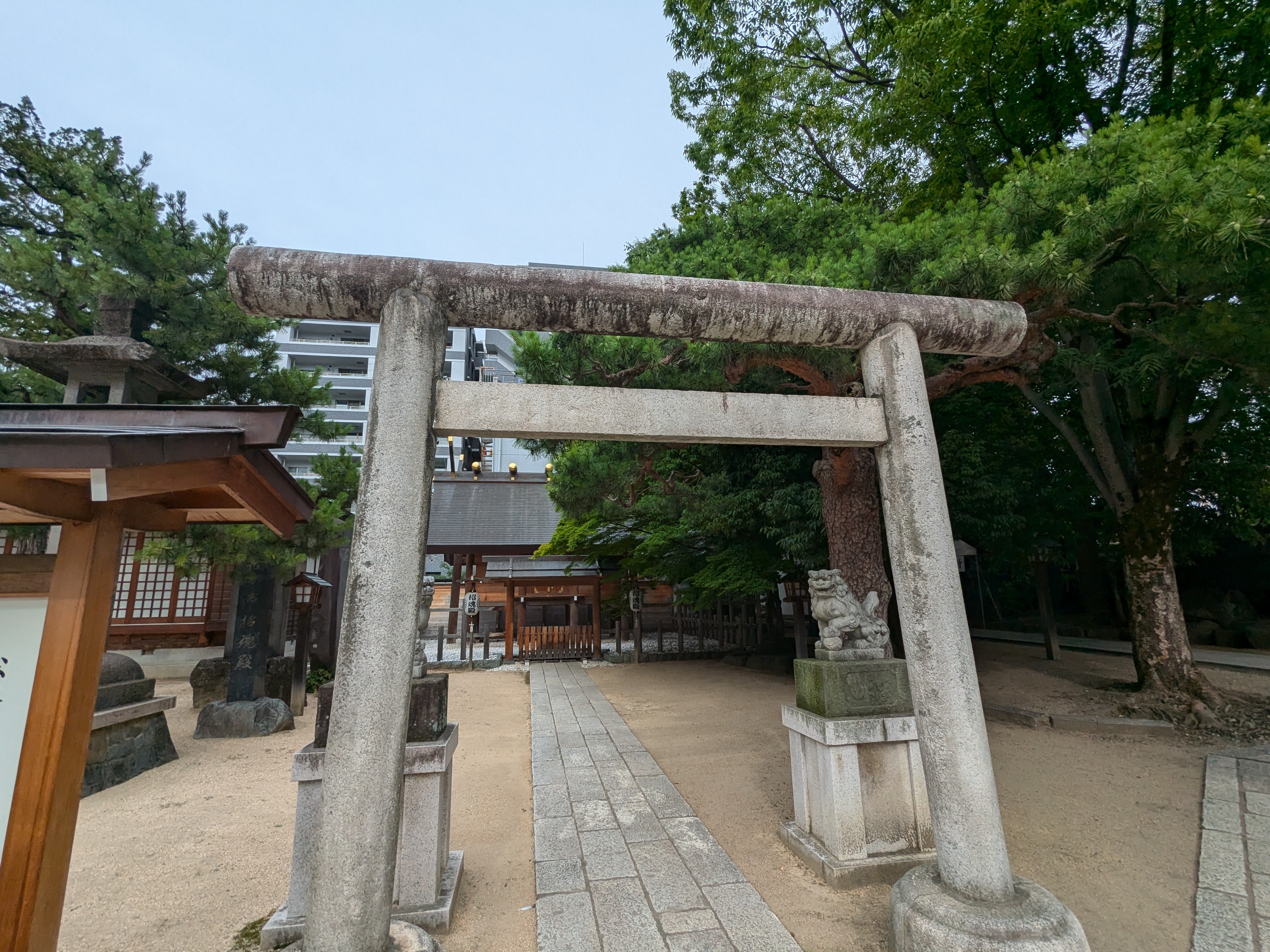
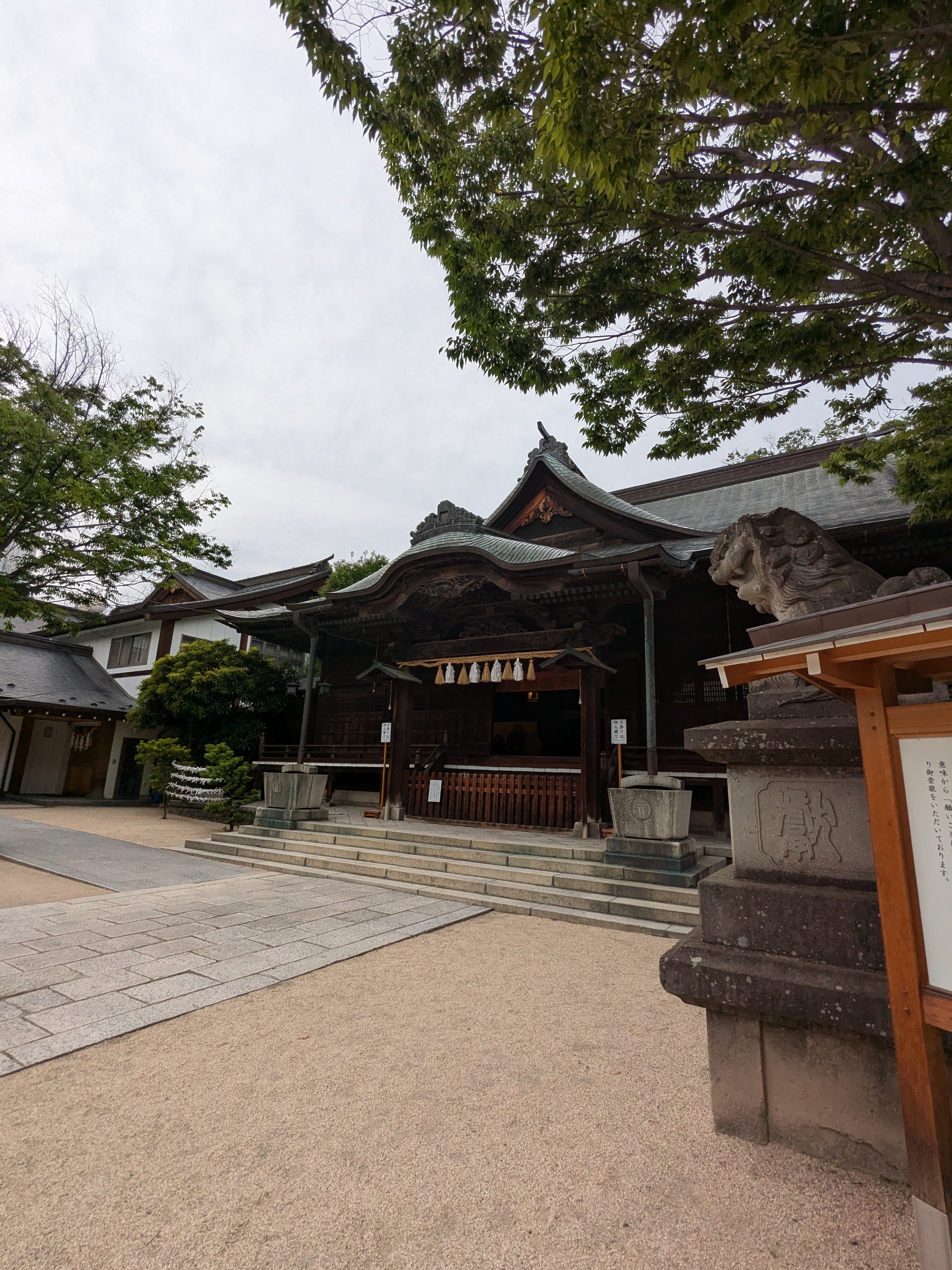
The grounds also contain the Matsumoto Shokon-den, a memorial for those who died in war. Within the same complex, small sub-shrines dedicated to Ebisu (the god of commerce) are tucked quietly in the corners. A lot of history compressed into a small space.
Evening: Real Shinshu Food
After check-in, I went out into Matsumoto at night.
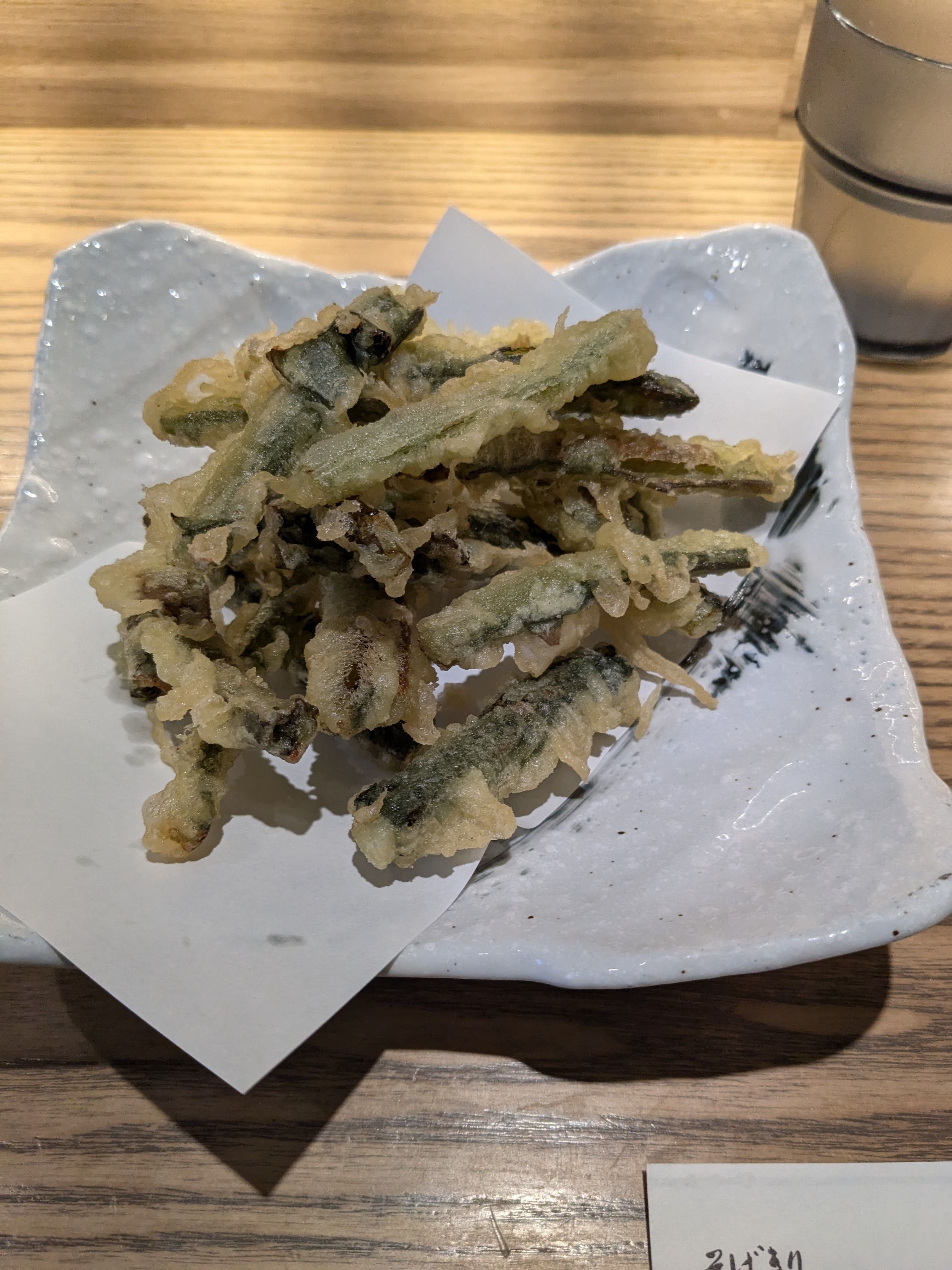
At a local izakaya, I ordered mountain vegetable tempura (sansai no tempura). The mountain vegetables — harvested from the Shinshu highlands — had a fragrance I’d never encountered in Tokyo supermarkets. When my chopsticks broke the batter, I could smell the mountain.
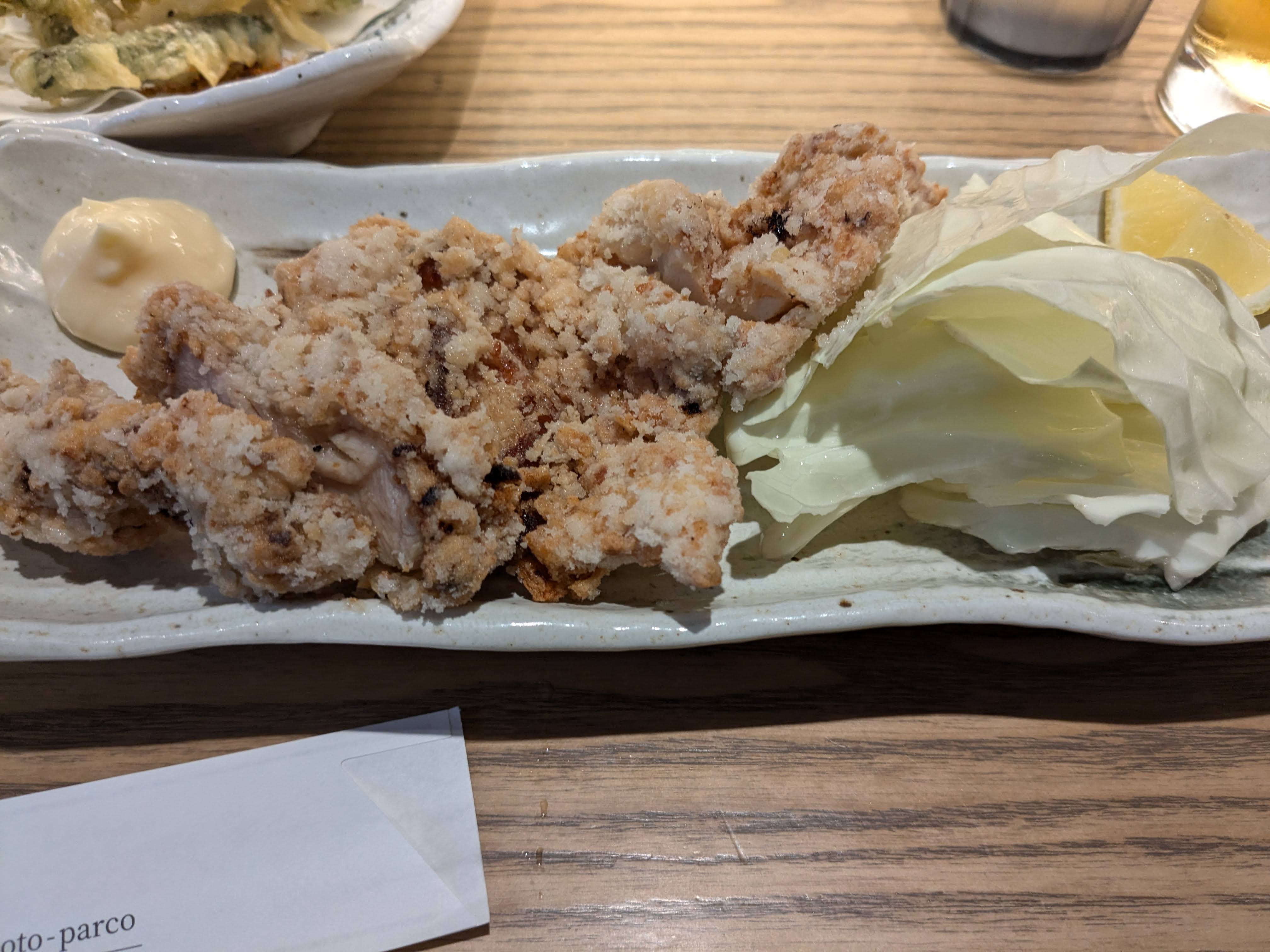
Then Sanzoku-yaki — the local specialty. Chicken thigh marinated in garlic soy sauce and deep-fried in a bold style. The name comes from an old pun: “bandits (山賊) steal (取る) things” — and the dish takes (取る) the chicken. One bite: garlic, umami, satisfaction.
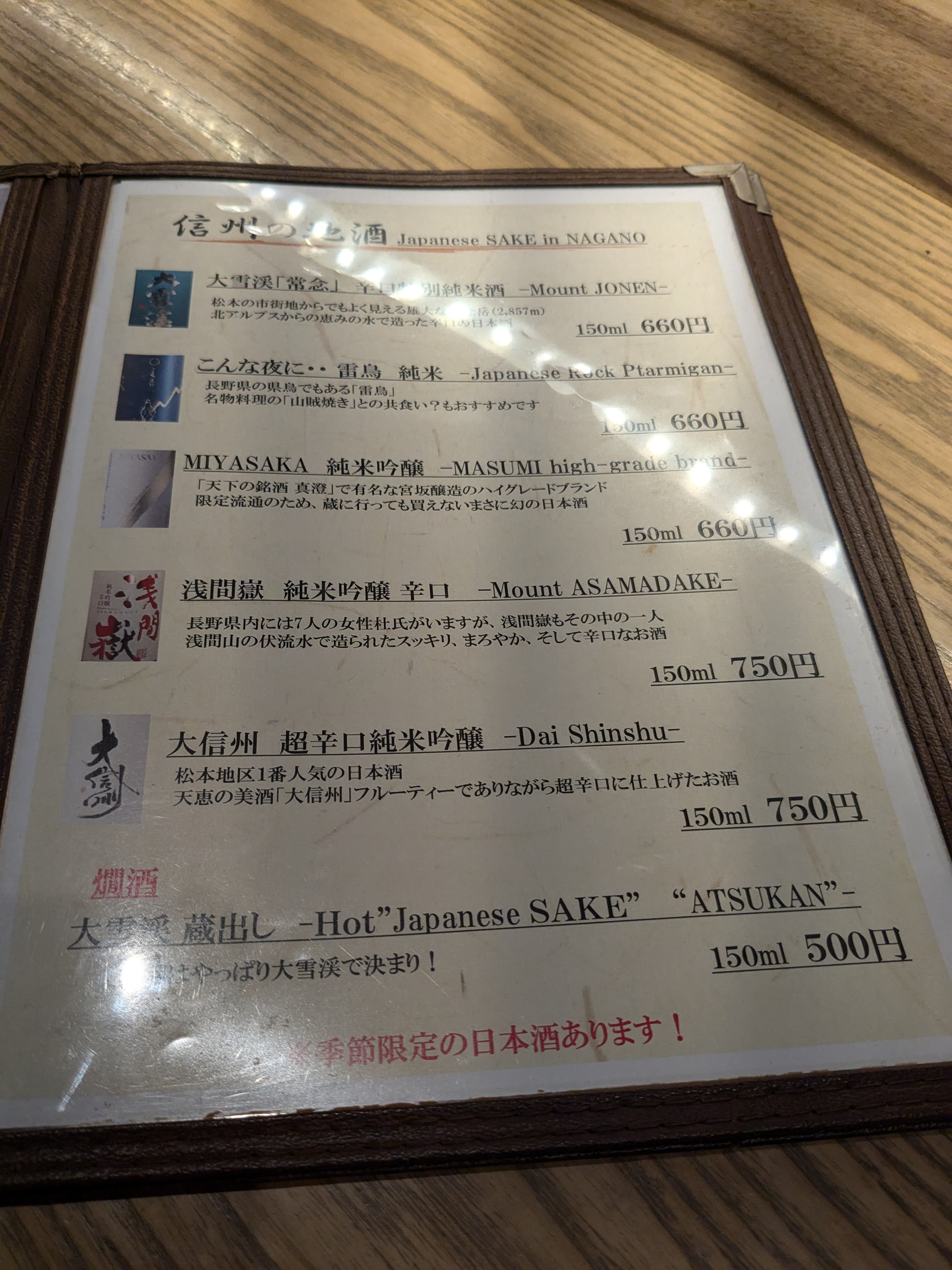
Shinshu soba to finish. The cold soba with local broth, then sobayu (the hot water the noodles were cooked in) served at the end. Simple, but this is the kind of food you cannot replicate in a city.

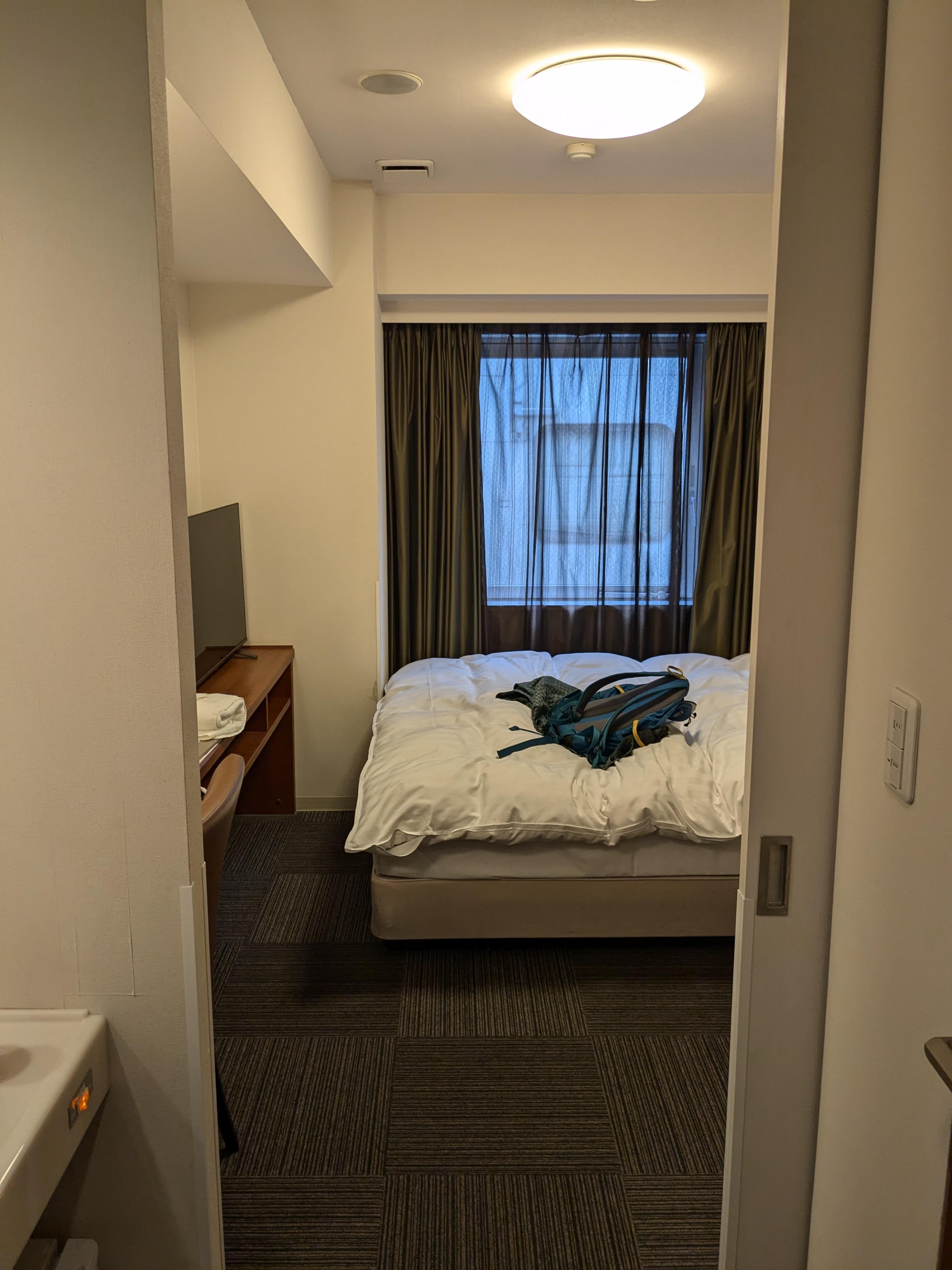
I stayed at Dormy Inn Matsumoto (天然温泉 梓の湯 ドーミーイン松本) — a clean business hotel just 5 minutes’ walk from Matsumoto Station, with a natural hot spring bath on the 9th floor. After a full day of walking, soaking in the onsen converted everything — the castle, the tempura, the soba — into one simple feeling: today was good. The next morning’s breakfast buffet also features local Shinshu dishes (more on that below).
🏨 Dormy Inn Matsumoto on Rakuten Travel (affiliate link)
▶ Check availability: Dormy Inn Matsumoto (rated 4.42 / 4,400+ reviews)
Day 2 Morning: Japanese Breakfast and a Rainy Walk
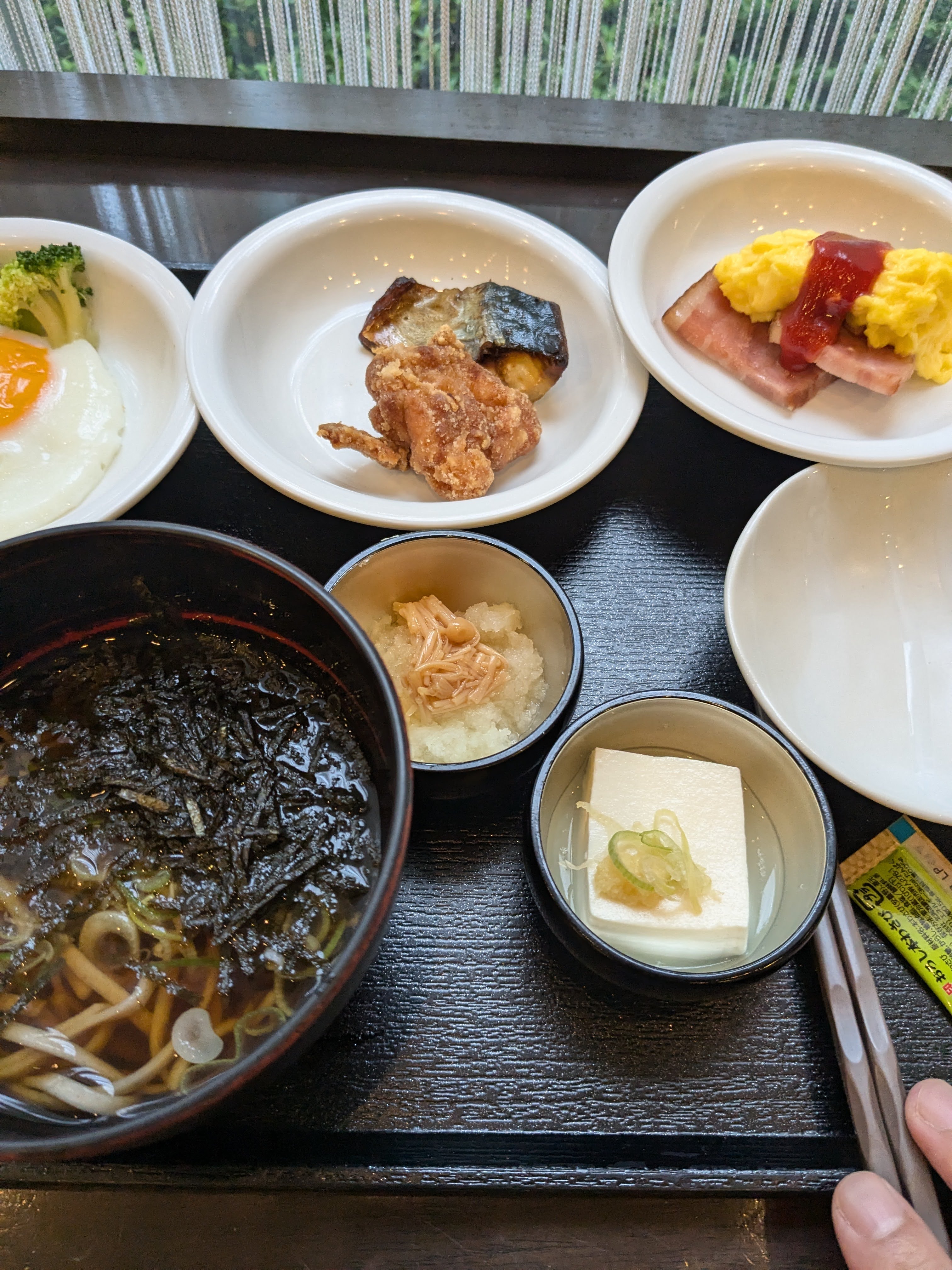
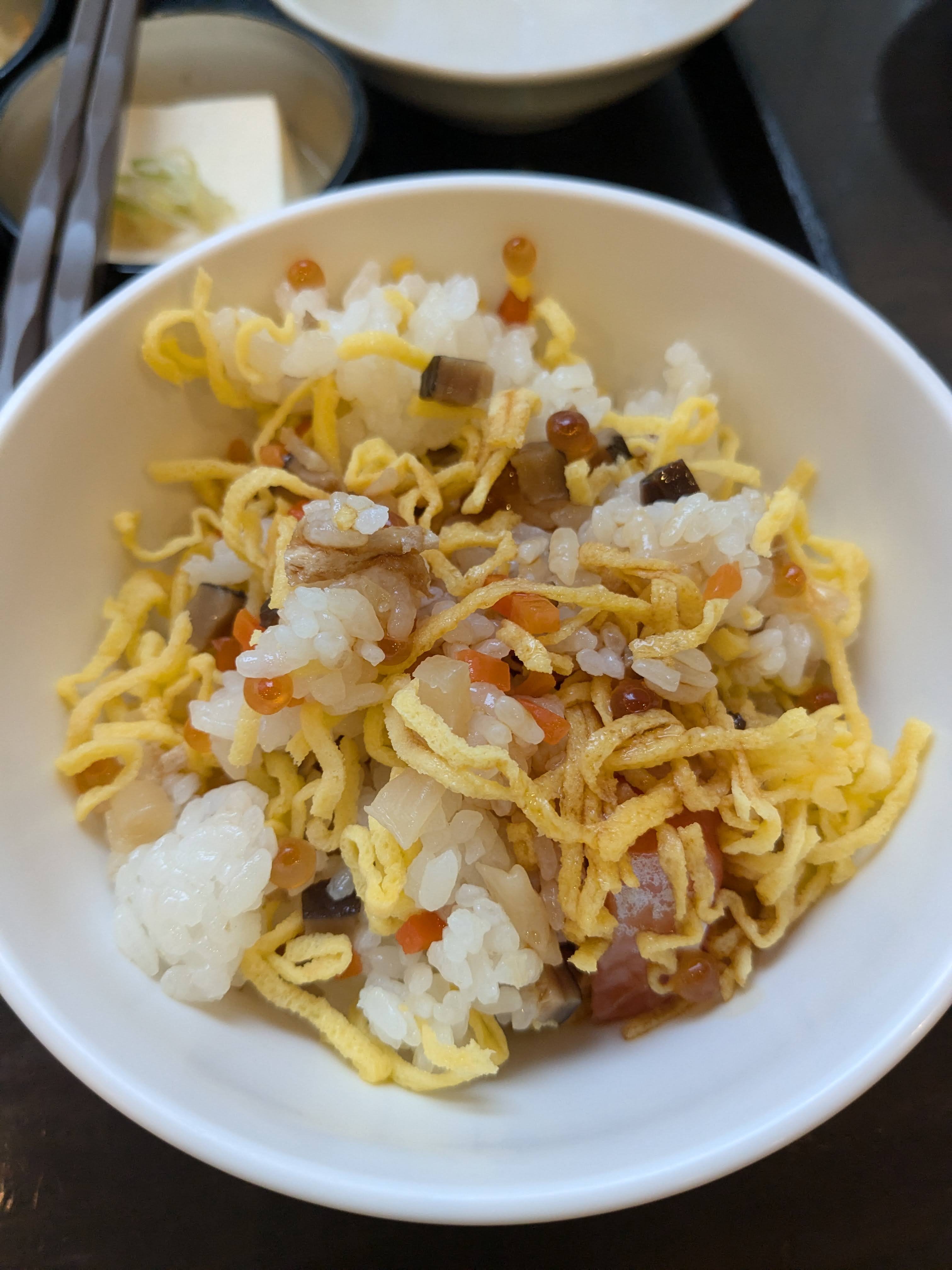
The hotel breakfast was excellent: mini Shinshu soba, grilled mackerel, scrambled eggs with ham, cold tofu, wasabi and ginger — plus a Shinshu mixed rice. A tray packed with Japanese flavors.
It was raining. I went out anyway.
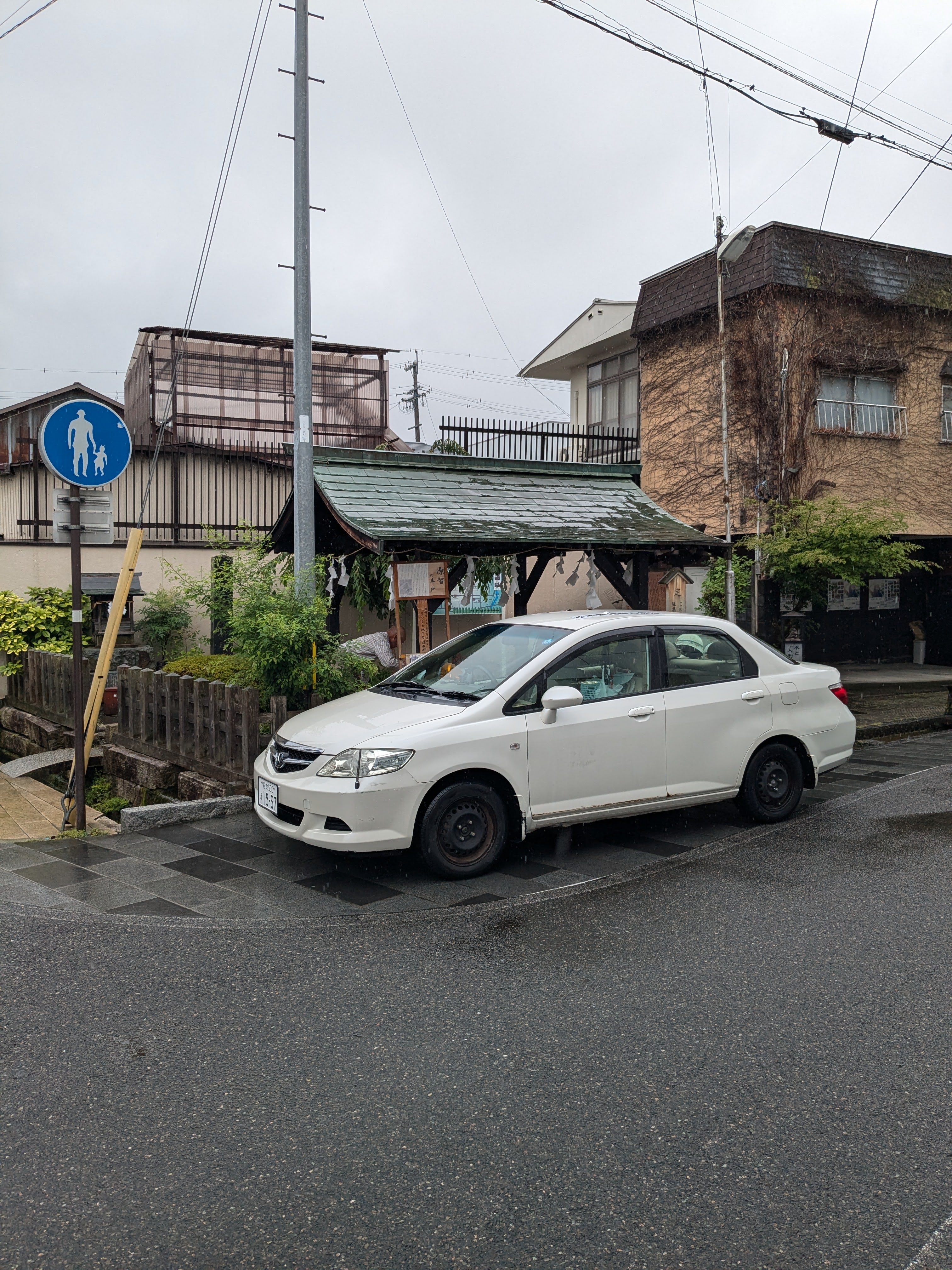
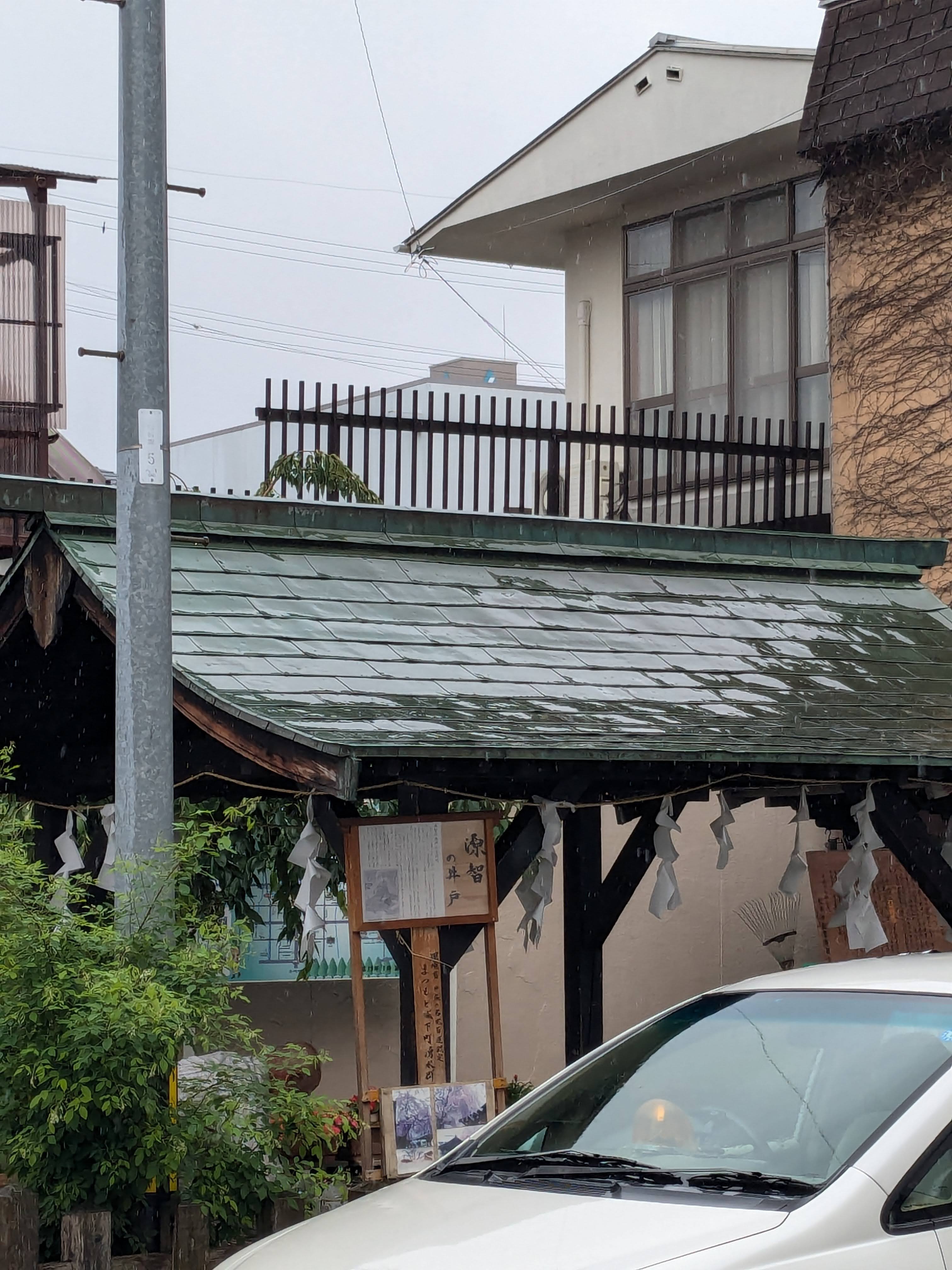
First stop: Genchi no Ido (源智の井戸), one of Matsumoto’s famous natural springs. The city has several “famous waters” (meisuido) that citizens have used since the Edo period. Reading the sign in the rain, I learned that this was a water town as much as a castle town.
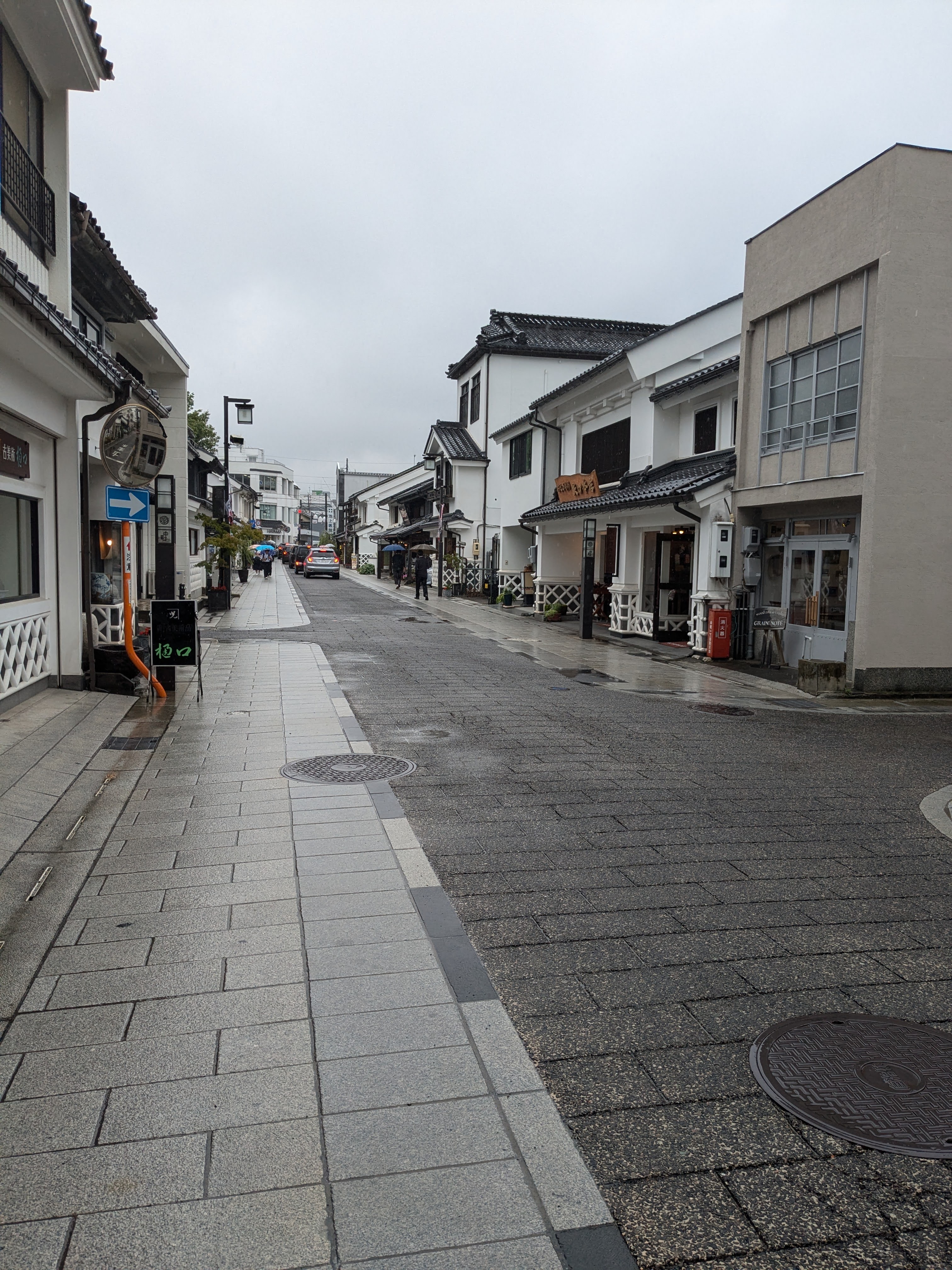
Then through Nakacho Street again in the rain. White plastered walls under a grey sky — a completely different mood from the day before. Quiet, no tourists, just the sound of rain on stone.
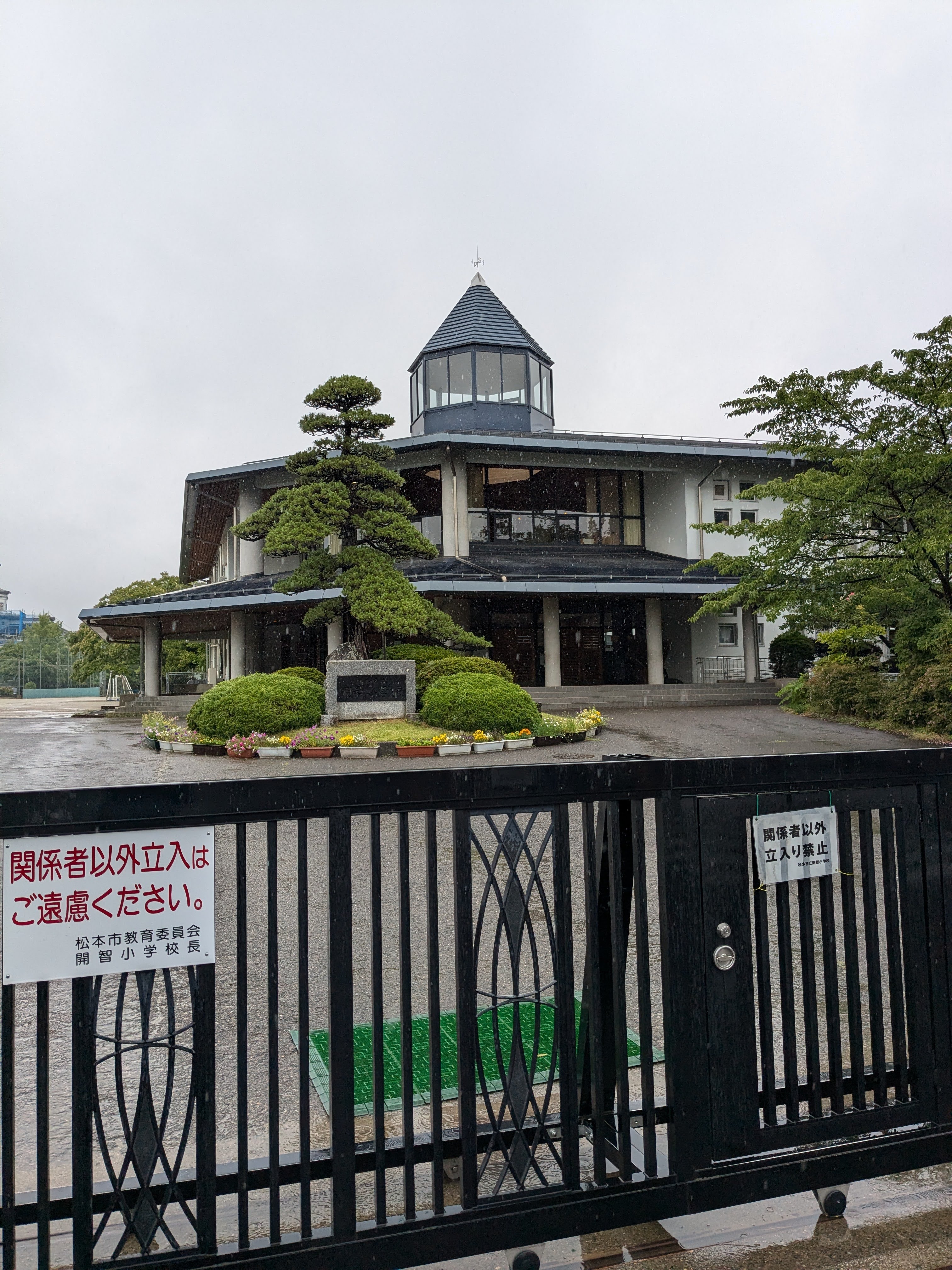
I passed the current Kaichi Elementary School — the living, active school that continues next to the famous historical Old Kaichi School building. History and the present side by side, very Matsumoto.
And then, without really deciding to, I was walking toward the castle again.
The morning castle is quiet. No crowds. The water in the moat mirrors the sky. After the rain, the black keep reflected perfectly in the still water.
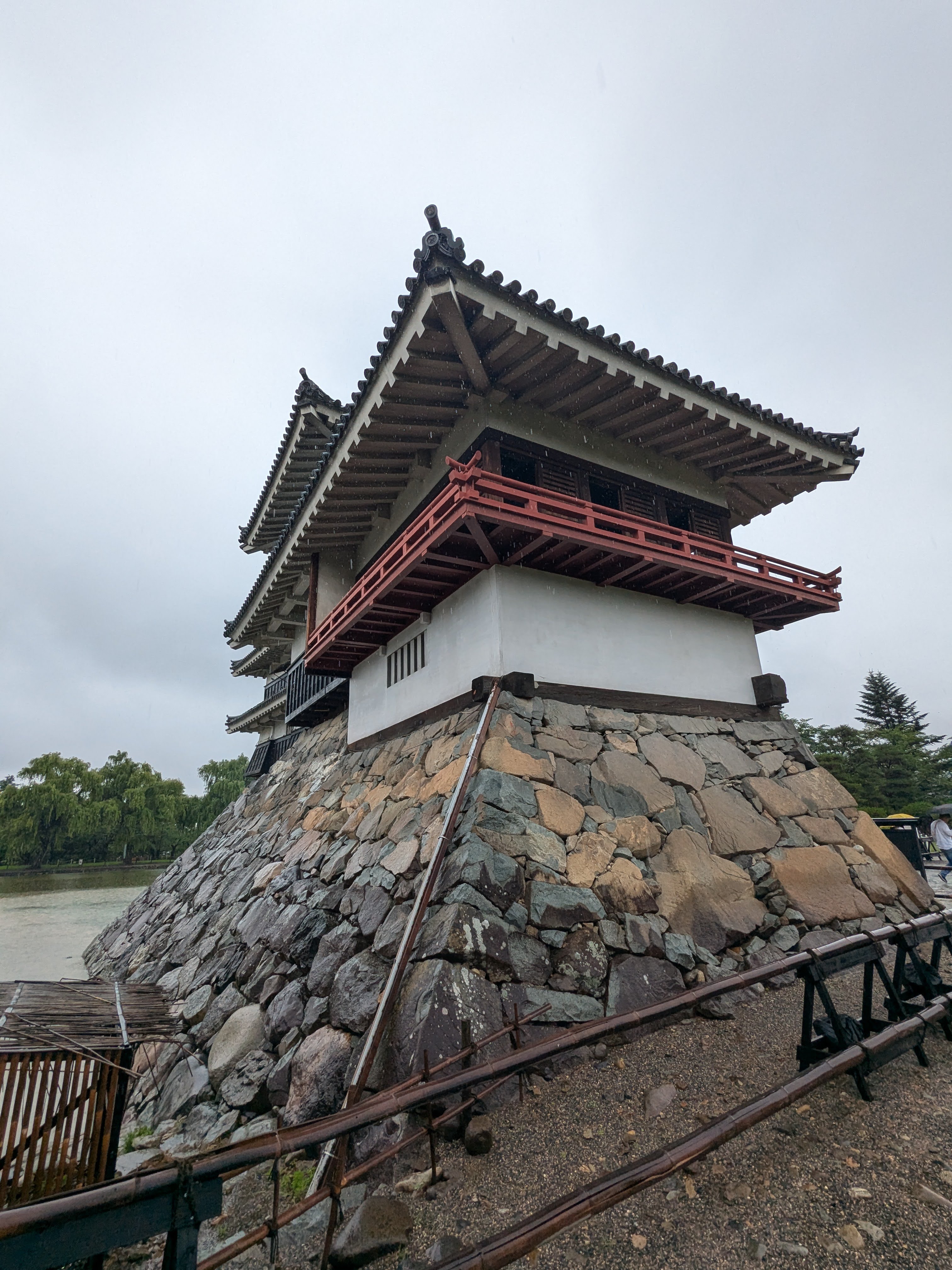
Day 2 Inside the Keep: Armor, Guns, and the Moon-Viewing Turret
The second time through, I read every exhibit panel.
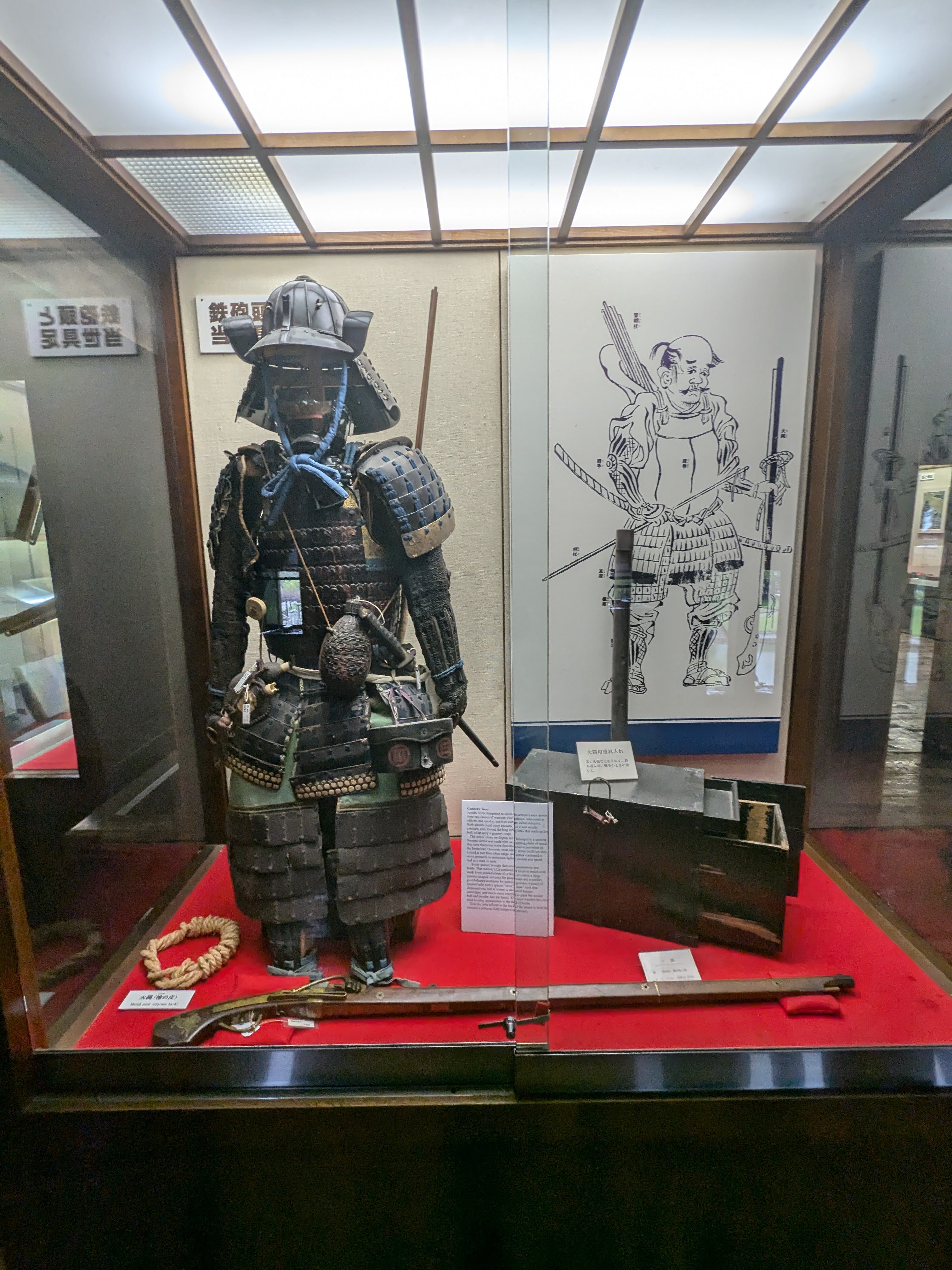
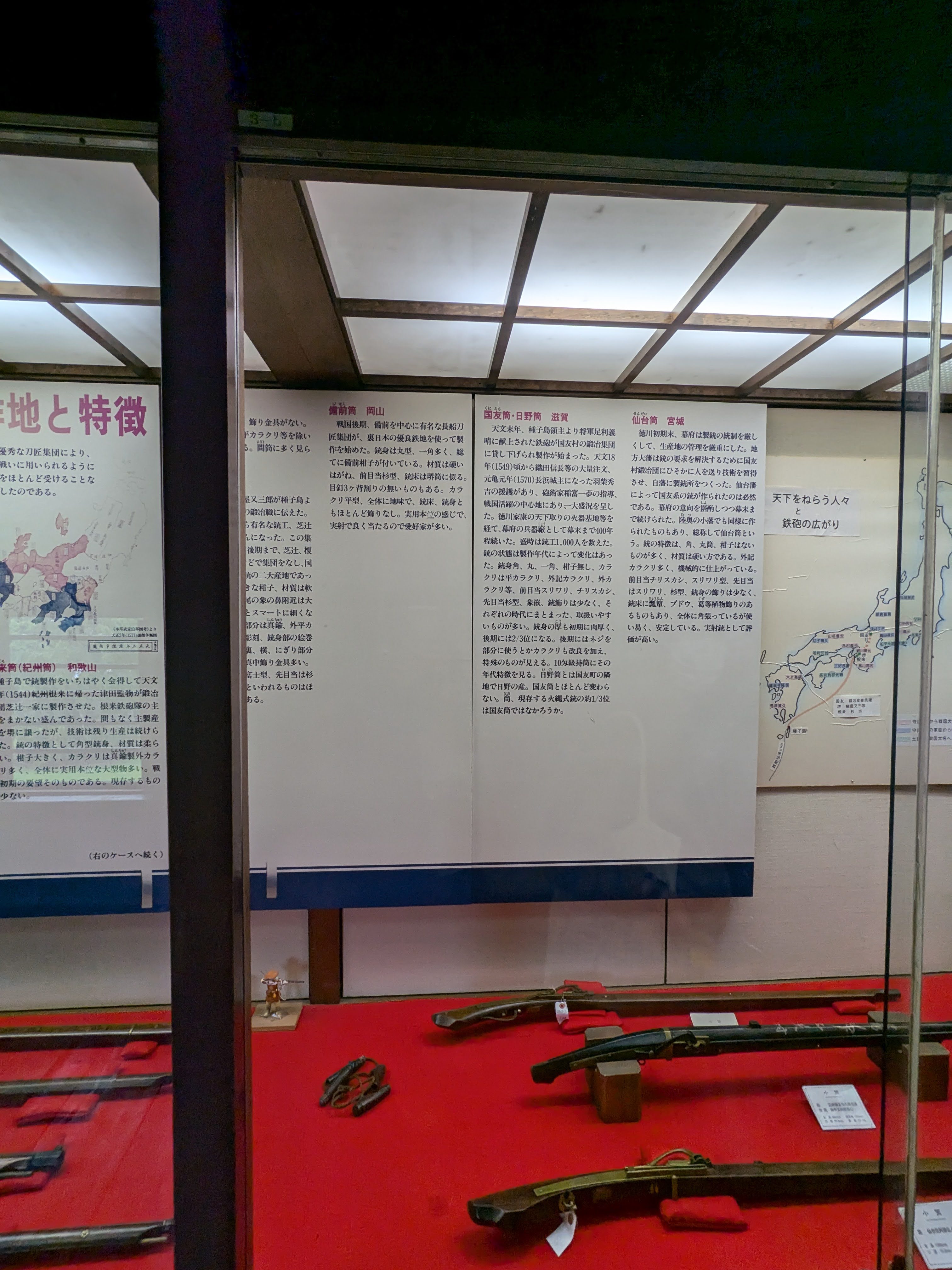
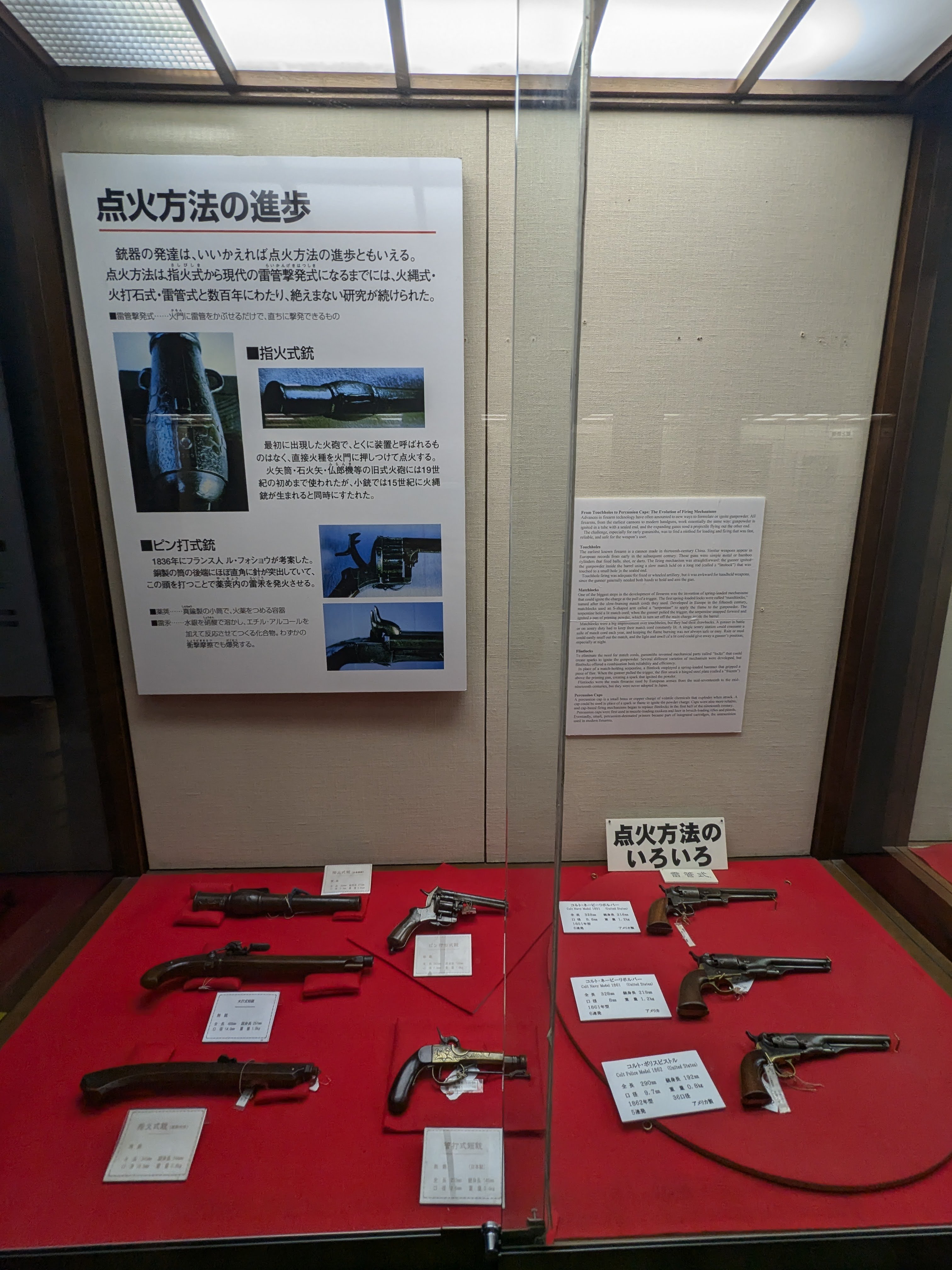
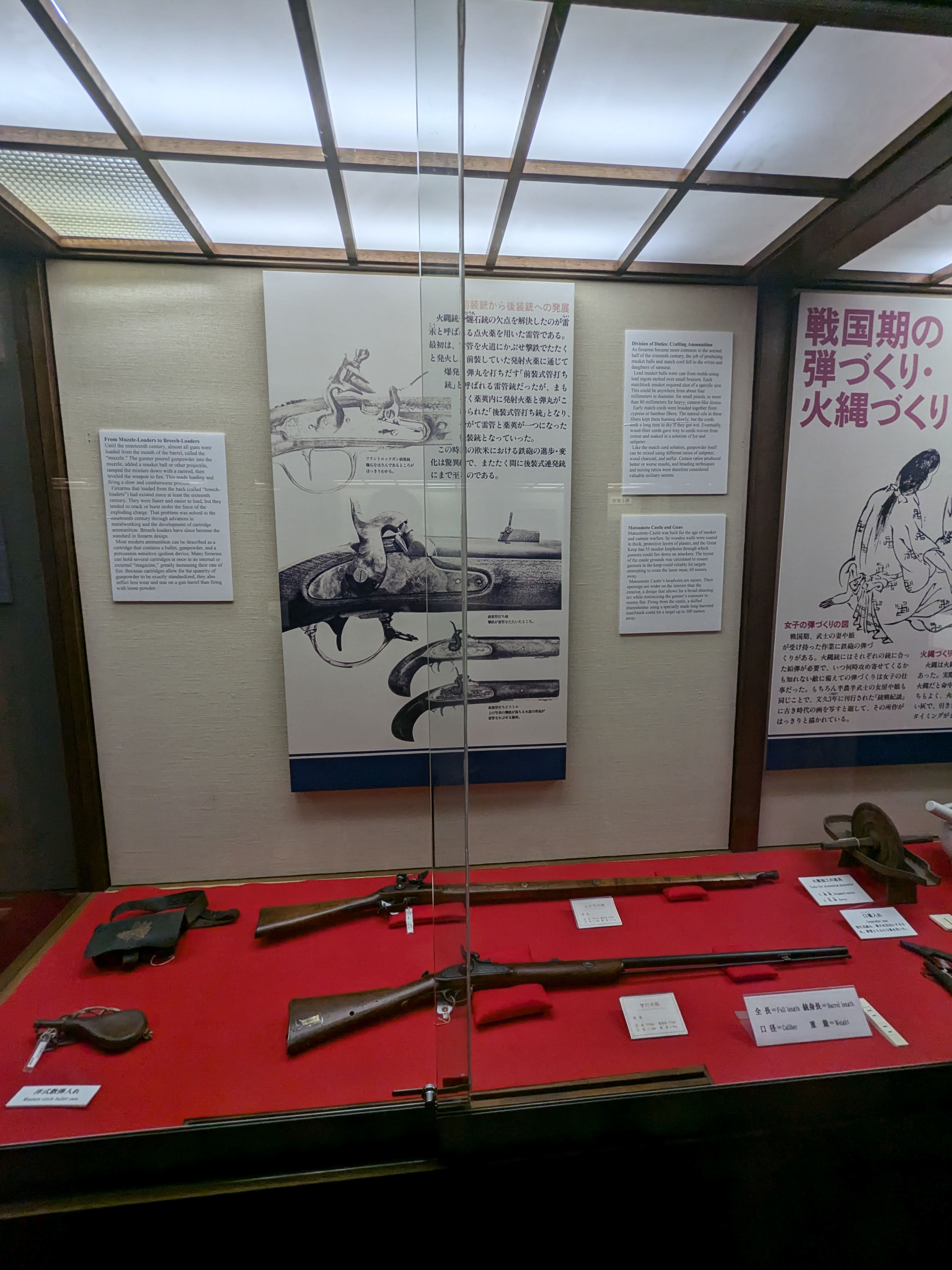
The matchlock gun (hinawajū) collection is staggering. Dozens of guns over a meter long. Matsumoto Castle was historically known as a “gun castle” (鉄砲蔵 teppogura), and the exhibits make this very clear: display panels explaining different bullet types (single, double, triple, chain shots), gunpowder manufacturing (saltpeter, sulfur, charcoal), gunners’ tools, bullet molds, and powder containers in bamboo, ox horn, and wood.
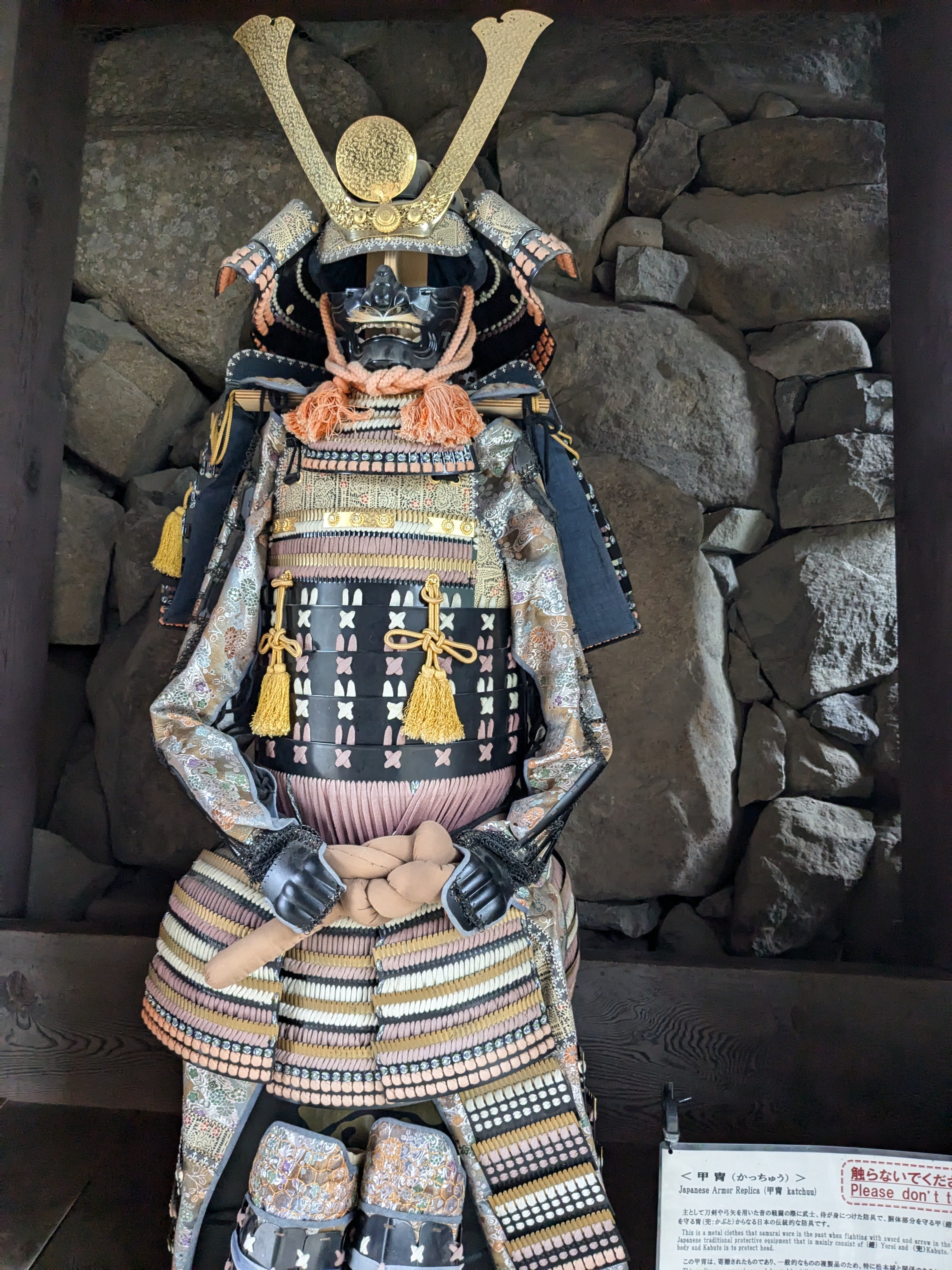
Standing in front of a suit of armor — Teppodoutougusoku, a design made to withstand musket fire — with a matchlock gun beside it, I had the strange sensation that the samurai wearing it had just stepped away for a moment.
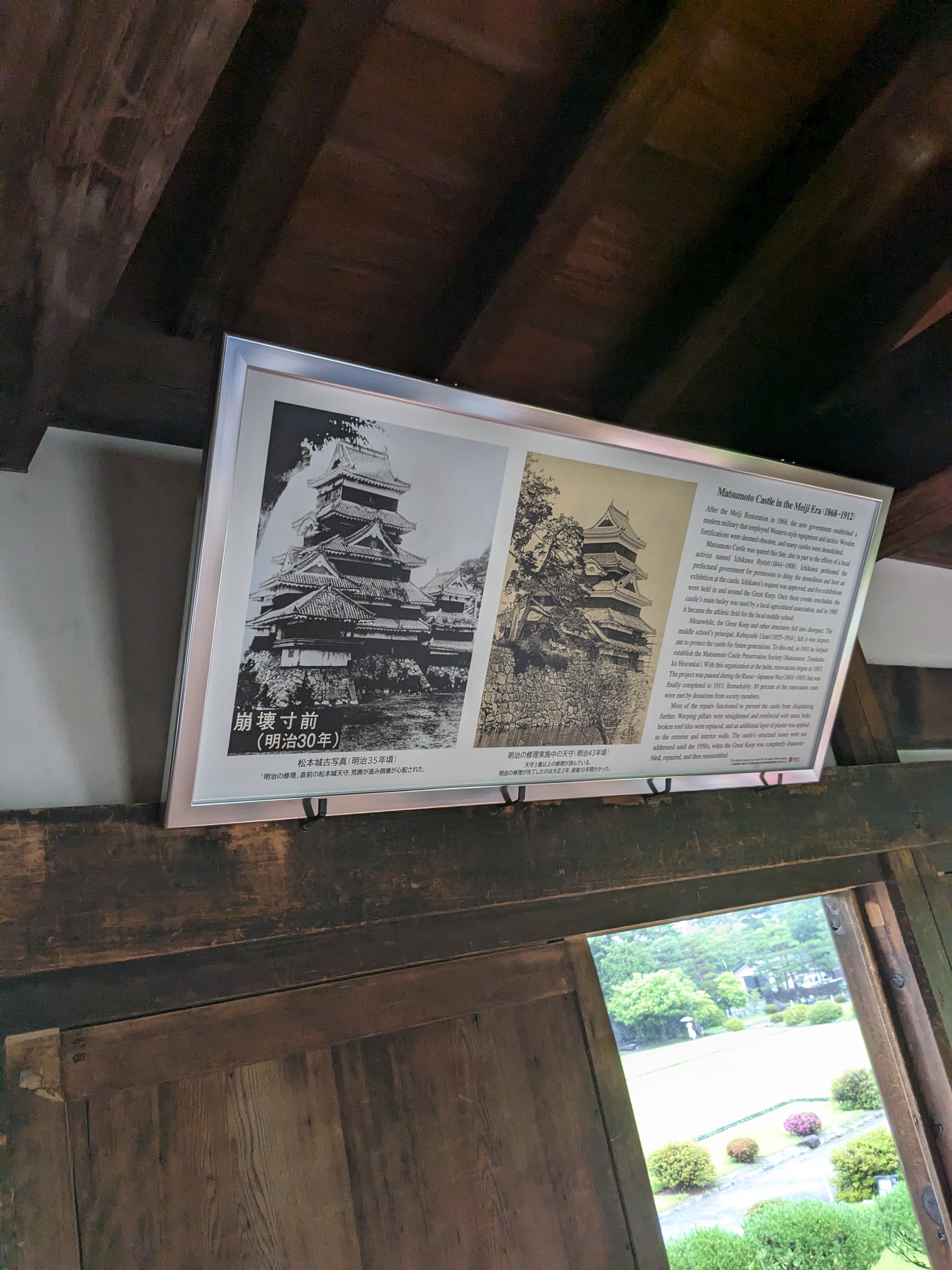
The sword exhibit added another layer: tanto, wakizashi, tachi displayed in cases, with what appeared to be a Edo-period sword appraisal document mounted nearby. Four hundred years of records, still here.
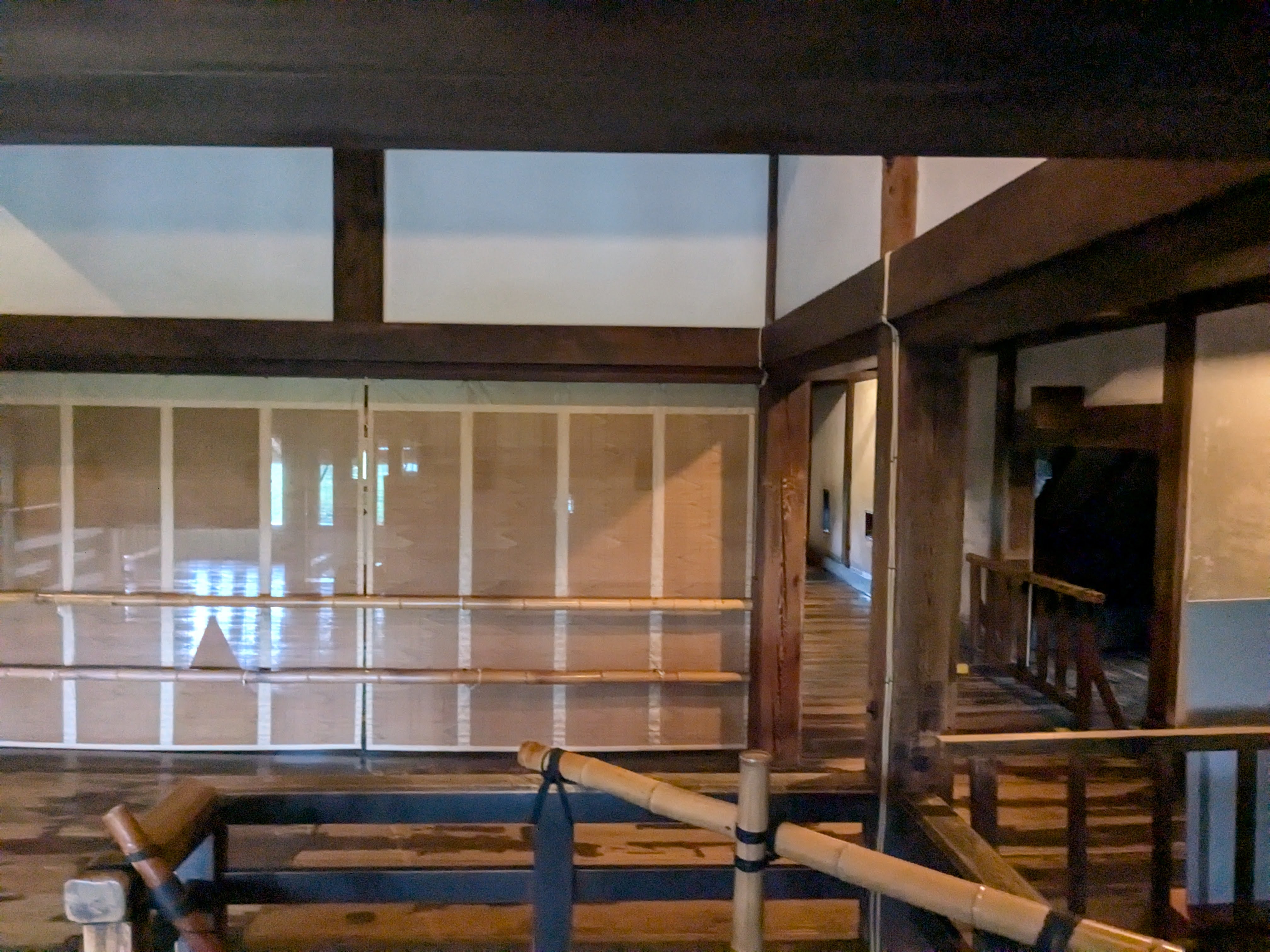
The Tsukimi-yagura (Moon-Viewing Turret) is Matsumoto’s most unexpected space. Added in the early Edo period — after the wars ended — this section of the castle has sliding paper screens (shoji), wooden lattice windows, and a veranda where light comes in softly. A space built for peace, attached to a castle built for war. The contrast is striking.
The top floor view on day two was just as good as day one.
Information panels on the top floor name the mountains visible in each direction: Mt. Jōnen, Mt. Tsubakuro, Mt. Ōtensho, Mt. Chō, Mt. Nabékammuri, Mt. Ontake. On a clear day, all of them would be visible.
The 5th floor has life-size samurai mannequins in full armor. The 4th floor has a wide open room with bamboo screen partitions — a calm space before the final climb.

Heading Home
I left Matsumoto with a simple thought: I’ll come back.
Before I left, I had told myself one visit was enough. Now, somewhere on the return journey, I was already thinking about coming back in autumn for the foliage, or in winter with snow on the black walls, or in spring for the cherry blossoms around the moat.
Each season would be a different castle entirely.
Summary: Matsumoto Is a “Deep” City
Before coming, my mental image of Matsumoto was: “National Treasure castle + castle town.” That’s true, but it’s only the surface.
- The castle is not a sight to look at — it is a place to experience (the steep stairs, the loopholes, the smell of 400-year-old wood)
- The castle town is not a tourist reconstruction — it is a living, functioning historic shopping district
- The food is not a branding gimmick — Shinshu vegetables, soba, sake genuinely taste different here
- The morning castle and the afternoon castle are two different places
Matsumoto is the kind of city that makes you want to return. Not because you ran out of things to do — but because you want to see it again, differently.
📍 Access: Highway bus from Shinjuku via Chuo Expressway (approx. 3–4 hours) / Limited Express Azusa from Shinjuku (direct, approx. 2h30m, non-reserved seat ¥6,170) · Matsumoto Castle is about 15–20 min walk from the bus/train terminal
🏰 Highlights: Matsumoto Castle (National Treasure), Yotsuhashira Shrine, Nawate Street, Nakacho Street, Genchi no Ido spring
🍽 Food highlights: Mountain vegetable tempura, Sanzoku-yaki chicken, Shinshu soba
⭐ Recommend: ★★★★★ (would definitely return)
Related Article (Japanese)
🏨 Where I Stayed / Find a Hotel in Matsumoto
PR: Contains Rakuten Travel affiliate link.
I stayed at Dormy Inn Matsumoto — natural hot spring on the 9th floor, breakfast buffet with local Shinshu dishes, 5 min walk from Matsumoto Station. Rated 4.42 on Rakuten Travel (4,400+ reviews).
▶ Check availability: Dormy Inn Matsumoto (Rakuten Travel)
Other hotels in Matsumoto / Nagano:
▶ Browse all Matsumoto & Nagano hotels on Rakuten Travel
