
 パソコ
パソコパソコです!役に立ったらSNSでシェアしてもらえると嬉しいな!
日本語版はこちら → 真夏の大山、ケーブルカーと下社参拝記
Heading to Mt. Oyama in the Summer Heat
It was the last Saturday of August 2023. I wanted a day trip somewhere with a proper mountain feel — not too far from Tokyo, manageable solo, yet with a real sense of altitude and history. Mt. Oyama (大山, 1,252m) in Isehara, Kanagawa fit the description perfectly.
The weather forecast had shown sunshine the day before. By morning, thick clouds had rolled in. I went anyway. For a summer hike, overcast skies are a blessing — no brutal direct sun, and mountain air stays cooler.
Getting There: Isehara Station and the Bus
From Shinjuku, I took the Odakyu Line express to Isehara Station — about 55 minutes. The north exit was easy to navigate; a cute green-roofed information kiosk with a “大山方面へ” (Toward Mt. Oyama) sign pointed me straight to the bus stop.
The Kanachu (神奈川中央交通) bus runs every 15–20 minutes to the Oyama Cable Car Bus Stop (大山ケーブルバス停). The fare is 330 yen one way. I boarded and 30 minutes later stepped off into a completely different world. The city had vanished. Steep forested ridges closed in on all sides.
Near the bus stop, two large information boards caught my eye. One was an Isehara hiking course map showing multiple trails branching across the mountain. The other — a bilingual Japanese/English/Chinese panel — told the story of Oyama-Afuri Shrine, founded, according to legend, during Emperor Sujin’s reign around 97 BCE. The mountain is sacred to three gods: the thunder god, the sea god, and the god of fresh water. Standing there reading it, before I’d even set foot on the trail, I felt the weight of history.
The Cable Car Station: Fans, Grasshoppers, and Summer Vibes
The walk from the bus stop to the cable car station takes about 15 minutes along a stone-paved approach road lined with tofu restaurants and souvenir shops. I arrived at the waiting area sweaty and thirsty, grateful for the large industrial fan spinning in the middle of the room.
On the wall behind it: a poster for “Kyara-inago” — seasoned fried grasshoppers, a traditional Oyama specialty. According to the poster, Edo-era residents who came on pilgrimage would eat these as a local delicacy. I did not buy them. Next time, maybe.
The cable car itself was a sleek green vehicle, updated in 2020. Big windows, clean interior, a slope steep enough that you grip the handrail instinctively as it starts to move.
The Cable Car Ride: Six Minutes of Steep Green Scenery
The moment the cable car began its ascent, the angle was striking. The track disappeared steeply downward beneath you, and behind you — through the rear window — Isehara city and the Sagami Plain slowly spread open. Even on a cloudy day, the view was impressive. A faint glimmer of the distant sea was visible.
Partway up, the car passes through a stone arch near Oyama-dera Station, where the two cars cross. The tunnel of green leaves parting to reveal an old stone arch felt like moving through a time gate. Six minutes from bottom to top, and you’re at 696 meters.
Afuri Shrine Lower Hall: History, Lions, and Panoramic Views
Stepping off the cable car at the lower hall (下社, Shimosa), I immediately walked toward the gap in the trees where the view opens up.
The Sagami Plain stretched below. Isehara’s rice paddies and streets, the layered ridges of surrounding hills, and the faint shimmer of Sagami Bay beyond. Clouds hung low but didn’t block the view entirely. It was exactly the kind of scene that makes a day trip feel worth it.
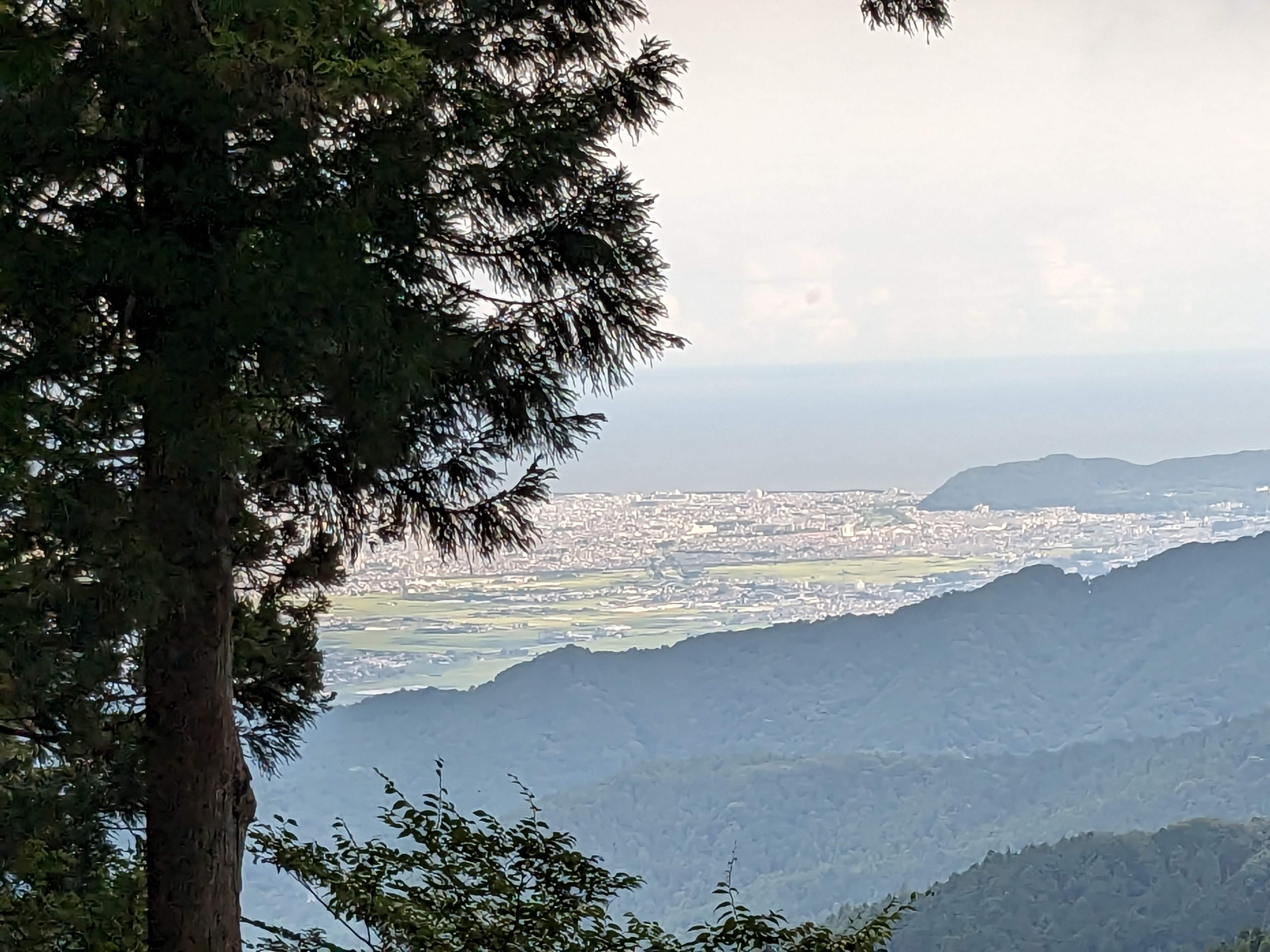 ▲ View from Afuri Shrine Lower Hall
The main hall (拝殿) is painted in deep vermillion with gold ornaments. The “Oyama Afuri Shrine” stone stele stands at its entrance. There’s a dignity to it — this is not a tourist attraction pretending to be a shrine. People come here to pray.
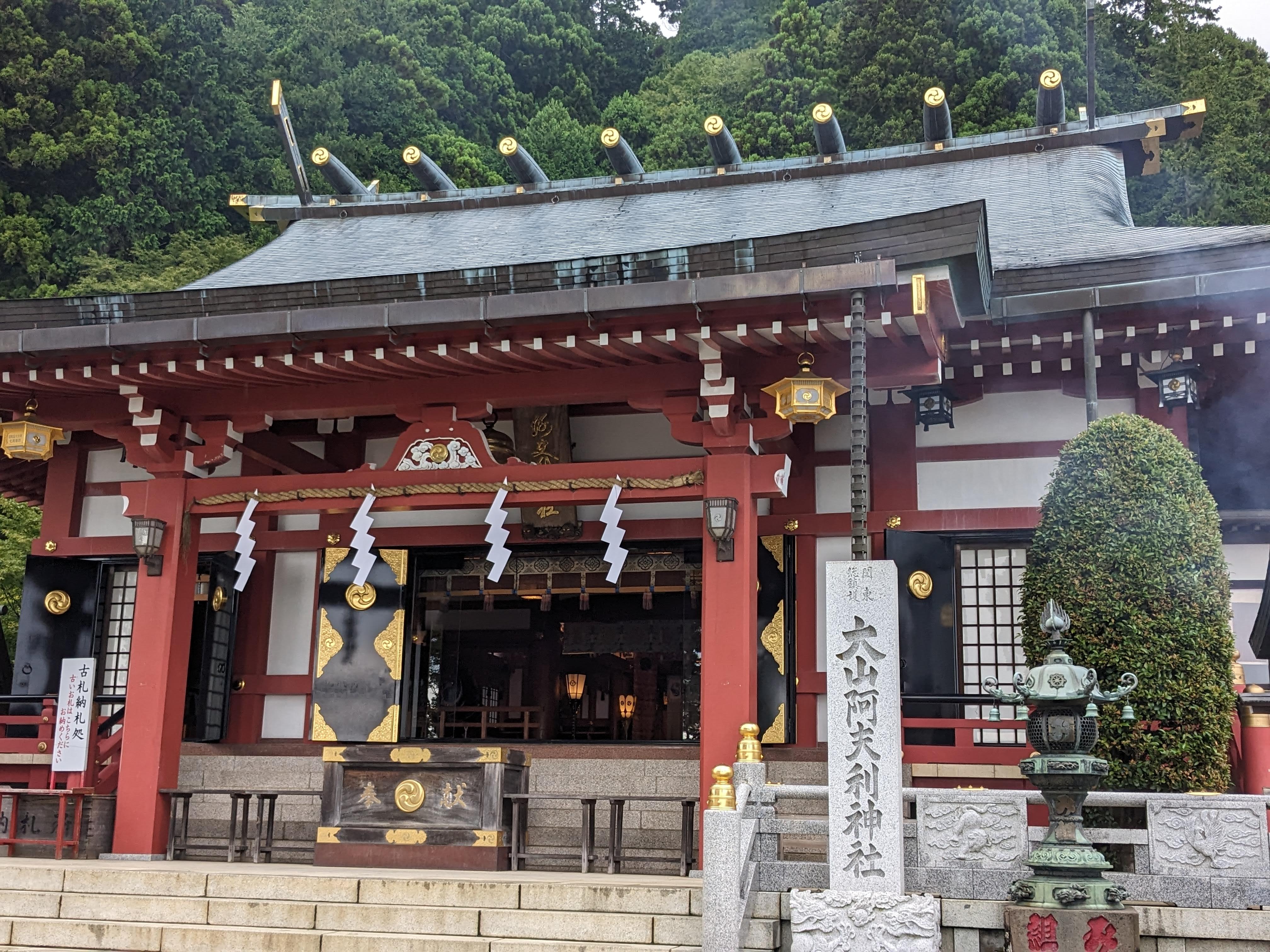 ▲ Oyama Afuri Shrine Main Hall
In the courtyard stands the Oyama Shishi (大山獅子) — a large rock formation topped with two stone lions, surrounded by twelve zodiac animal figurines. A plaque reads “日本三大獅子山” (One of Japan’s Three Great Lion Mountains). I hadn’t known that. Mt. Oyama carries that distinction quietly.
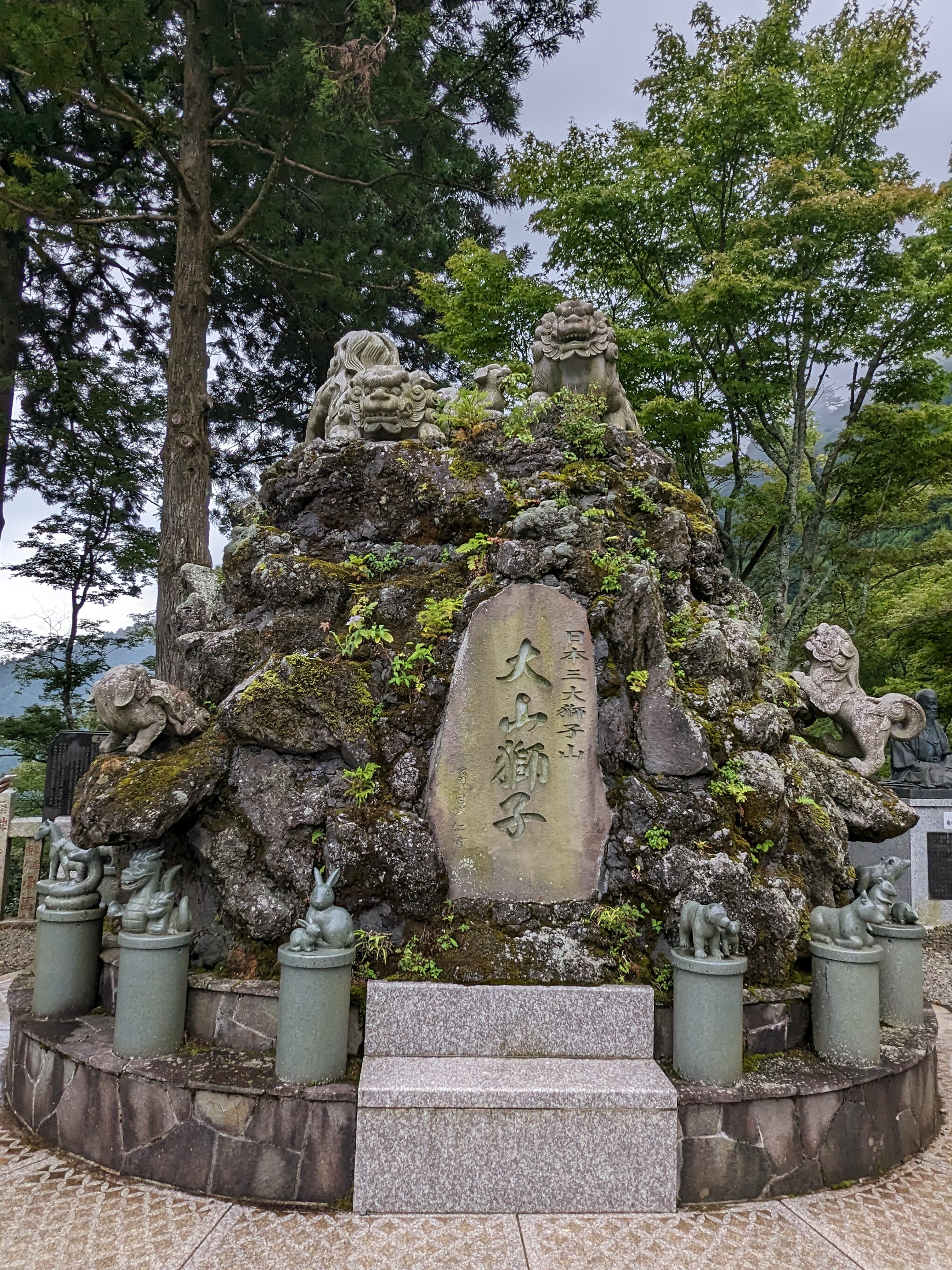 ▲ Oyama Shishi rock monument
The Observation Balcony
Near the lower hall there’s a stone balustrade overlooking the plain below. Stone pillars are engraved with the names of donors — generations of people who funded the shrine’s upkeep. Standing there, looking out over Sagami, I thought about why this mountain was traditionally used for rain prayers (雨乞い). When clouds gather here, rain follows below. The relationship between the mountain and the people of the plain must have felt very real before modern meteorology.
Even in the cloudy light, the view was something. The ridgeline to the south became a silhouette, the bay beyond shimmered pale silver. It didn’t need to be sunny to be beautiful.
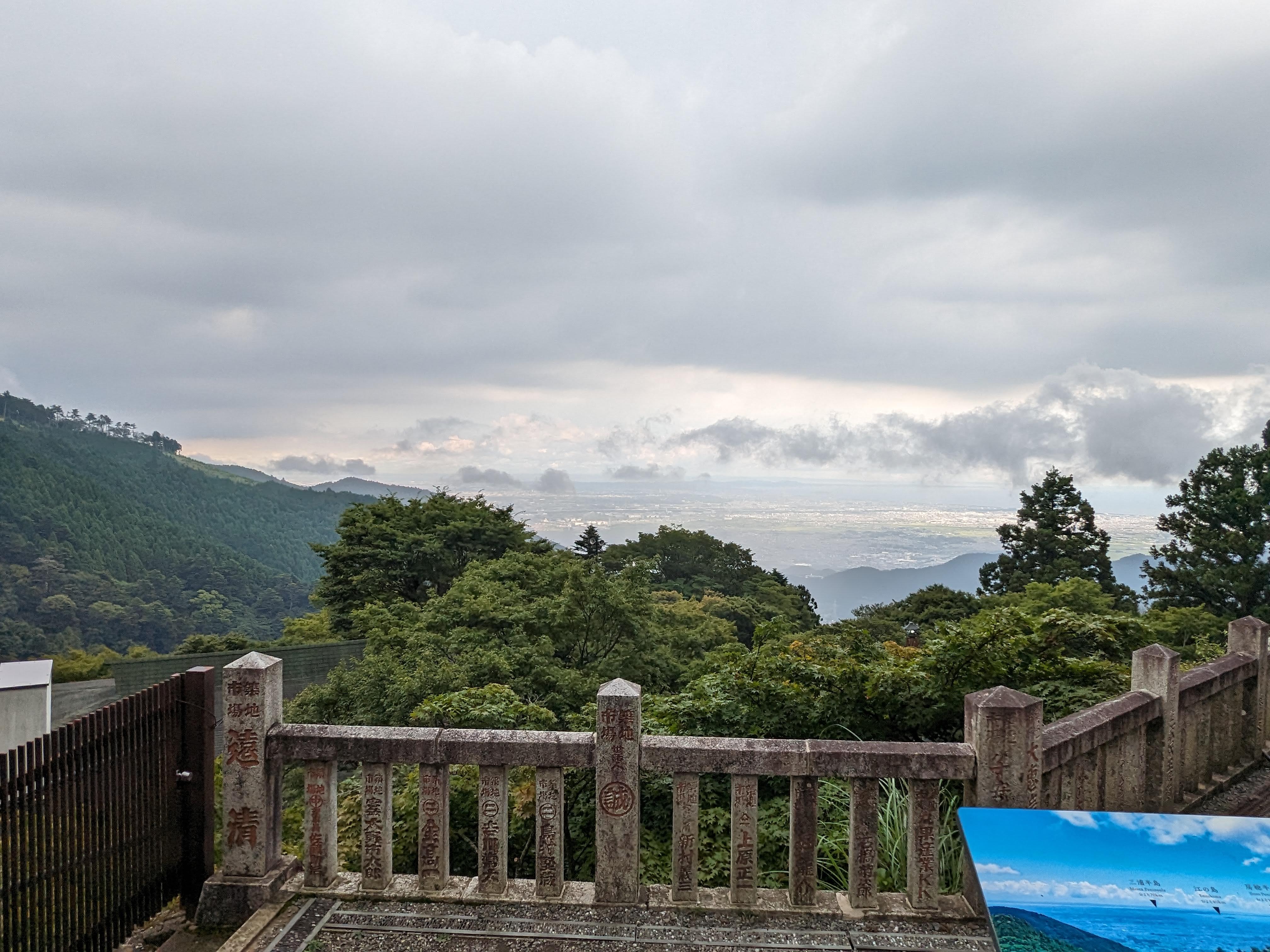 ▲ View from the stone balustrade
Into the Forest: The Stone Steps Begin
From the lower hall, the trail toward the summit (1,252m) begins with a long section of mossy stone steps climbing through a dense cedar forest. I walked a short section of this.
The steps are old, uneven, and covered in lichen. Tall cedars block the sky. The air drops noticeably cooler as you enter. It was quiet, almost hushed — the kind of quiet that makes you aware of your own breathing.
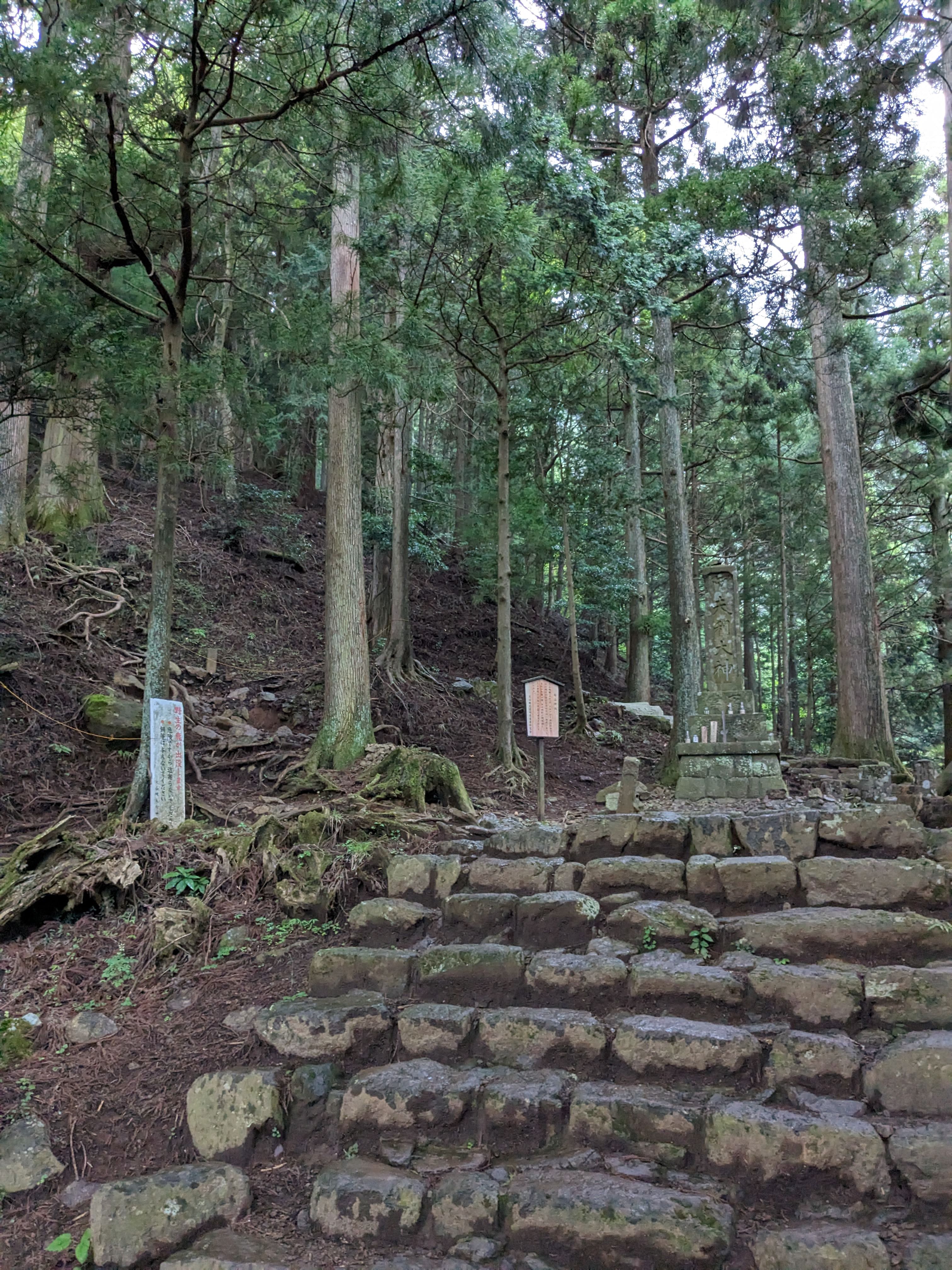 ▲ Stone steps of the climbing trail
I didn’t make it to the summit on this visit. The sky was darkening, the time felt short, and honestly — I hadn’t brought enough water for a full 90-minute climb. I turned back at the lower hall.
I’m not sure that’s a failure. The lower hall alone gave me the shrine, the view, the history, and the forest atmosphere. That’s a complete experience.
Back Down: Tofu and the Return Journey
Walking back through the approach road, every restaurant was advertising tofu. Oyama tofu is famous — the local soft tofu made with pure mountain spring water. Set menus with cold tofu, miso soup, and pickles ran around 1,500–2,500 yen.
I was too late for a proper sit-down meal (shops start closing around 15:00–16:00 after the post-hike lunch crowd), so I kept walking to the bus stop. Another lesson for next time: plan to be back down by 14:30 if you want tofu.
Summary
| Item | Detail |
|---|---|
| Date | August 26, 2023 (Saturday) |
| Weather | Overcast, light drizzle |
| From Tokyo | Shinjuku → Isehara (Odakyu, ~55 min) → Oyama Cable Bus Stop (Kanachu bus, ~30 min) |
| Cable car | Round trip ¥1,120, ~6 min each way |
| Time at lower hall | ~40 min (shrine visit, views, brief trail walk) |
| Summit | Not reached (lower hall only) |
| Estimated cost | ~¥4,000 total (transport + cable car, no meal) |
Mt. Oyama works at multiple levels. You can ride the cable car, see the shrine, enjoy the view, and be back on the bus in two hours. Or you can commit to a proper 3–4 hour climb to the summit. Either way, the access is easy, the history is real, and the views — even on a cloudy August day — are worth the trip from Tokyo.
Full access guide, costs, course details, and packing list → Mt. Oyama Complete Day Trip Guide
Find Hotels in Kanagawa
PR: This section contains affiliate links.
▶ Search Kanagawa hotels on Rakuten Travel
