
July 21, 2020. A Tuesday.
That summer, the world was holding its breath.
Japan’s state of emergency had been lifted, but things still felt strange. On an impulse, I decided to head to Mt. Takao. No agenda. No plan. Just a need to go outside, break a sweat, and climb a mountain.
Mt. Takao sits in the western edge of Tokyo, accessible by Keio Line from Shinjuku in about 50 minutes. It’s the world’s most-visited mountain — and on this foggy summer day, it felt like a different world from the city I’d left behind.
Arrival at the Cable Car Station
Getting off at Takaosanguchi Station, I walked toward the trailhead. The cable car / eco-lift building was decorated with a large banner.
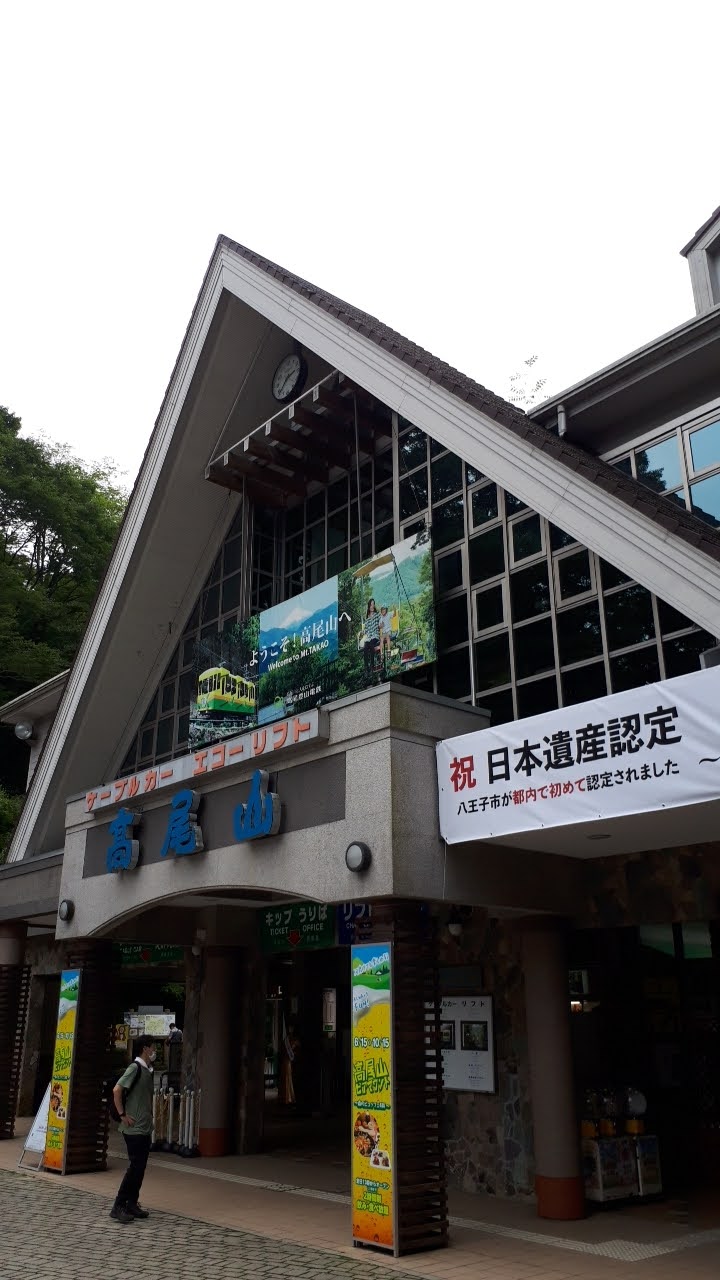
“Congratulations on Japan Heritage Designation — Hachioji City, the first in Tokyo to receive this honor.”
Mt. Takao and its surroundings were designated as Japan Heritage in 2019 under the title “Reiki Man-zan Takaosan — A Silk Road Story Woven by People’s Prayers.” The banner celebrated that recognition.
I chose to skip the cable car and hike up Route 1 (Omotesando Course) on foot. The trail is fully paved, but don’t let that fool you — the incline is steep from the start. In the July humidity, I was sweating within minutes.
Ancient Trees and Warning Signs
The forest along Route 1 is full of enormous cedar and cypress trees. Some have hollow centers, kept alive despite decades of decay. Many have warning signs attached — the mountain takes its visitor safety seriously.
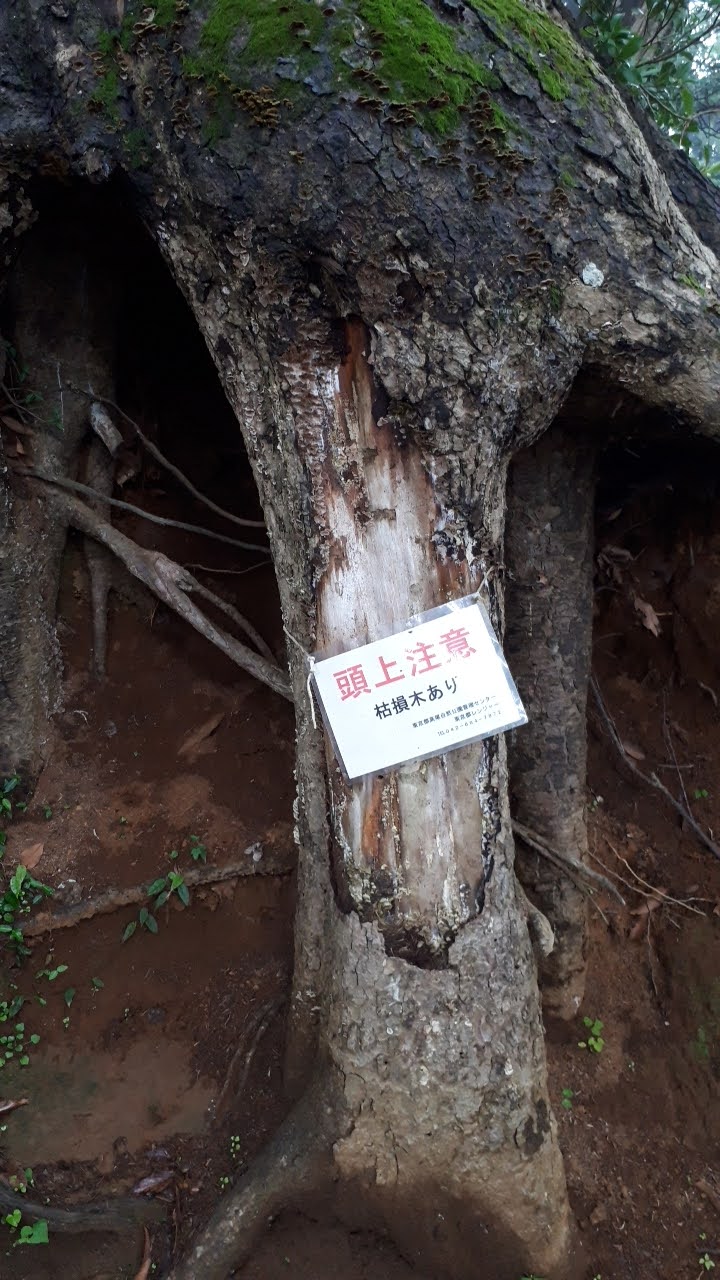
“Attention: Damaged tree above.” Red text on white, wedged between the mossy roots of a massive trunk.
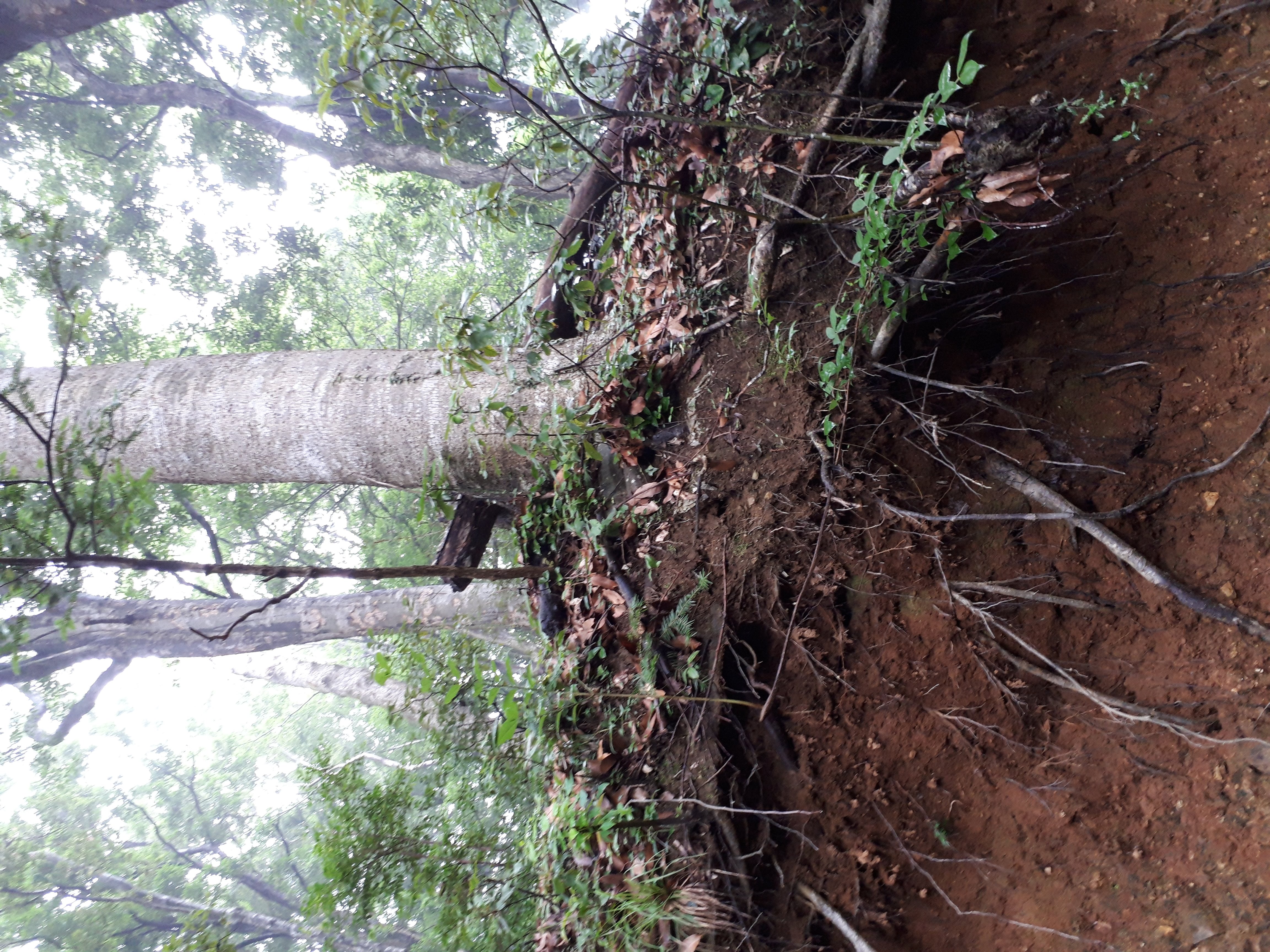
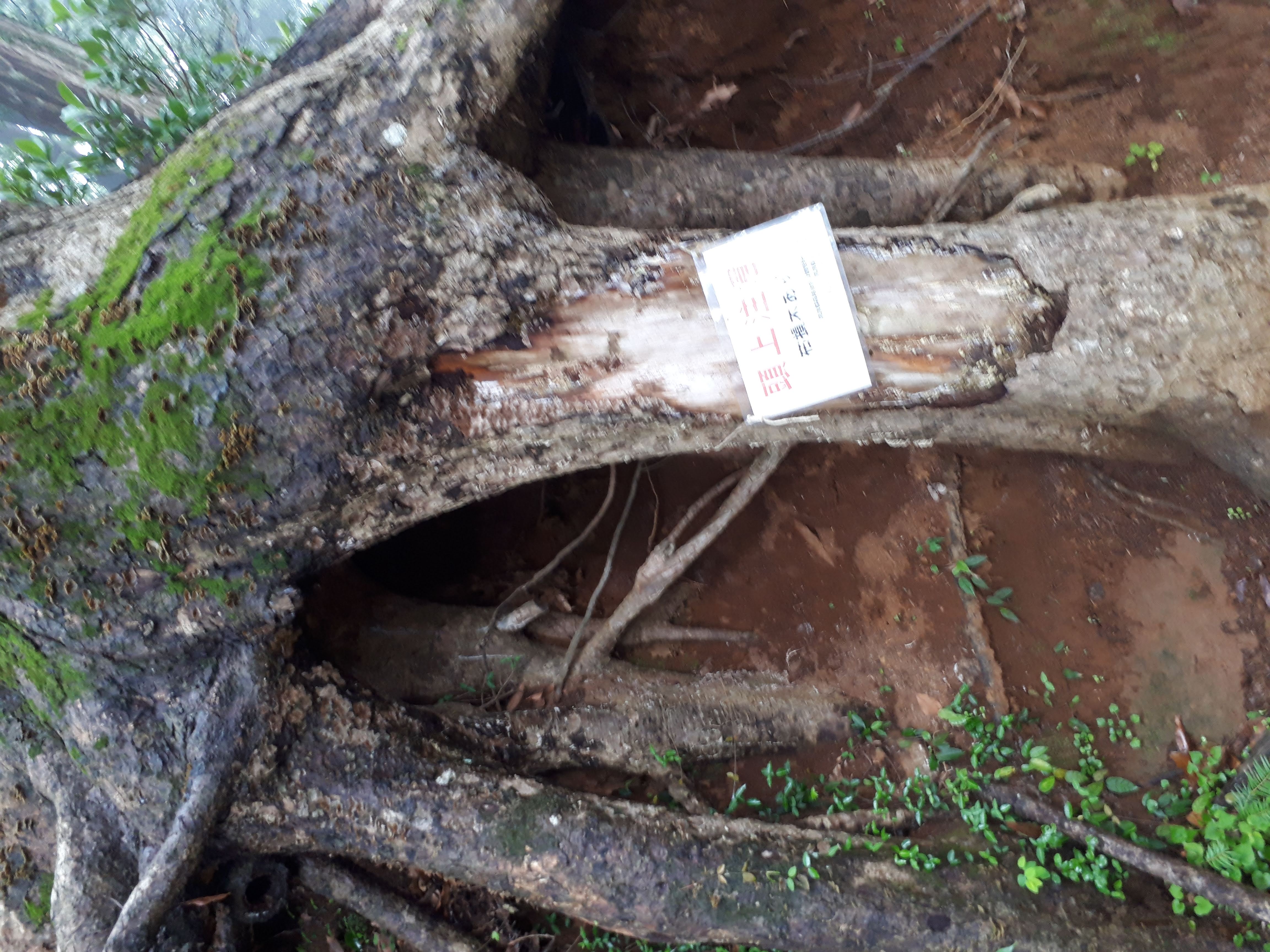
Further up, exposed roots created strange formations in the trail — massive trees whose root systems had eroded away, leaving gaps large enough to walk through.
The Weather: Deep Fog and Clouds
The weather that day was entirely overcast. The closer I got to the summit, the thicker the fog became. Visibility dropped to perhaps 30–40 meters. No views of distant mountains — just shifting walls of mist between the trees.
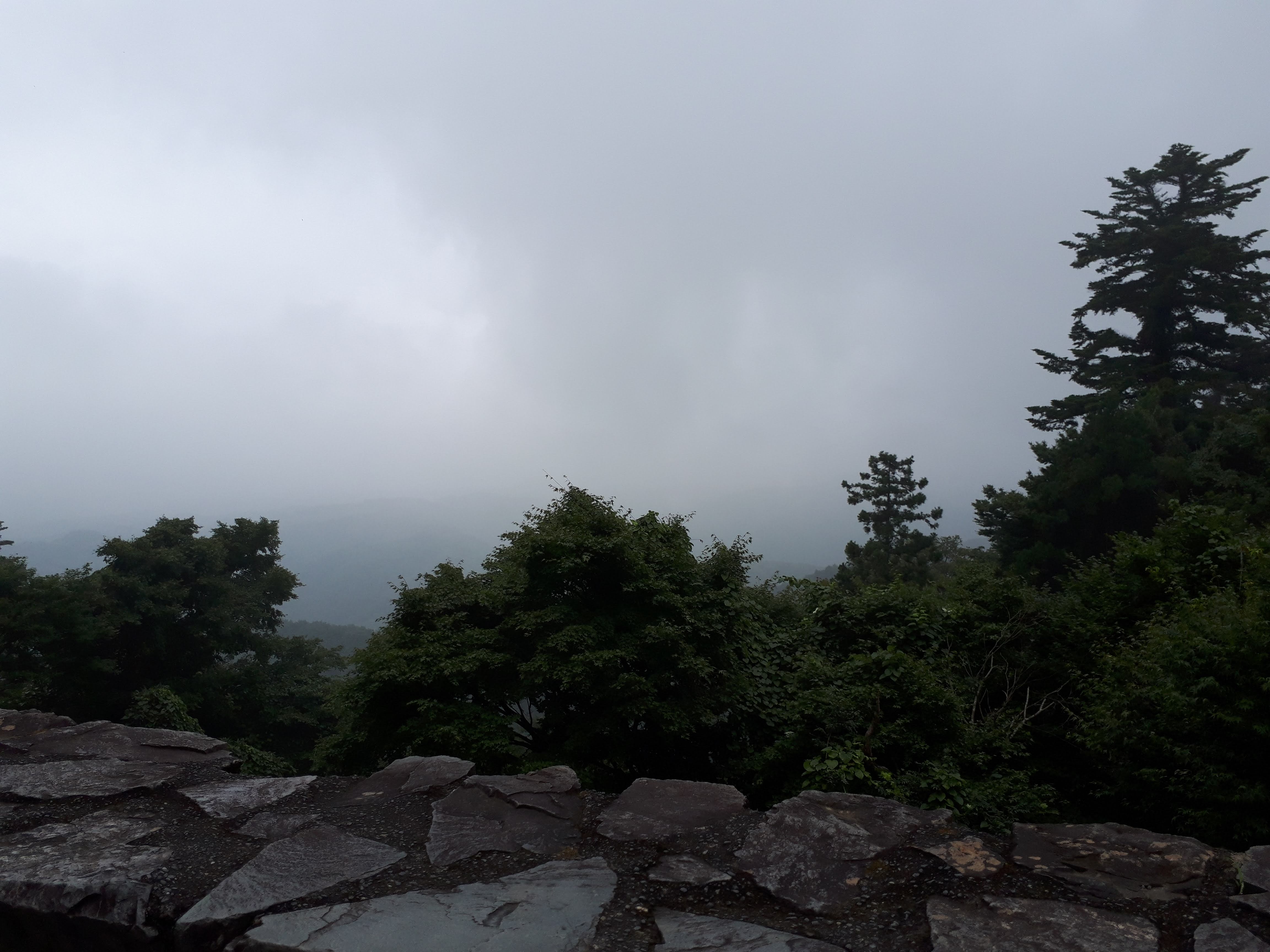
A rocky platform offered what should have been a panoramic view. Instead, tree silhouettes emerged and dissolved in the fog. It was, in its own way, beautiful.
Yakuoin Temple: The Soul of Mt. Takao
Yakuoin Temple (Takaosan Yakuoin Yukiji) is the spiritual heart of the mountain. Founded in 744 CE, it belongs to the Chisan sect of Shingon Buddhism. Roughly 3 million people visit each year.
In the mist, Yakuoin felt particularly otherworldly.
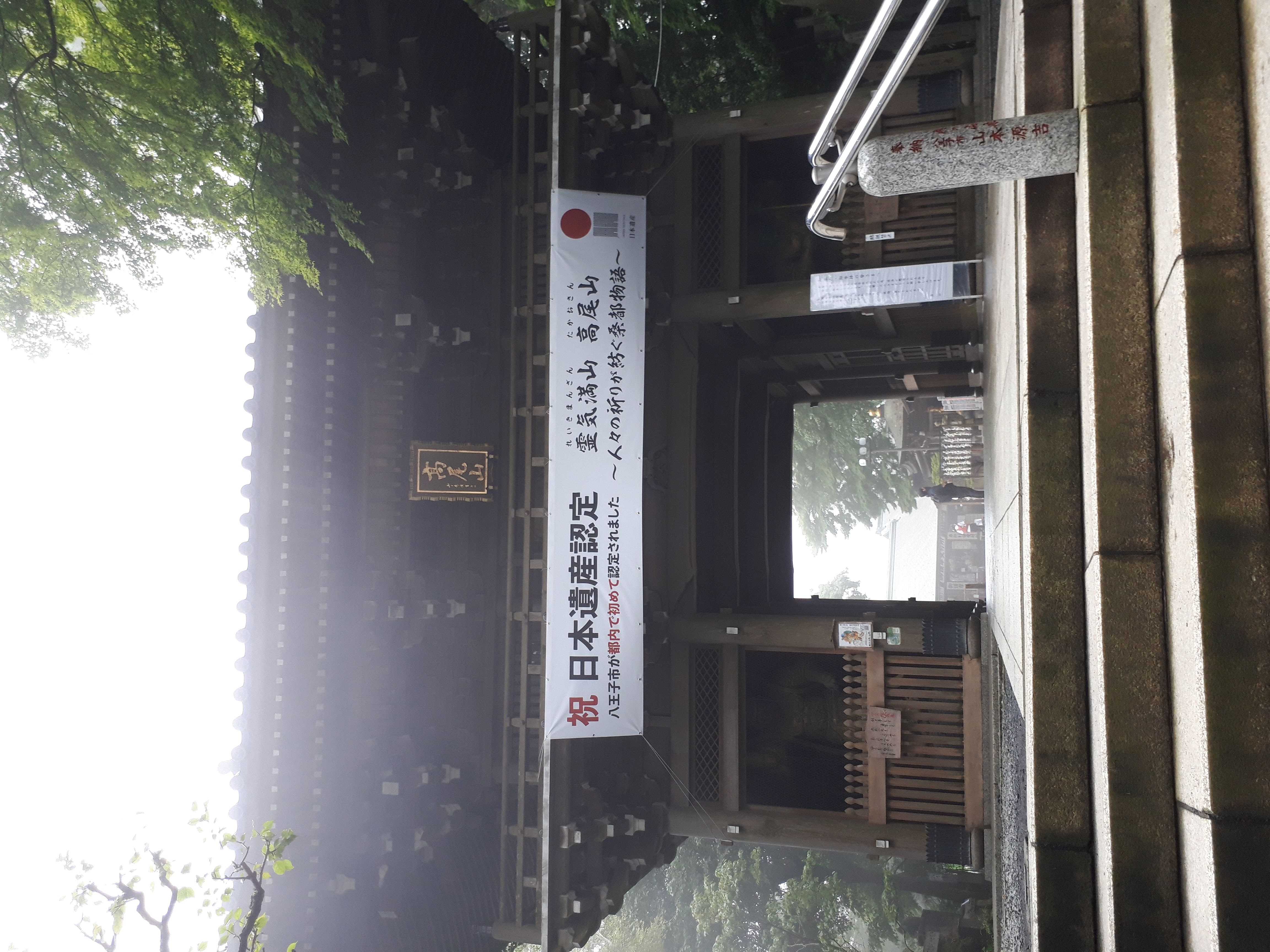
The main gate displayed the Japan Heritage banner: “Reiki Man-zan Takaosan — A Silk Road Story Woven by People’s Prayers.”
The temple complex is a mix of wooden architecture and vivid decoration.
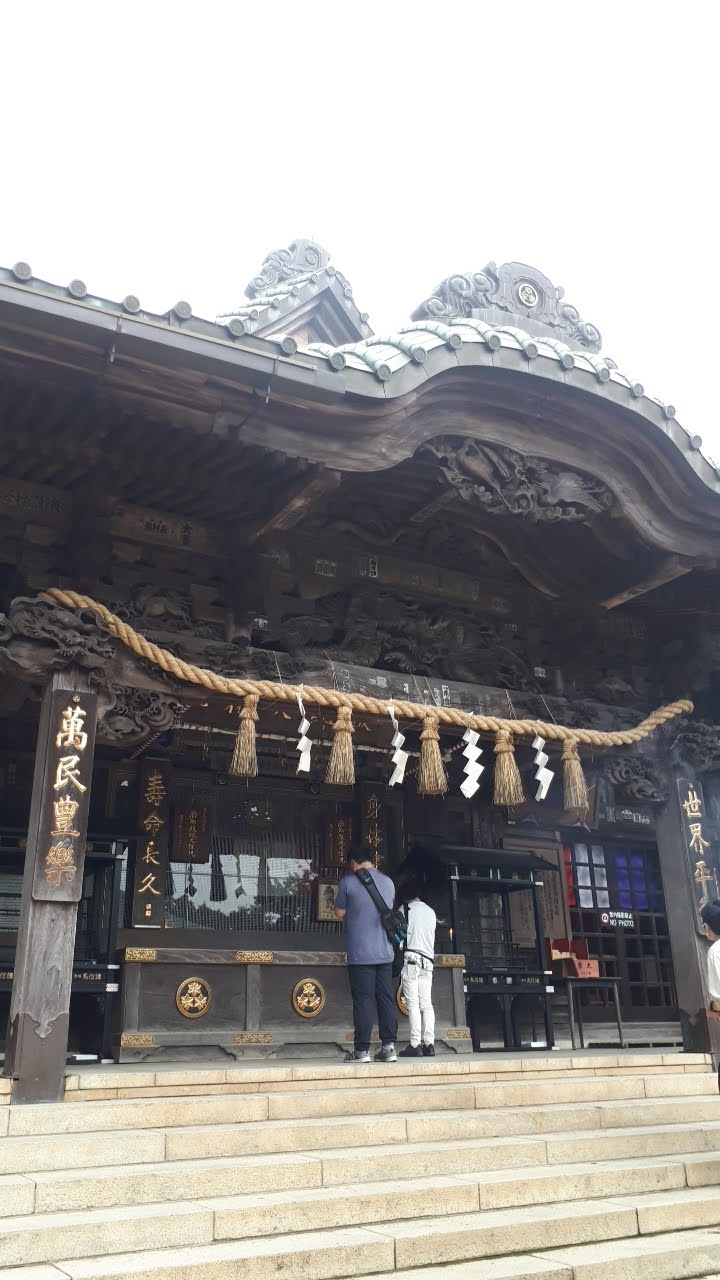
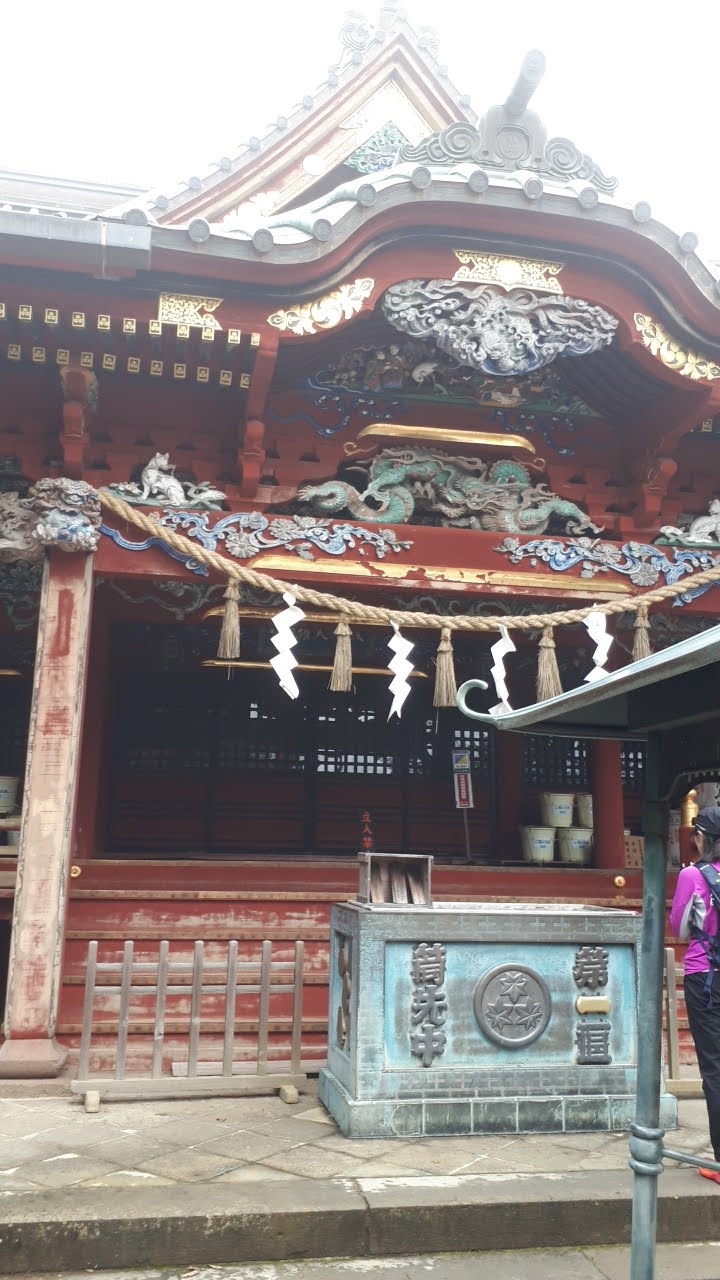
Despite it being 2020, a handful of worshippers were praying at the offering box. People still came to the mountain to pray.
Highlights Inside Yakuoin
The Golden Buddha and Water Pavilion
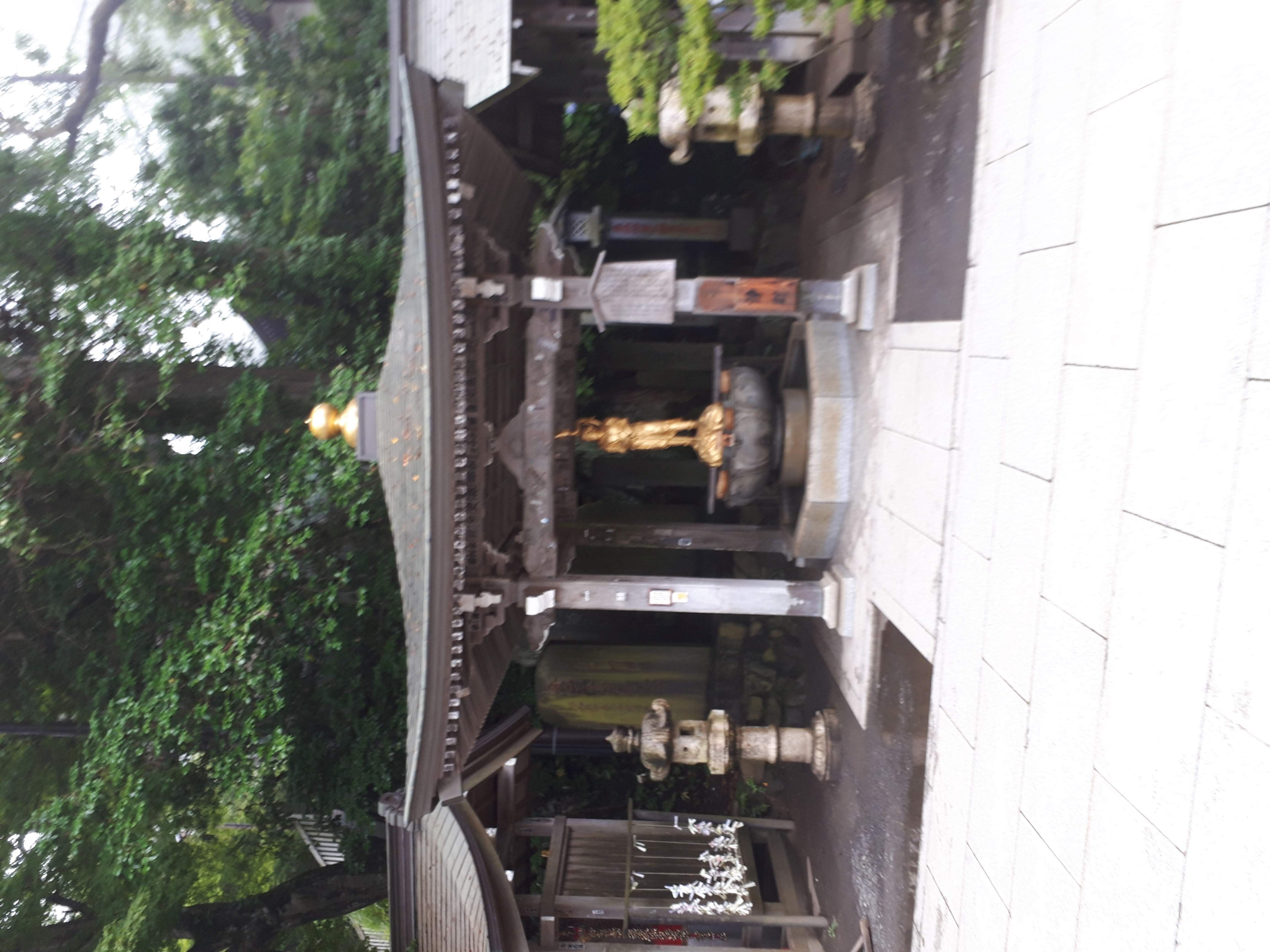
Inside the temple grounds stands a hexagonal pavilion housing a golden standing Buddha above a stone water basin.
The Luck Ring: Kaokana Wa Kuguri
One of Yakuoin’s most unique features is a large stone ring mounted in a stone structure. The inscription reads “厄除開運 顔叶輪潜” — loosely, “Ward off evil, invite fortune, pass through the ring.”
The idea is that walking through the ring grants protection and fulfills wishes.
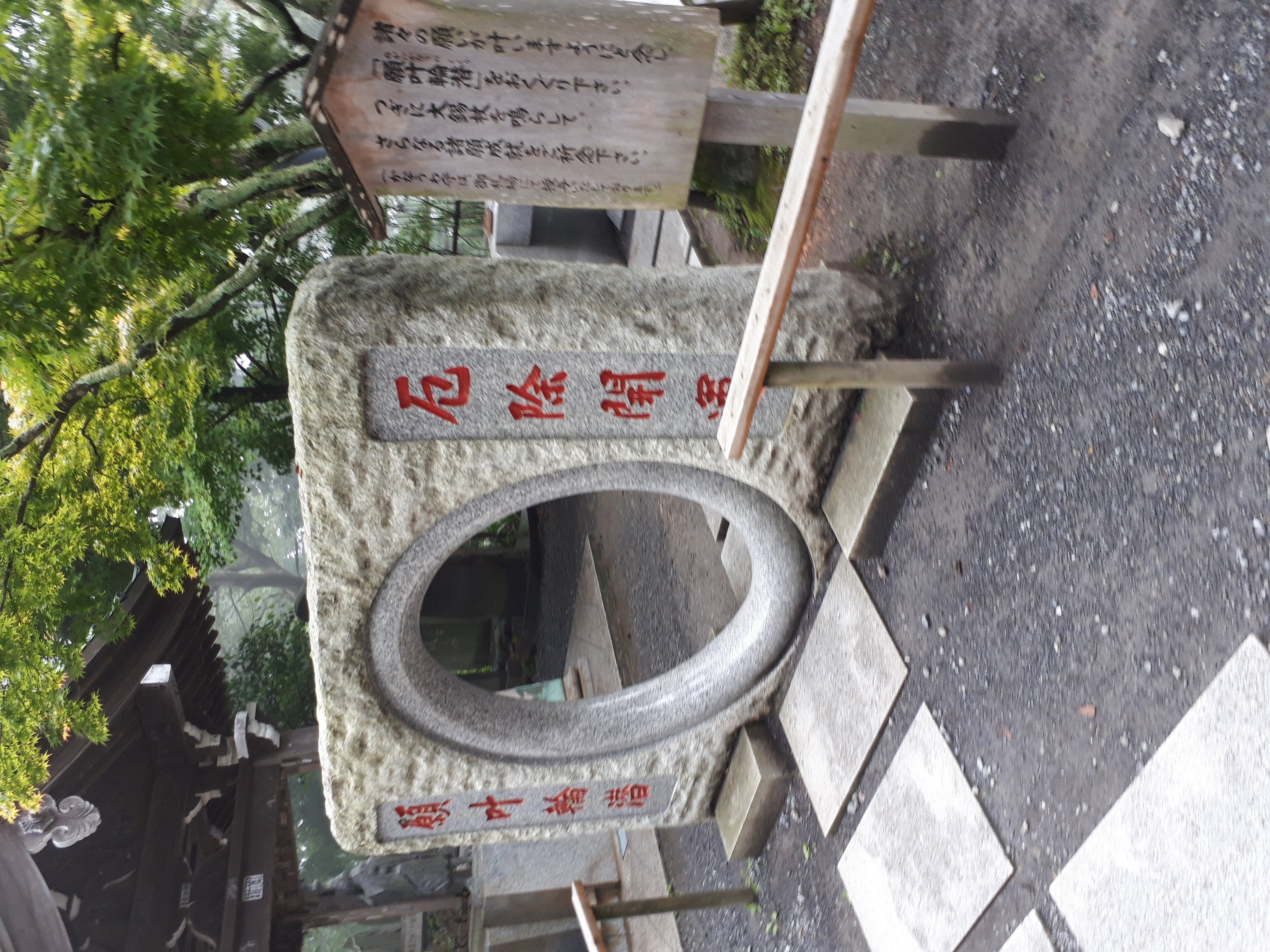
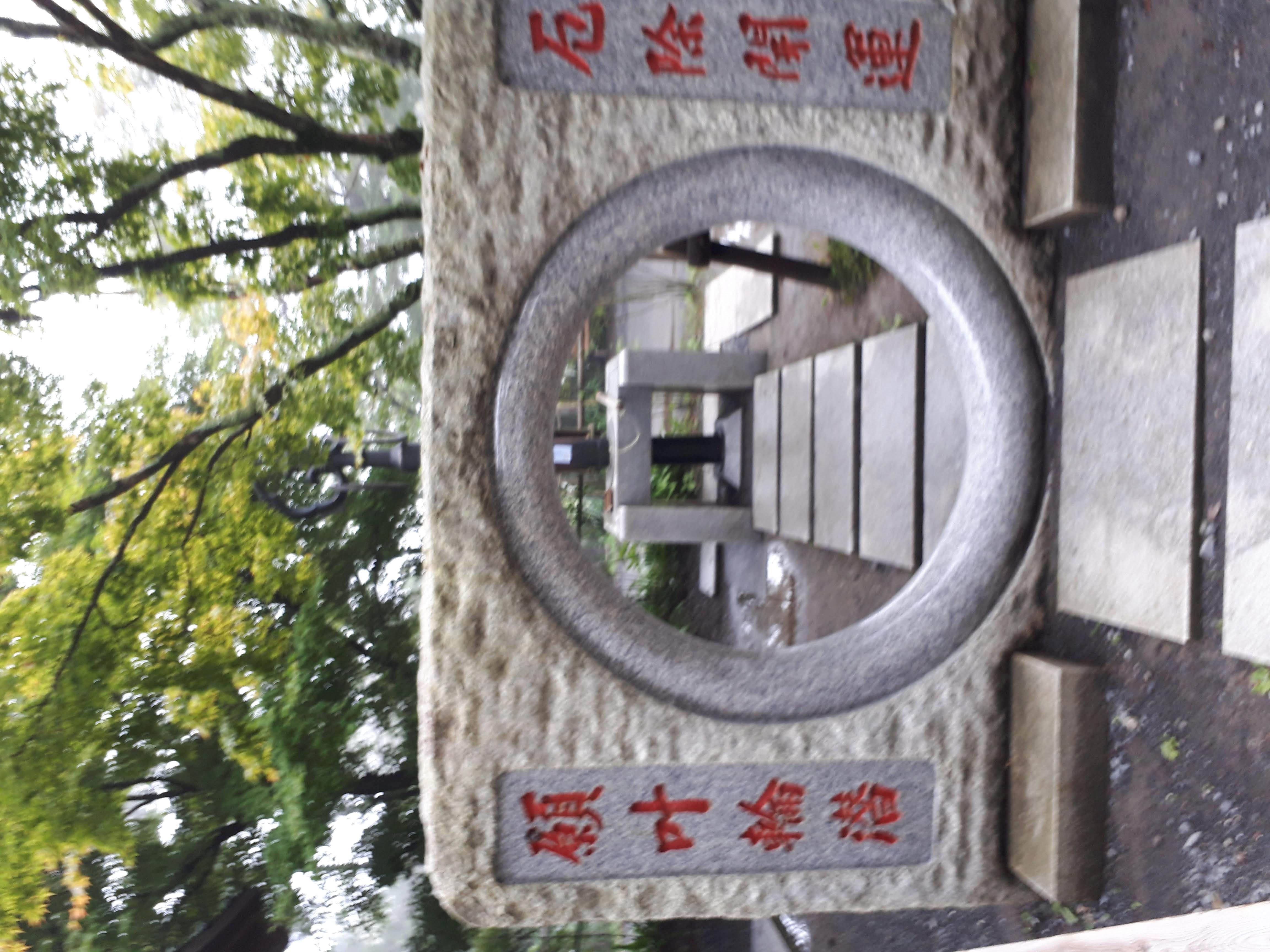
I walked through it. The sense of ritual, however small, felt meaningful.
The Tengu
Mt. Takao’s most famous symbol is the tengu — a supernatural mountain being depicted with wings and a sword. The deity Iizuna Daigongen is said to manifest as a tengu, and statues appear throughout the grounds.
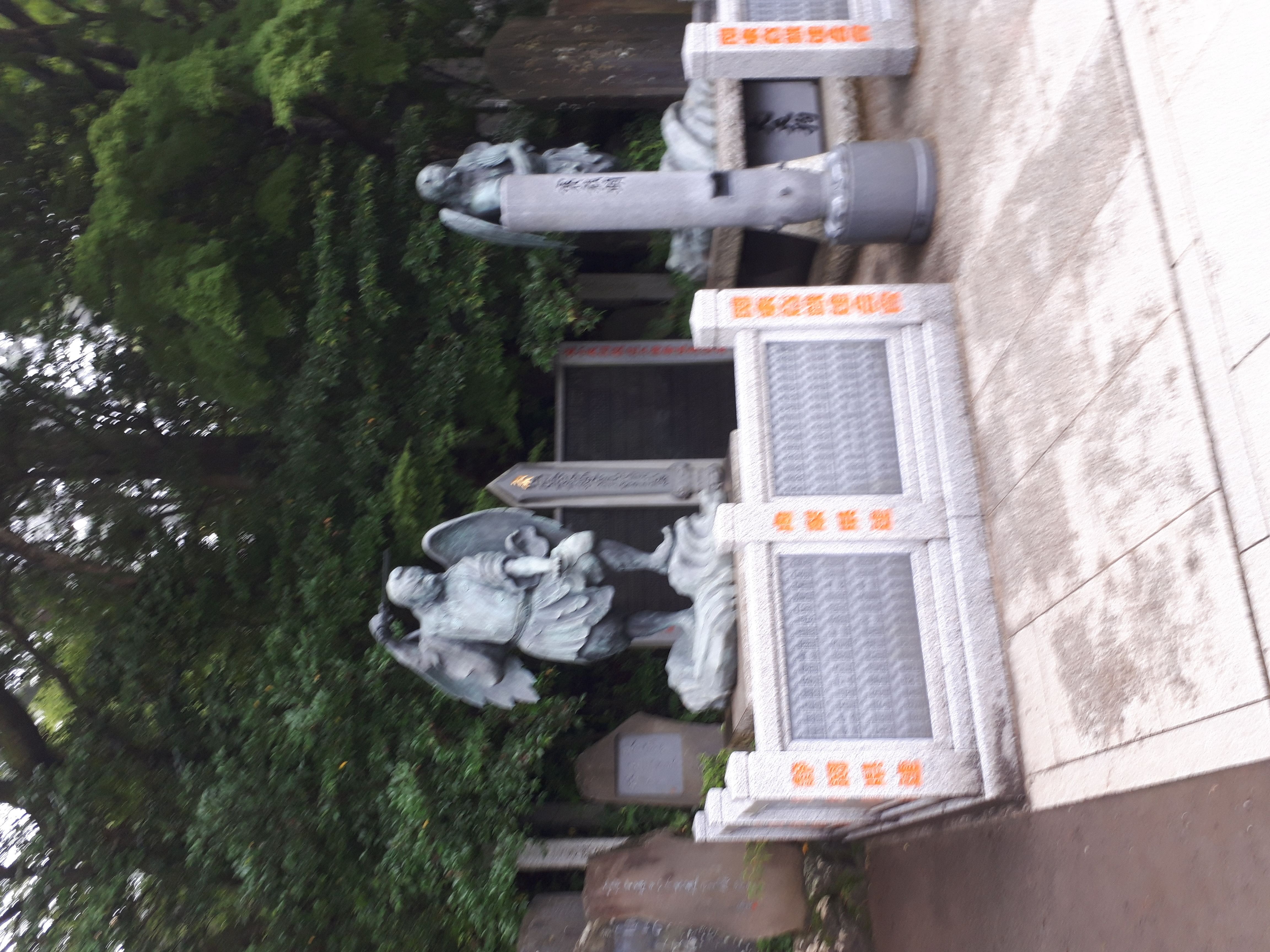
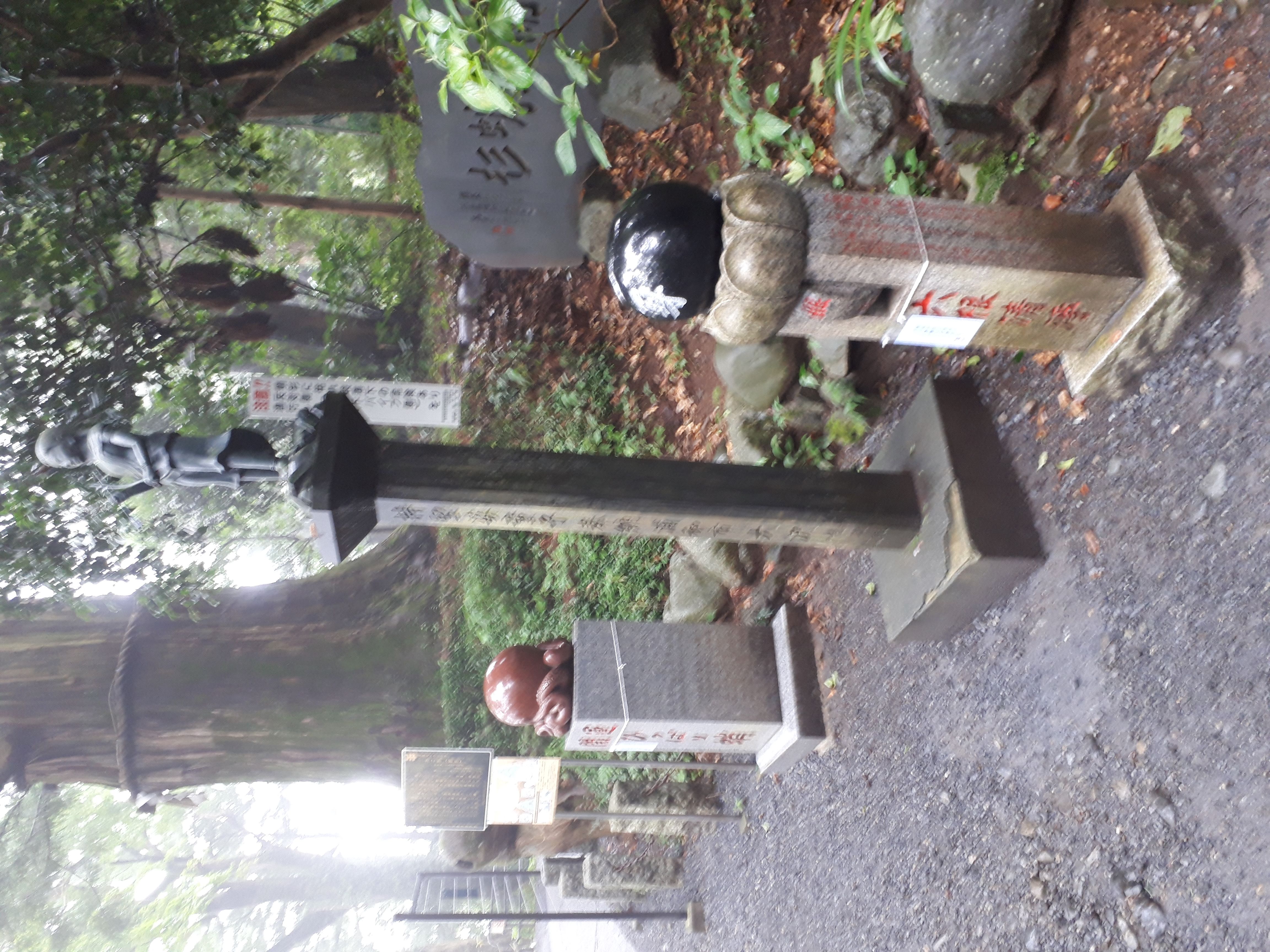
The bronze tengu stood in the fog with genuine presence. In the mist, surrounded by ancient cedar trees, the supernatural didn’t feel far away.
The Red Gate (Niomon)
At the far end of the complex, a vivid red gate towers above a steep staircase. The characters “厄除開運” (ward off evil, open fortune) are painted large across the facade.
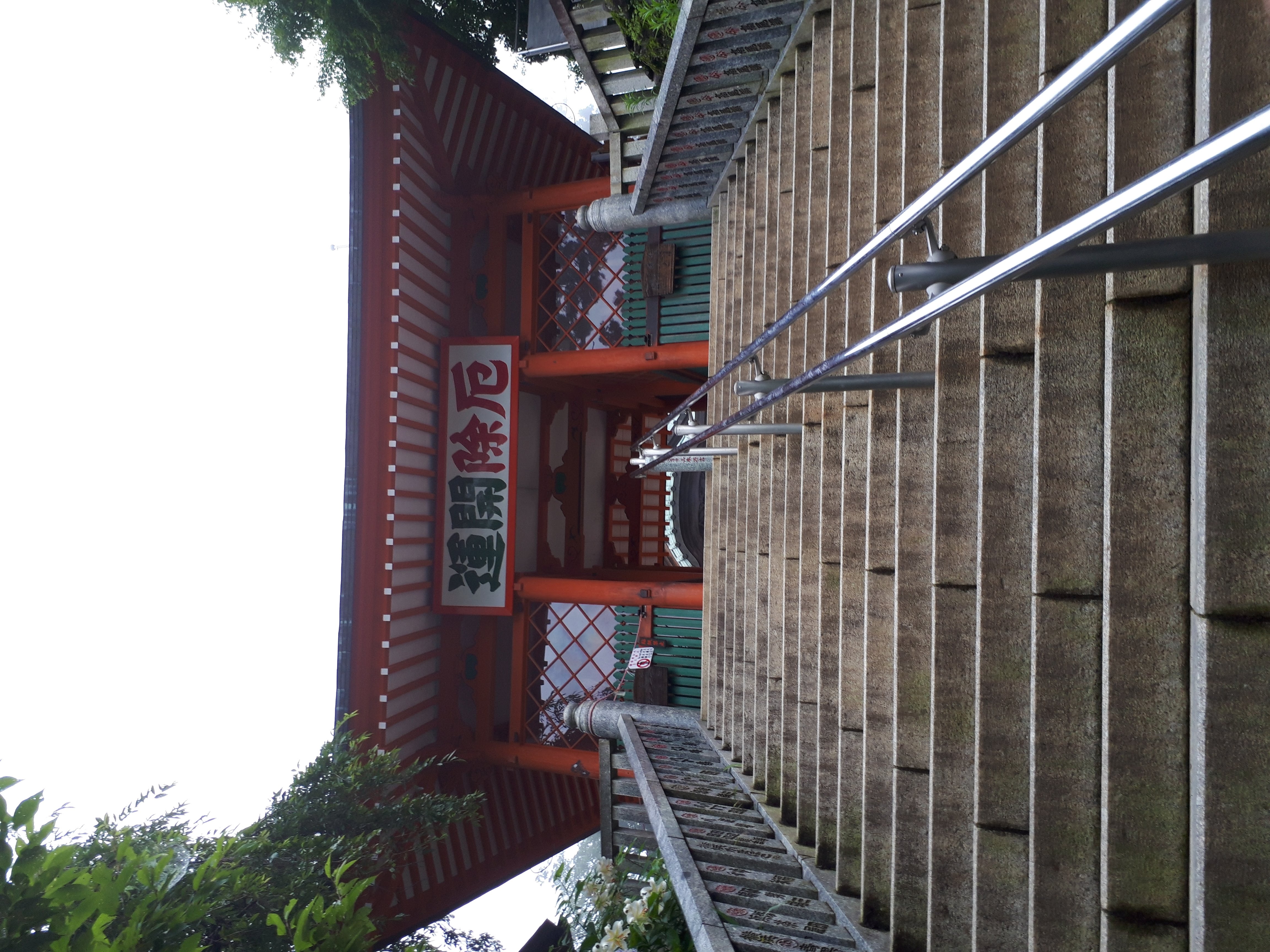
Climbing these steps, I felt the weight of the mountain’s history pressing gently on my shoulders.
The Suspension Bridge
Near Yakuoin, a wooden suspension bridge crosses a forested ravine. Part of Route 4, it’s also accessible from Route 1 with a short detour.
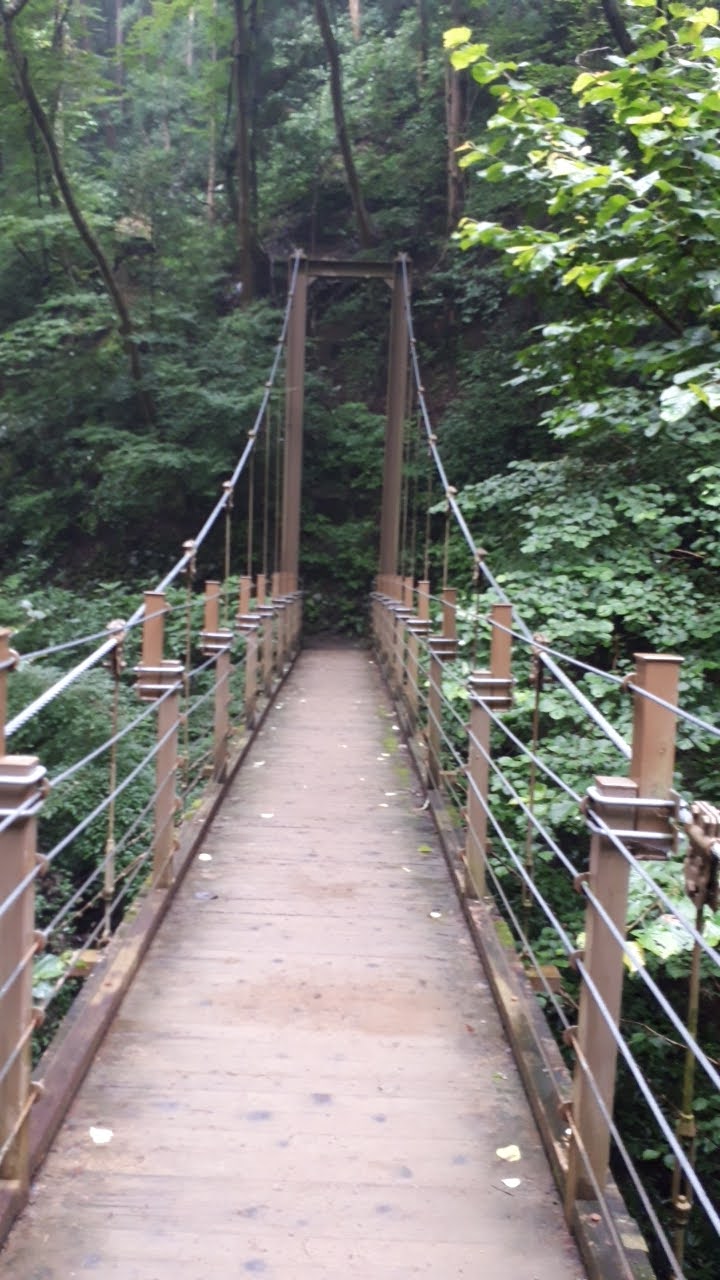
The bridge swayed slightly underfoot. The forest below was impossibly green.
The Summit: 599.15 Meters
Past Yakuoin, the final push to the summit. The sign appeared out of the mist.
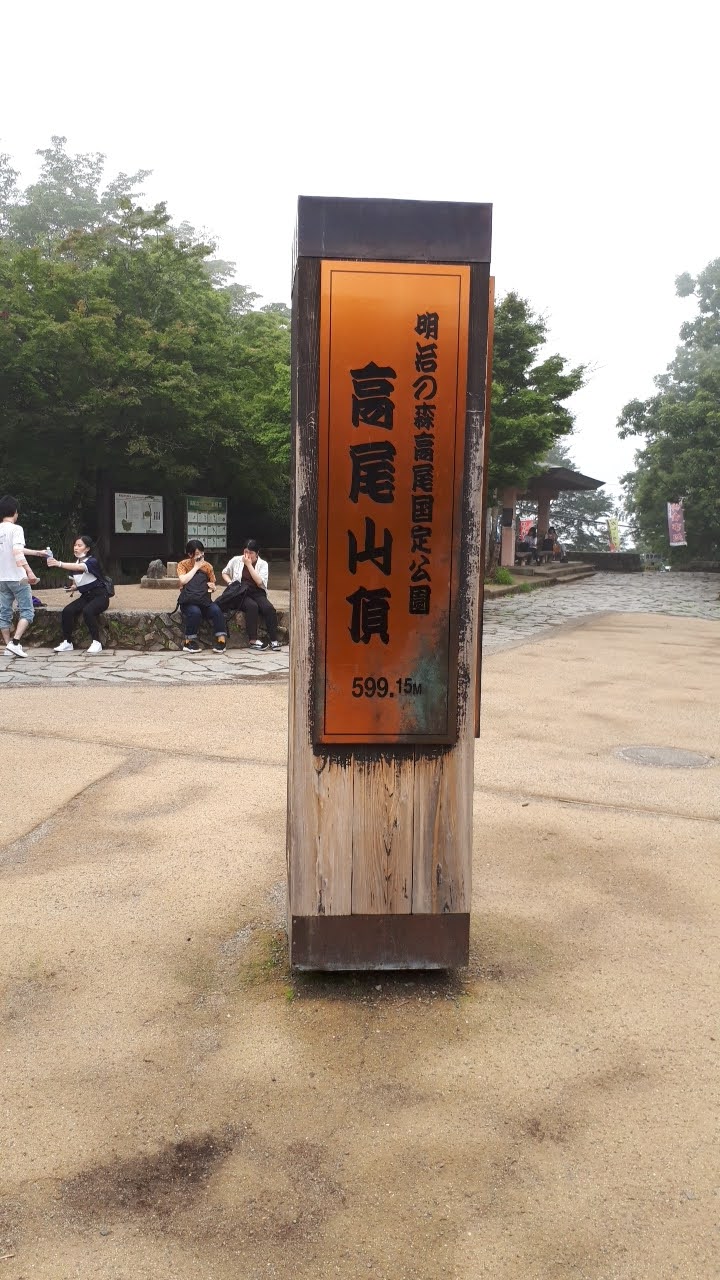
“Meiji-no-Mori Takao Quasi-National Park. Mt. Takao Summit. 599.15m.”
On clear days, Mt. Fuji is visible to the west. On this day: nothing. Just fog.
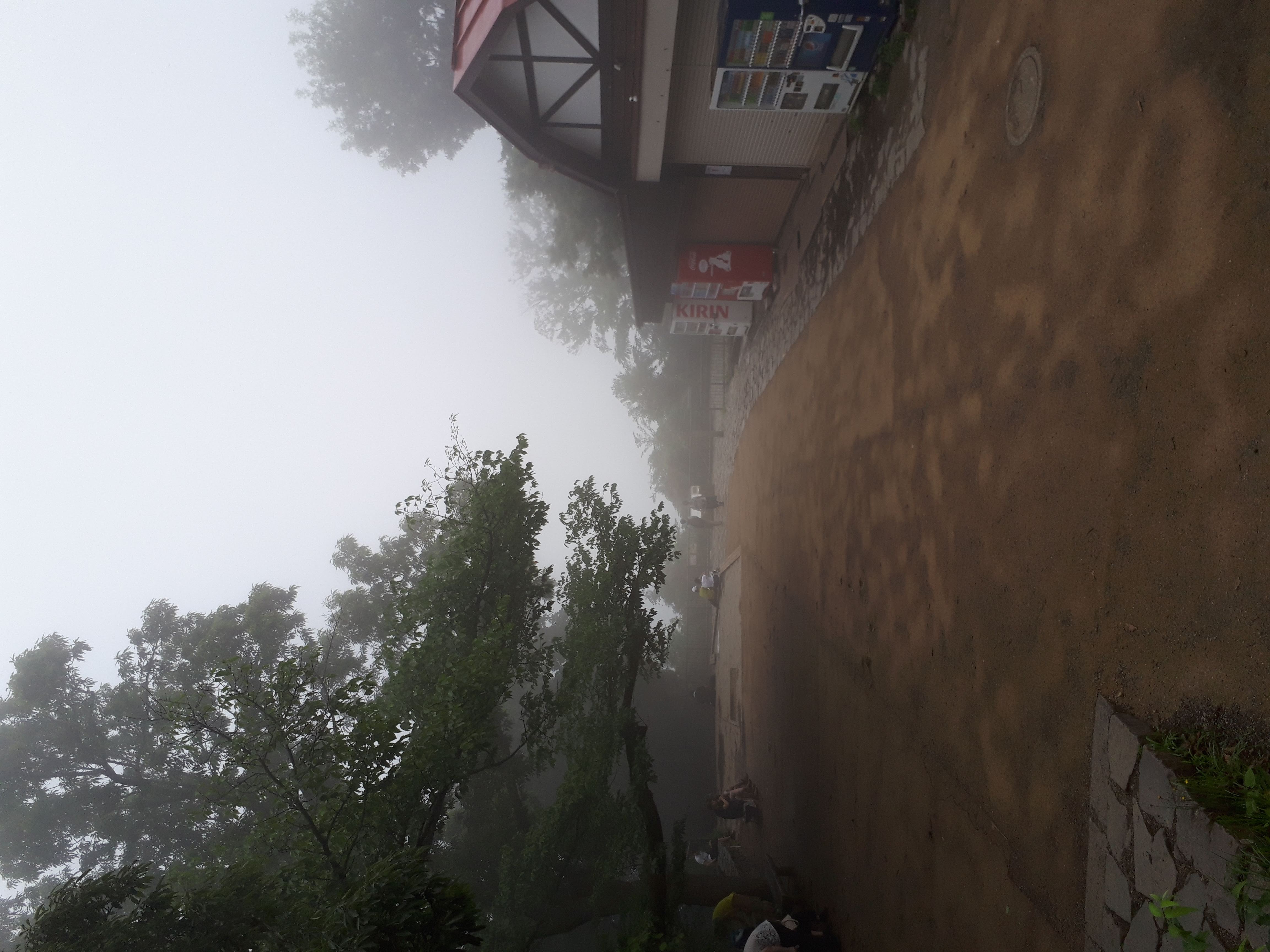
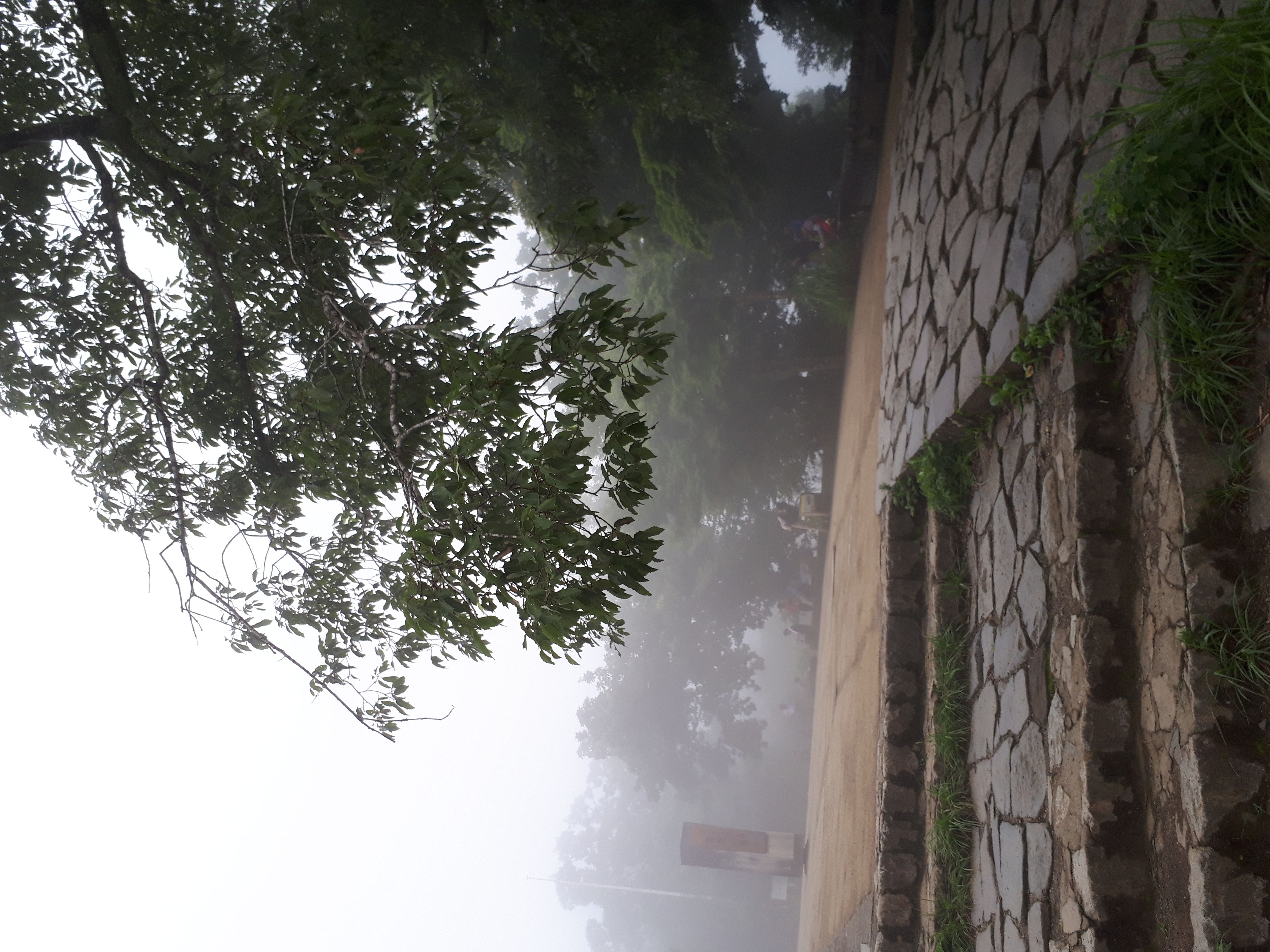
A few hikers sat on benches in the mist. A vending machine hummed. The summit felt quiet — and somehow, that was exactly right.
I checked the trail map before descending.
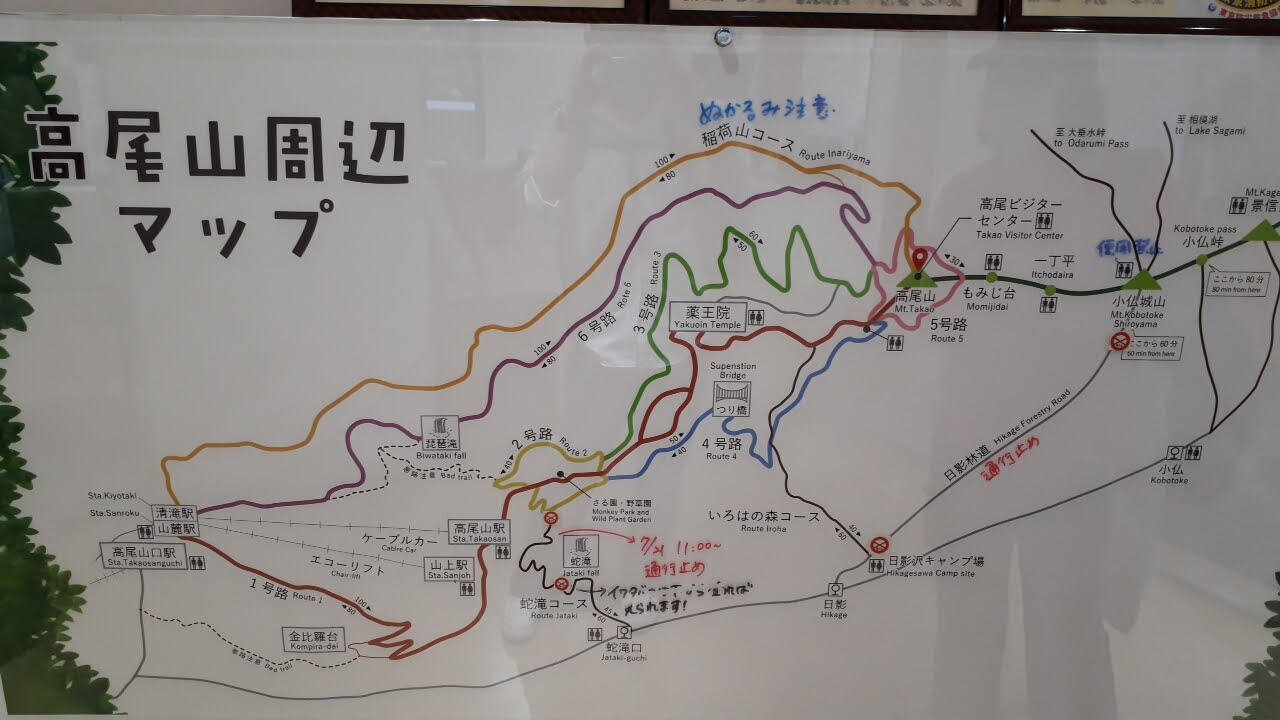
The snake waterfall (Jataki) course was marked “Closed from 11:00 AM, July 21” — hand-written in pen on the posted map. A reminder that mountains close trails without warning.
The Descent and Post-Hike Meal
After the summit, I descended and took the cable car back down. At the base, I stopped at a soba restaurant — Mt. Takao is famous for its noodles.
Tororo Soba
Buckwheat noodles in cold broth, topped with mountain yam (tororo) and a raw egg. Simple, clean, and deeply satisfying after a sweaty hike.

Mushroom Side Dish
A small bowl of simmered mushrooms (shiitake and other local varieties) topped with shredded white vegetables. Mountain ingredients, minimal preparation.

The Beer
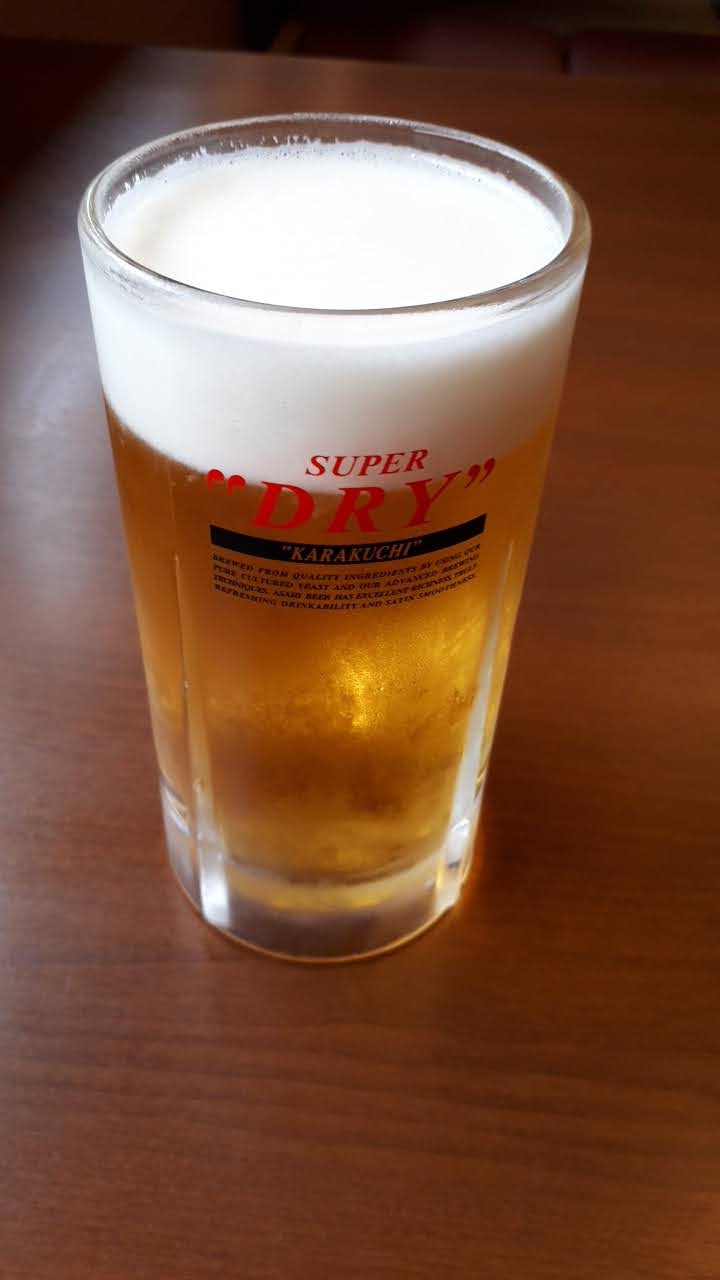
Asahi Super Dry, draft. Cold. Perfectly poured.
This was what I’d been walking toward all day.
Reflections on Mt. Takao in 2020
The mountain that summer was quieter than usual. Fewer crowds, more fog, an unusual kind of stillness.
Walking through Yakuoin’s luck ring, standing before the tengu in the mist, arriving at a foggy summit with no view — none of it was what the guidebooks promise. And yet, it was exactly what I needed.
Mt. Takao at 599 meters is not a technically demanding mountain. But it has genuine depth — spiritual, ecological, historical. A mountain that rewards the curious visitor who looks past the cable car and the souvenir shops.
I’ll be back. Maybe in autumn for the maples. Maybe in winter, when the air clears and Fuji appears over the horizon.